E-Paper



Odisha school enrolment declines below national average: CAG report
Between 2018-23, Odisha identified 1.01 lakh out-of-school children, but mainstreamed only 40,120, leaving a massive shortfall of 61,487 children


Bhubaneswar: A performance audit of Odisha’s school education system has found a decline in Gross Enrolment Ratio (GER), Net Enrolment Rate (NER) and transition rates - key indicators of the educational status of a State - at secondary and higher secondary levels, even as these indicators improved nationally between 2018-19 and 2022-23.
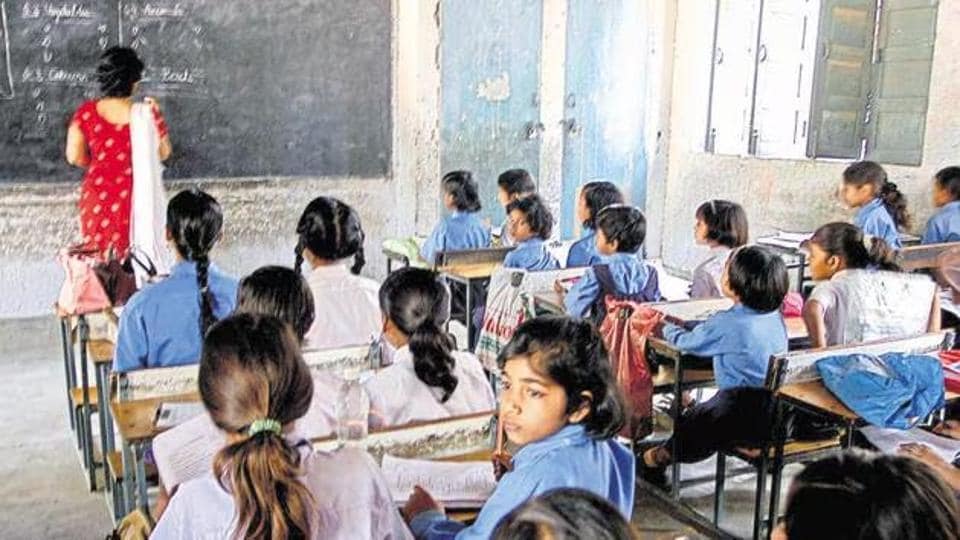
The report by the Comptroller and Auditor General (CAG), tabled in the state assembly on Tuesday, flagged serious discrepancies in enrolment data, unreliable methodologies for computing key indicators, persistent high dropout numbers and over 61,000 out-of-school children (OoSC) who were never brought back into the education system. The audit said Odisha’s educational statistics—critical for planning and budgeting—are “not credible”, exposing serious gaps in implementation under the Right to Education (RTE) Act and Samagra Shiksha.
According to Unified District Information System for Education Plus (UDISE+) data analysed by the audit, Odisha’s GER at the secondary and higher secondary levels fell during 2022-23 over 2018-19, even as the all-India GER rose. The NER also declined at these levels and remained below national averages even as the CAG noted that the credibility of the indicators were doubtful.
Enrolment data uploaded by schools to UDISE+ did not match figures used for Mid-Day Meal (PM Poshan) provisioning, with mismatches ranging from 10,454 to 2.5 lakh students over the five-year period. The State relied on projected child population figures from the National Institute of Educational Planning and Administration (NIEPA) instead of conducting mandatory household surveys under the RTE Act. Whenever projected population estimates fell below enrolment counts, OSEPA added out-of-school children to enrolment figures to compute GER—an “erroneous” practice that distorted indicators, the audit said.
The audit found that the transition rate from secondary to higher secondary level dropped sharply, registering negative growth between 2018-19 and 2022-23, and remained lower than the national rate. In 2022-23, the rate stood at 70.3%, implying three in 10 students did not move to Class XI. The audit also uncovered impossible transition rates exceeding 100% in a few districts for 2018-19.
While retention rates at the secondary stage grew it lagged behind all-India growth, while Odisha’s higher secondary retention rate remained below the national average. Several districts showed declining retention trends despite the state-level increase.
Between 2018-23, 1.50 lakh to 5.47 lakh students from classes I to XI dropped out from school each year before reaching the next class. The secondary-level dropout rate shot up to 17.7% in 2022-23, marking an 86% rise over 2018-19. Audit analysis of Class X cohorts found that 2.74 lakh students (12%) enrolled in Class X did not appear for the Board examination during four academic years.
Unwillingness to study, poverty/financial distress, child marriage, migration for earning, household/agricultural labour and distance/difficult terrain were a few reasons of dropout. Other associated causes included lack of parental guidance and low parental literacy.
The audit said that while the school and mass education department undertook programmes such as the Learning Recovery Plan and Multilingual Education, core socio-economic drivers of dropouts remain unaddressed.
Between 2018-23, the State identified 1.01 lakh out-of-school children (age 6–18) but mainstreamed only 40,120, leaving a massive shortfall of 61,487 children (61%). For the 15–18 age group—critical for higher secondary enrolment—only 0.75% of identified children were mainstreamed. Even these numbers are unreliable: OoSC figures maintained by Odisha School Education Programme Authority (OSEPA), district project coordinators and district social welfare offices did not match.