EV policy should be valid for a decade
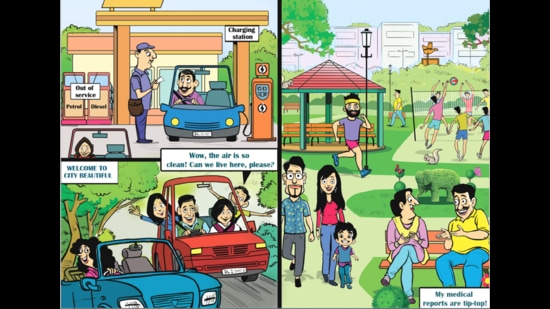
The government of India is committed to reduce carbon emission by 45% till the year 2030, and bring it down to 0% by 2070. Many experts believe these targets are ambitious for a country like India, which is mostly dependent on fossil fuels for energy needs. However, the electric vehicle policy is a step in the right direction. The UT’s EV Policy should be valid for at least a decade or two, and the benefits offered should not be rolled back once there is a boost in sales. Sufficient land should be earmarked in each sector to set up charging stations, and efficient people should be hired to run them. There should be a clear policy for scrapping old vehicles after a fixed period. Workshops should also be set up to repair the vehicles, and the cost of spare parts, especially batteries, should be reasonable.
Suresh Verma, Chandigarh
Provide loans at lower interest
To make electric vehicles the popular choice, car companies and banks could allow buyers to pay instalments at a reduced rate of interest, and longer duration loans. Many people are perfectly capable of paying monthly instalments, but may not have the down payment. Thus, buyers should be allowed to get 100% loan. Insurance should also be provided at a discounted premium. Car companies should adjust old vehicle scrap in the bill.
Harsh Vardhan Mehta
Provide 60% subsidy
The introduction of electric vehicles has both benefits and issues, which may take some to resolve. The vehicles are easy to drive, have a lower operating cost, are cheaper than petrol and diesel vehicles, and are low-maintenance, besides being eco-friendly. However, they have slow pick-up, are slower, can cover short distances, and take a long time to charge. Before launching this model, the requisite infrastructure needs to be installed, and the subsidy should be increased to 60%. The government should credit the subsidy to the accounts of dealers so that buyers are spared from running after government officials. The scheme should be introduced in phases – first public transportation and government vehicles should be covered, then three-wheelers, and finally all private two-wheelers and four-wheelers. It should not burden buyers with taxes or increase the price of petrol to force people to switch to electric vehicles.
Kidar Nath Sharma, Chandigarh
{{/usCountry}}Kidar Nath Sharma, Chandigarh
{{/usCountry}}Take cues from the West
With pollution on the rise in the tricity, electric vehicles are the way forward. In the USA and Italy, citizens have been offered considerable incentives for switching to electric cars, and though India is also providing certain advantages to buyers, they need to be made more attractive to effect a real change. The government should provide regulatory, tax and financial incentives, or a combination of the three. In Norway, which has purportedly seen the highest electric vehicle sales, buyers save 25% from the word go. Indian buyers should also be able to reap similar benefits, and more awareness should be raised about zero tailpipe emissions. A uniform electric vehicle policy should be implemented in the Chandigarh tricity.
Vineet Gandhi, Chandigarh
Exempt parking fee
Electrical vehicles will control both noise and sound pollution in the city. The administration however needs to supplement the existing infrastructure by building charging stations. The parking fee for electrical vehicles should be exempted in malls and cinemas to incentivise residents, and special zones should be reserved for EVs in parking areas. Senior citizen and ladies should be allowed to travel free of cost in electric vehicles. Panchkula and Mohali should also follow suit.
Sqn Ldr Manjit Singh Johar (retd), Chandigarh
Raise awareness
Electric vehicles are the need of the hour. As educated citizens we need to understand the negative impact of increasing pollution and switch to electric vehicles. The UT administration should implement the EV Policy, raise awareness among residents and offer incentives in the form of subsidies. It is time to catch up to the world.
Garv Bhupesh Verma, Panchkula
Defer implementation of policy
While Chandigarh has seen a minor increase in sales of electric vehicles, it is nothing significant. The government should have limited its electric vehicle policy to two-wheelers and auto-rickshaws as most people rely on their vehicles to take them beyond the tricity and at present there are not enough charging stations. Let this exercise be deferred till sufficient awareness has been raised.
Kundan Lal Sharma, Mohali
Sensitise residents about green fuel
Climate change and pollution are issues that can no longer be ignored, and may have far-reaching effects on the next generation as well. We need to raise awareness about green fuel and the adverse effects of pollution. Mohali and Panchkula should also frame a similar electric vehicle policy.
Ishita Nara
Increase range of EVs
It is heartening to know that the UT is taking concrete measures to curb pollution, and the electric vehicle policy should also be co-opted in the tricity area. To encourage residents to purchase electric vehicles the administration must provide adequate incentives, cap the cost of the vehicles to make it affordable for the middle class, provide an adequate number of charging points, and manufacturers should improve the range of electric vehicles available.
Chander Vij
Switching to EVs not practical
Electric vehicles are undoubtedly an eco-friendly mode of travelling. However, are we really equipped to switch to electric vehicles? Even if the Chandigarh administration sets up enough charging points within city limits, what will happen to inter-city travellers? Another road block is the dismal power situation. Power cuts and electricity department’s strikes are eventualities, which have not yet been considered. Hybrid vehicles, which run on both green and fossil fuel, are a viable option, but they will cost a lot. Switching to electric vehicles is not a viable option at present.
AK Sharma, Chandigarh
Flexible battery rules needed
The UT administration has embarked on an ambitious project to give a push to eco-friendly electronic vehicles, and check pollution levels in the city. However, the administration’s interoperability standards for electric vehicle battery swapping should be a guiding principle, instead of a uniform standard, which can stifle innovation. Subsidy for battery swapping should be for all layers as long as they meet safety standards. The administration should fix anomalies in GST rates and ensure that charging stations are available at common places, besides petrol stations.
SK Khosla, Chandigarh
Take care of teething issues
It is heartening that the UT administration is rolling out a draft electric vehicle (EV) policy in the city. In view of the increasing levels of air pollution in the city, electric vehicles are the only way forward. Our transportation ecosystem is one of the biggest emitters of carbon dioxide emission, and one way of bringing down these emissions is through the implementation of the electric vehicle policy. The high prices of petrol are sure to encourage people to switch to electric vehicles, but the EV policy should account for any and all teething problems and take care of them. There should be charging infrastructure and dedicated parking lots. The equipment used should be standardised to meet global norms. Further, sufficient service centres should also be set up by the administration to care of any breakdowns.
Anil Kumar Yadav, Chandigarh
Subsidise electricity
The ambitious electric vehicle policy will not only curb pollution, but will also help the common man save money. However, it will only be successful,if electric fuelling stations are established at all prominent places, national highways, electric batteries are readily available, and residents are able to charge their vehicles at home. Besides, the administration should provide a subsidy on purchase of vehicles, establishment of charging stations and the price of electricity.
Subhash Chug
Smart marketing is key
The UT administration’s move to go green with the help of electric vehicles is admirable. Buyers are to be offered several subsidies, which will incentivise the residents. However, the administration needs to step up on marketing as the petrol and diesel vehicle lobby is powerful. We need to raise awareness among commuters. Chandigarh being a high-tech city could set an example by leading the switch to electric vehicles, which will prove to be economical in the long run. Cheap loans from banks and financial institutions will boost sales and door-to-door campaigns, street plays and social media campaigns will further the cause.
Sunny Dhaliwal
Publicise electric vehicles
The Chandigarh administration has taken a remarkable step to reduce pollution. However, it must first focus on providing the infrastructure required for switching to electric vehicles, and then publicise the initiative in each and every sector. Government departments should also phase out old cars and switch them with electric vehicles. The concerns and apprehensions of the residents should be allayed.
P Mehta
Proper implementation needed
The UT administration often struggles to implement its own policies, despite its lofty intentions, due to loopholes. Take for instance, the policy to install solar panels over roof tops of houses over a kanal. As far as the electric vehicle policy is concerned, unless enough incentives are provided and the vehicles are sold at a cost-effective price, replacing petrol and diesel run cars will be not be easy, even if charging points are set up across the city.
SC Luthra, Chandigarh
Rope in Mohali, Panchkula
It is appreciable that the Chandigarh administration is drafting a policy to encourage the use of electric vehicles as the plan to build a metro has been shelved. To start with, the administration can switch to electric local buses, as this will boost the public’s confidence, while reducing air and noise pollution. The UT administration should coordinate with Mohali and Panchkula as well. Residents should be given some incentives to make the switch. In the view of rising prices of petrol and diesel , electric vehicles are the best choice.
Inderjit Singh Sidhu, Mohali
Subsidise batteries
The electric vehicle policy, which should have been approved 10 years ago is still on paper. The administration needs to focus on providing heavy subsidies and loans on the purchase of electric vehicles. The cost of lithium batteries used in the vehicles needs to be subsidised, and there should be charging points at every 200m. The vehicles should be popularised in schools, and colleges, and solar panels should be use to charge the vehicles. The use of electric buses should be extended to long-distance routes as well. Road tax and the need for a licence should be waived for electric two-wheelers.
Navjot Singh Chhabra, Mohali
Set practical targets
The use of e-vehicles will certainly reduce air pollution in the city by bringing down emissions from the transport sector. Policy suggests that rather than arbitrary fixing the subsidy for different types of vehicles, it should be calculated by incorporating actual markets costs and resale value of vehicles. The draft advocates subsidies to vehicle buyers, which is expected to act as a major incentive to people to move from fossil fuel-based vehicles to electric vehicles. The subsidy target should be practical and based on the actual new vehicles being registered. For instance, it does not make sense to fix a target of say 200 vehicles a month for the subsidy, when only 100 vehicles are being registered. Before residents are asked to switch to electric vehicles, adequate charging points should be set up across the city.
Sanjay Chopra, Mohali
Set up solar power stations
Pollution, particulary that of the air, is causing much concern, therefore going green with electric vehicles is a welcome decision. Installing solar power stations on residential and commercial units should be made mandatory. At the same time, trees must be planted in open spaces and industrial areas so that the effects of carbon release are negated. The administration must also ensure there are sufficient charging points.
Capt Amar Jeet, Kharar
Residents must switch to green fuel
Everybody knows that using electric vehicles will bring down the pollution levels, which is in the interest of everyone. Why wait for the administration to give us incentives, rather we must ourselves switch to green fuels. The policy should be adopted by not just the Chandigarh tricity, but on a a global level.
Anju Mohan, Panchkula
Reduce GST
The Chandigarh tricity has the maximum vehicles per capita as compared to other cities. The cost of running e-vehicles is around 40% less than petrol and diesel guzzling vehicles. Another advantage of green vehicles is that it will reduce our dependence on crude oil. Authorities must provide subsidy as well as reduction in GST to encourage green vehicles’ sale as they are safe to drive, have low maintenance cost and are pollution as well as noise free.
Col TBS Bedi (retd), Mohali
Policy must be implemented correctly
The UT administrator has approved the ambitious EV policy and it must be implemented correctly as building the required infrastructure and making people aware of the new system will take time. It is appreciable that the administration has sought residents’ suggestions to be addressed to the chief executive officer of Chandigarh Renewable Energy and Science and Technology Promotion Society (CREST).
Usha Verma, Chandigarh
Spreading awareness is key
With the roll out of draft EV Policy 2022 by the Chandigarh administration, the questions of reliability and consistency have already started popping up. Viewing the brighter side, this stands to be one of the best steps for environmental benefit as it will help reduce pollution. In order to incentivise usage of green fuel and reduce pollution levels, awareness on the benefits of EVs needs to be spread at a fast pace.
Komal Sharma, Chandigarh
Expert takes
Start more electric transport
Though purchasing and maintaining electric vehicles is costly, implementation of the policy will definitely help reduce the pollution levels in the city. The UT administration could start by introducing electric public transportation.
Paveela Bali, environmentalist
Curb red tape
While it is important to create infrastructure for electric vehicles,authorities must also work towards adoption of CNG vehicles. Rebates should be given to those who purchase EVs and permits for charging stations should not be bogged down by red tape.
Nitin Mehan, general secretary, Federation of Chandigarh Region Automobile Dealers
Make electric cars affordable
The government must remove duties and make electric cars more accessible and affordable. At present, the cars are rather expensive, even though people can save lakhs in fuel over the years. Charging points at fuel stations and at regular intervals on highways is also a must. Brands like Tesla should be welcomes to the country.
Anmol Gupta, electric car owner
First phase out diesel guzzling vehicles
The UT administration should first phase out all diesel-based commercial vehicles as was done in Delhi. It will also need to set up infrastructure to support the vehicles such as charging stations.
Subodh Kumar, president, Renewable Gas Association of India
Incentives are the way to go
The Chandigarh administration has proposed direct incentives for all types of EVs, including e-bicycles, besides early bird incentives, and waiver of road tax and registration charges, which will encourage residents to switch to EVs.
Debendra Dalai, director, environment, Chandigarh
Reader of the week
Lead from the front
The Chandigarh administration should lead from the front and start using electric official vehicles. It could also start a ‘green guardians’ campaign, where citizens who switch to electric vehicles are appreciated every fortnight. The UT administration should tie-up with prominent dealers in the region, thereby saving on marketing cost. Owners registered their electric vehicles under the Chandigarh RTO should get generous rebates.
Avik Seth