Gurugram: Commuters and people living along the Golf Course Road may now find that their monsoon woes are a thing of the past with the persistent issue of waterlogging in the area finally being resolved by the administration. The eco-restoration initiative for Creek 4, undertaken by Gurugram-based NGO ‘IamGurgaon’ in collaboration with the Gurugram Metropolitan Development Authority (GMDA), has ensured effective water management in the region preventing flooding, officials said.
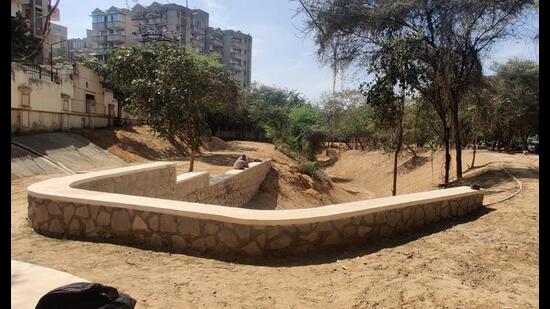
The eco-restoration of Creek 4, a 3.5 km stretch flowing through sectors 55, 56, and 57, represents a collective vision for environmental sustainability and community welfare. The project aims to rejuvenate and preserve the creek through scientific restoration techniques, community engagement, and corporate partnership.
According to GMDA officials, the teams removed solid waste from the creek, stopped open defecation and improved the visibility and accessibility of the site, increasing safety and utility of the area.
GMDA executive engineer, Vikram Singh, said that Creek 4 was extremely beneficial in channelising storm water from the main carriageway of sectors 56,57,58 as well as along Golf Course Road and was a lifeline during heavy rainfall. “The ‘Green and Blue System’ of Gurugram is integral to the project, emphasizing the preservation of green spaces, water bodies, and natural habitats to enhance ecological resilience and biodiversity,” he said.
GMDA officials said the initiative also involves the creation of mobility corridors for pedestrians, transforming undeveloped public spaces into accessible and safe walkways for residents. “At its core, the project employs sustainable development strategies such as water quality monitoring, sediment management, and the introduction of native flora and fauna to restore the natural balance of the creek. Innovative solutions for water purification and habitat creation are being implemented, including the deepening of the catchment area to mitigate flooding and improve water management,” Singh said.
{{/usCountry}}GMDA officials said the initiative also involves the creation of mobility corridors for pedestrians, transforming undeveloped public spaces into accessible and safe walkways for residents. “At its core, the project employs sustainable development strategies such as water quality monitoring, sediment management, and the introduction of native flora and fauna to restore the natural balance of the creek. Innovative solutions for water purification and habitat creation are being implemented, including the deepening of the catchment area to mitigate flooding and improve water management,” Singh said.
{{/usCountry}}The eco-restoration project aims to foster community involvement through educational workshops, clean-up drives, and nature walks. It is designed to raise awareness about creek conservation and instil a sense of ownership among local residents, schools, and businesses, said officials.
The project not only aims to enhance the living standards of the community but also serves as a model for sustainable urban development. “The restoration efforts include the establishment of groundwater recharge zones, slope stabilization, and the reopening of rainwater channels to recharge the groundwater system. Land pollution mitigation focuses on cleaning and restoring contaminated areas, while new greenways provide scenic, pedestrian-friendly routes throughout the city,” said Singh.
Latika Thukral, founder of ‘IamGurgaon’ said, “We are so happy to be working with GMDA on the creeks and saving the city from flooding. We have to stop making these concretised drains on the road. And another reason for disaster is the encroachment by residents.”
Sarika Panda, architect and urban planner and a resident of the city said that nature-based solutions are lifelines against urban floods. “By harnessing the power of ecosystems, we can mitigate risks, improve water quality, and create resilient cities. Through initiatives like rejuvenating water bodies, constructing green spaces, and implementing sustainable drainage systems by reviving old creeks, they’ve improved Gurugram’s battle with floods in many areas. Their efforts not only protect lives and property but also enhance the city’s overall ecological health,” she said.
GMDA officials said the project emphasises the reuse of debris and construction materials to build walls, seating, and pathways, reducing waste and promoting sustainability. “The use of recycled materials, such as concrete blocks and old hum pipes, highlights the project’s commitment to minimizing structural and carbon footprint. The initiative also explores how green corridors can provide shaded pathways for pedestrians while fostering thriving ecosystems. The impact of these efforts is already visible in Sectors 55, 56, and 57, where rainwater is once again flowing in the creek, enhancing biodiversity and environmental quality,” said Singh.