E-Paper



Sprinkling of anti-foam agent in Yamuna begins
The emergence of white foam on the Yamuna is an annual phenomenon during winters

 Prefer HTon Google


Days after visuals of a thick layer of foam covering the Yamuna’s surface went viral on social media, Delhi Jal Board (DJB) teams on Tuesday began sprinkling anti-foaming solutions to counter the build-up of the toxic froth around the Okhla barrage, officials with the water utility said.
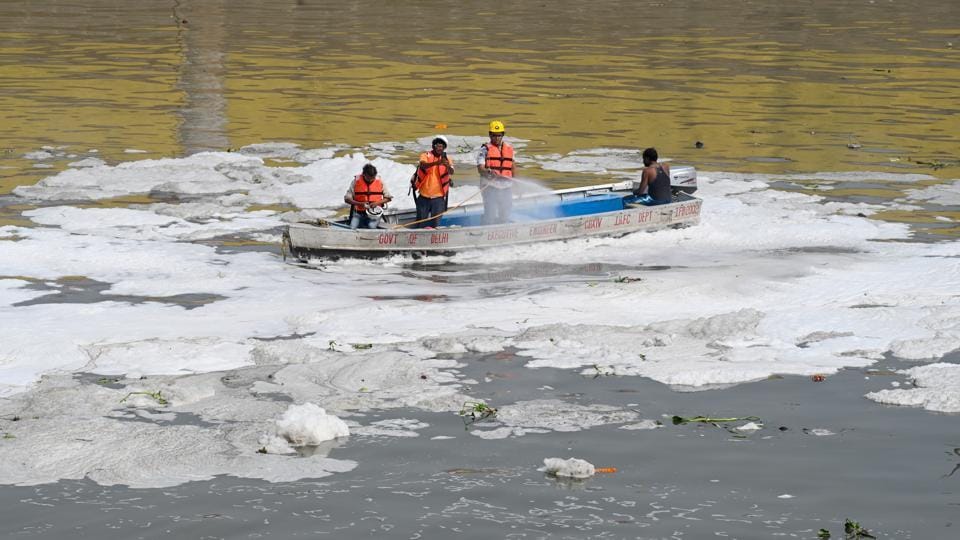
DJB officials said around 12-15 tonne of a diluted anti-foaming agent is expected to be used in the process, adding that the exercise will continue till Chhath, scheduled to be celebrated between November 6 and 8.
The emergence of white foam on the Yamuna is an annual phenomenon during winters, and experts say it is an indicator of high levels of untreated sewage and industrial pollutants in the river’s water.
A senior official on Tuesday said that during an inter-departmental coordination meeting last month, it was decided that eight departments will coordinate to ensure that the toxic froth is kept to a minimum.
“The irrigation and flood (I&FC) department is providing boats for sprinkling of anti-foaming agents and they will also co-ordinate the opening of barrage gates with Uttar Pradesh. We (DJB) have been entrusted with responsibility of sprinkling the ant surfactants, carrying out patrolling in the area, and ensuring that sewage treatment plants operate on optimum level,” the official said, on condition of anonymity.
Other departments including DDA, DPCC, MCD and I&FC have been asked to ensure removal of water hyacinth, crack down on illegally operating dhobi ghats, and take action against dyeing and washing units and automobile service stations which discharge their effluents into drains.
The development came even as lieutenant governor VK Saxena posted on X: “Instead of making accusations, allegations and excuses on media/social media, it would be better to provide relief to the people of Delhi and especially Chhath worshippers and fasting people from this worsening situation. I expect concrete steps for redressal.”
In response, the Aam Aadmi Party in a statement said: “As the Delhi assembly elections approach, the BJP has again started dumping industrial waste from Haryana and Uttar Pradesh into the river Yamuna. Delhi has no major industries, so where is this waste coming from? The BJP constantly and only creates hurdles in the functioning of the elected government of Delhi. We will continue to fight and provide for better services to our citizens.”
Another official, from the quality control wing of DJB, said that a temporary water testing laboratory near Kalindi Kunj is also on cards to provide information about water quality parameters around this area to the general public.
The second official said that directions have also been issued to monitor the quality of water upstream and downstream of the Okhla barrage. “Four parameters including biochemical oxygen demand, chemical oxygen demand, total suspended solids, and ammoniacal nitrogen will be monitored. If things go as per plan, these reports will be made online,” the official said.