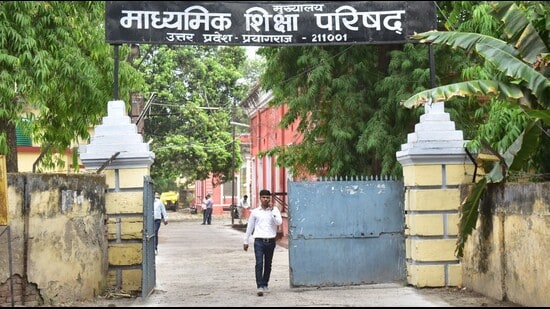
The Madhyamik Shiksha Parishad, or UP Board, will introduce a major curriculum overhaul starting from the 2026–27 academic session, which begins April 1, 2026, by making vocational education compulsory for Class 9 students. All students seeking admission to Class 9 in UP Board–affiliated schools will have to choose at least one vocational subject.
By 2030, the Board will also restructure the Intermediate (Class 12) examination. Students in the Humanities, Commerce and Science streams will appear for six subjects instead of five, while Agriculture students will take seven subjects instead of six, with a vocational subject added as a mandatory component.
UP Board secretary Bhagwati Singh announced that the Board will integrate updated vocational curricula developed by the Pandit Sunderlal Sharma Central Institute of Vocational Education (PSSCIVE), Bhopal which is an NCERT constituent.
“This initiative aims to modernise our outdated vocational courses and align them with contemporary industry expectations,” Singh said. “By incorporating PSSCIVE’s modules, we intend to bridge the gap between traditional training and current employment trends, equipping students with practical, employable skills” he added.
According to Singh, the finalisation of content for over 80% of the more than 30 vocational subjects at the high school level is already complete. Discussions are underway to fine-tune the modules and ensure seamless implementation across more than 28,000 affiliated institutions.
{{/usCountry}}According to Singh, the finalisation of content for over 80% of the more than 30 vocational subjects at the high school level is already complete. Discussions are underway to fine-tune the modules and ensure seamless implementation across more than 28,000 affiliated institutions.
{{/usCountry}}“At the Intermediate level, students will have an even wider array of vocational options. This expanded choice will significantly strengthen their technical competency and employability,” he added.
As a mandatory curriculum component, Class 9 and 10 students will be able to choose from over 30 vocational electives, including photography, retail, computer applications, mobile repair, solar system maintenance and more.
For Class 9, schools will conduct internal assessments with equal weightage: 50% theory and 50% practical. For Class 10, the UP Board will conduct the examination for the theoretical component (50%), while schools will continue to assess practicals internally and forward the results to the Board.
To ensure hands-on experience, schools will also be required to collaborate with nearby industrial or commercial establishments to offer mandatory internships of at least 10 days in the relevant job role.
Vocational education will be introduced in Class 11 in 2029, paving the way for the expanded subject structure in the 2030 Intermediate examination.
Singh noted that each proposed vocational subject has a dedicated 10-member committee. “To bring meaningful reform to the 46 vocational courses currently offered, experts from polytechnics, engineering institutes, and universities have been working for several months,” he said.