Lucknow
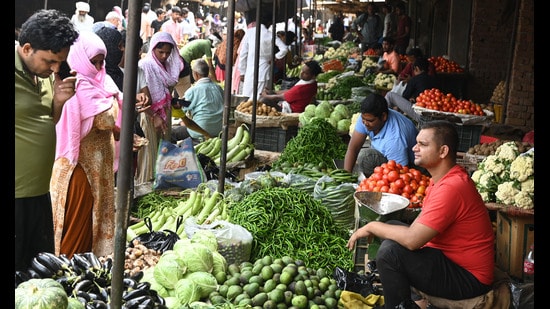
Recent heavy rainfall and flood-like conditions in Lucknow and surrounding areas have devastated local green vegetable crops, severely disrupting supply chains. According to Najmuddin Raini, president of the Bharatiya Kisan and Arhati Welfare Association at Dubagga Phal Sabzi Mandi, and Satya Prakash Tripathi, senior agricultural marketing inspector at Naveen Galla Mandi on Sitapur Road, arrivals of local produce at city mandis have plummeted by up to 50 percent.
While efforts to source vegetables from neighbouring districts have slightly improved availability, a 30 percent stock deficit persists compared to normal levels. Mandi officials warn that this sustained shortage will likely prevent prices from fully normalising for at least another 15 days.
Local retailers, such as Ibrar from Narhi, note that this volatility in the wholesale market is placing a heavy burden on consumers.
Price trends show that bottle gourd which was selling at ₹10 to 15 per kg in mandi two weeks ago, reached ₹35 to 40 last week during peak rainfall and has now come down to ₹20 to 25 per kg. In the retail market, bottle gourd was ₹25 to 30 two weeks ago, jumped to ₹70 to 80 last week and is now selling at ₹40 to 50 per kg.
Leafy greens like soya and fenugreek have been among the worst hit, as high moisture and rain lead to rapid rotting during transit. Combined retail prices for these greens soared from ₹160/kg to a peak of ₹240/kg last week; they remain high at ₹200–210/kg despite a slight decline. In the wholesale market, fenugreek prices rose from ₹40–50/kg to ₹120/kg, while dill rose from ₹60/kg to ₹100–120/kg; both have since moderated slightly to ₹60/kg and ₹80/kg, respectively.
{{/usCountry}}Leafy greens like soya and fenugreek have been among the worst hit, as high moisture and rain lead to rapid rotting during transit. Combined retail prices for these greens soared from ₹160/kg to a peak of ₹240/kg last week; they remain high at ₹200–210/kg despite a slight decline. In the wholesale market, fenugreek prices rose from ₹40–50/kg to ₹120/kg, while dill rose from ₹60/kg to ₹100–120/kg; both have since moderated slightly to ₹60/kg and ₹80/kg, respectively.
{{/usCountry}}In the case of capsicum, wholesale prices climbed from ₹25–30/kg to ₹45–50/kg before settling at ₹35–40/kg. Retail prices increased from ₹50–60/kg to a peak of ₹90–100/kg, and are now trading at ₹70–80/kg.
Wholesale prices of lemon rose from ₹100–120/kg to ₹150/kg, but have now dropped to ₹80/kg due to improved arrivals. Retail prices peaked at ₹300/kg last week, down from ₹200–240/kg two weeks ago, and have now decreased to ₹160/kg.
Satya Prakash Tripathi noted that the local agricultural belt is currently failing to meet the demand for core staples. “We are sourcing essential items like tomatoes, onions, coriander, and green chilies from distant states,” Tripathi said, explaining why prices for these staples have remained volatile despite some market adjustments.