
 E-Paper



Villagers protesting against Rowghat iron-ore project clash with police
The villagers protesting against the Rowghat iron-ore mines project alleged that they were cane-charged by police. However, the Bastar police claimed that there was no use of force during the event.

 Prefer HTon Google


RAIPUR: The villagers protesting against the Rowghat iron-ore mines project clashed with police on Friday when the former allegedly gheroed the collectorate office campus in Bastar’s Narayanpur district on Friday.
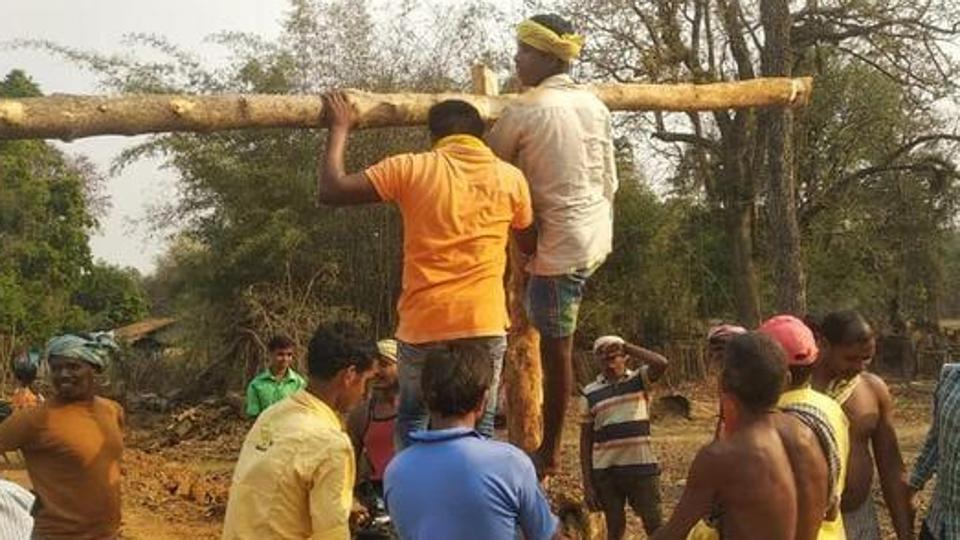
The protestors alleged that they were cane-charged by police. However, the Bastar police claimed that there was no use of force during the event and the villagers were trying to break the barricades of the collectorate premises.
Hundreds of villagers have been protesting under the banner of Rowghat Sanghrash Samiti against the project which would come up on Rowghat hills spread along the border of Narayanpur and Kanker districts since last Saturday.
A press release issued by the Samiti on Wednesday said that the Bhilai Steel Plant (BSP) received permission from the Environment Ministry in January this year to mine 3 lakh tonne per annum iron ore and transport it through roads but till date, no Gram Sabha of any affected village has given its consent to this mining project, which makes the mines ‘illegal’.
On Friday, the protestors gathered at Binjali village and marched towards the collector’s office in Narayanpur town to submit a 20-point memorandum in this regard.
The police tried to contain them but the crowd managed to break through barricades at two places. Visuals of the protest march show that the police lathicharged on the crowd to disperse it but the protestors managed to reach in front of the Collectorate office.
Subsequently, a delegation of protesters was allowed to enter the office premises to meet collector Rituraj Raghuvanshi. Meanwhile, some protestors started shouting slogans against the administration and stormed inside the collectorate campus demanding the collector to come and meet them resulting in a scuffle between them and police.
However, inspector general (IG) of police, Bastar range, Sunderaj P in a statement said that there was no use of force during the event.
“…While the representatives of the protestors were having discussion with the officials inside the collectorate, a few of the protestors tried to break the barricading and rush into the premises. Police and executive magistrates briefed the protestors about the security arrangements and stopped them from doing so. Police and district administration handled the issue with patience and resolved it. The protestors dispersed after handing over memondram of their demands to the collector,” the IG said.
-kW0H-U20214218012MgB-250x250%40HT-Web.jpg)


