Pune: Dry weather has coincided with persistently elevated air pollution in Pune, with the city recording an Air Quality Index (AQI) above 100 on most days in October this year. According to data from the Central government’s Sameer app, the AQI peaked at 141 on October 22, raising concerns over prolonged exposure to particulate matter as the city approaches winter.
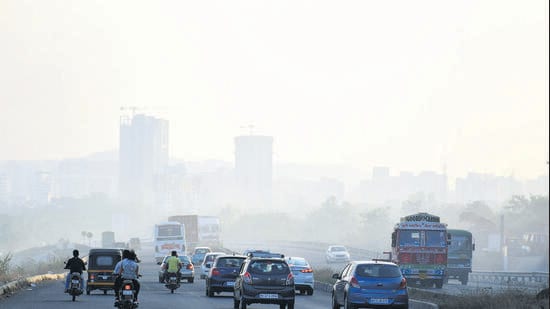
Pune’s AQI ranged from 107 to 141 on most days this month, falling below 100 only on October 4, 5 and 6. On October 25, it stood at 130. Among monitoring stations, Revenue Colony in Shivajinagar recorded the highest AQI at 149. Katraj, which has witnessed extensive construction activity, recorded an AQI of 91, placing it in the satisfactory category.
Pollution levels were higher in Pimpri-Chinchwad, where the average AQI stood at 142. Bhosari recorded the highest reading in the industrial city at 158, indicating that air pollution remains a concern across the Pune metropolitan region, although levels vary by location.
Dry weather can contribute to the accumulation of air pollutants. Without rainfall, particulate matter from construction sites, unpaved surfaces and roads can remain suspended in the atmosphere for longer.
Weak winds can also prevent pollutants from vehicles, industries, construction sites and waste burning from dispersing quickly. As winter approaches, falling temperatures and stable atmospheric conditions can restrict vertical mixing, trapping pollutants closer to the ground.
{{/usCountry}}Weak winds can also prevent pollutants from vehicles, industries, construction sites and waste burning from dispersing quickly. As winter approaches, falling temperatures and stable atmospheric conditions can restrict vertical mixing, trapping pollutants closer to the ground.
{{/usCountry}}An AQI in the moderate category can cause breathing discomfort among people with lung disease, asthma and heart conditions, particularly with prolonged exposure. Sensitive individuals may also experience respiratory discomfort, especially near major roads, construction sites and other pollution sources.
Highlighting the growing concern, Sharmila Deo, a member of Pune Airport Action Hub, said dry weather had contributed to rising pollution and warned that conditions could worsen with the onset of winter.
“With dry conditions setting in, the city is experiencing an increase in air pollution. With winter approaching, air quality is expected to deteriorate further. Waste burning and construction dust are among the major sources of pollution. Alternatives are available to address these sources, but authorities need to ensure strict enforcement of measures to control air pollution in the city,” she said.
Waste burning releases particulate matter and other harmful pollutants, while poorly managed construction sites generate dust. Preventing open waste burning, covering construction materials, controlling dust at sites, sprinkling water where appropriate and regularly cleaning roads can help reduce emissions. Civic authorities also need to ensure compliance with pollution-control norms through effective monitoring and enforcement.
With winter approaching, sustained air-quality monitoring and stricter enforcement of pollution-control measures will be crucial to prevent further deterioration. Officials from the Indian Institute of Tropical Meteorology (IITM) and the Pune Municipal Corporation (PMC) were unavailable for comment.