PUNE: Latur, Beed, Dharashiv and Parbhani have emerged as the worst-hit districts in Marathwada, with a prolonged dry spell severely affecting the Kharif crops and threatening the survival of the standing crops ahead of the harvest; agriculture department officials said.
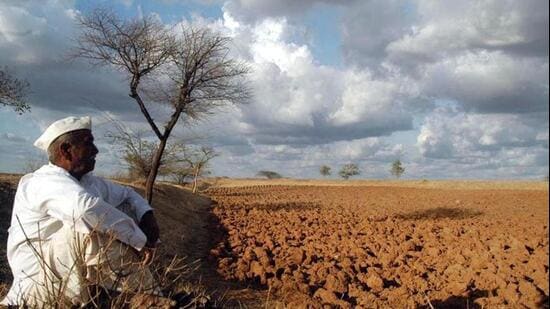
Officials are worried that over 80% of the standing crops in these four districts may have been damaged, with soybean and cotton among the worst affected. Sowing has been carried out on more than 23.17 lakh hectares in these four districts, with around three lakh farmers depending on the Kharif crops.
Agriculture minister Dattatray Barne, who recently reviewed the Kharif crops’ situation in the Marathwada and Amravati revenue divisions of the state told Hindustan Times that the entire Marathwada region has been severely affected by the protracted dry spell.
“It is true that the condition of the Kharif crops in these four districts of Marathwada is pretty bad. Once the panchnama is completed, we will come to know the extent of the crop damage in all districts in the state,” he said.
An agriculture department official said, “The rainfall in these four districts since August 1 has been abysmal. None of these districts has received even 200 mm of rain during this period, which is needed for proper growth of crops before harvesting. The 20% crops that have survived are mainly due to the availability of water near local sources.”
{{/usCountry}}An agriculture department official said, “The rainfall in these four districts since August 1 has been abysmal. None of these districts has received even 200 mm of rain during this period, which is needed for proper growth of crops before harvesting. The 20% crops that have survived are mainly due to the availability of water near local sources.”
{{/usCountry}}The rainfall deficit has been particularly severe in Latur, which received only 353.7 mm against its normal rainfall of 706 mm between June and September 21. Dharashiv recorded 350.8 mm against 603.1 mm, Parbhani 428.7 mm against 761.3 mm, and Beed 443.7 mm against 603.1 mm during the same period. Beginning August, the situation worsened. Beed received only 20% of its normal rainfall in August and 36% of its normal rainfall in September so far. Latur received 31.8% and 37%, respectively; while Dharashiv received 27% and 34%. Parbhani, despite receiving relatively better rainfall in September, has recorded only 53% of its normal rainfall for the month thus far.
Officials said water availability in local water bodies has also dwindled, making further rainfall crucial for the crops that have survived. “Good rainfall during the withdrawal phase of the southwest monsoon is now imperative for the remaining crops to develop properly and reach harvest,” the agriculture department official said.
Crop losses have left farmers facing a severe financial setback after they invested heavily in cultivation.
Gopal Dukre, a farmer from Khedula village in Pathri taluka of Parbhani, spent more than ₹1.20 lakh cultivating soybean, cotton and sugarcane on six acres.
“My entire crop has wilted. I do not even have the money to hire labourers to uproot the damaged crops, which will cost me over ₹5,000. I do not know how to overcome this financial setback. I have a family to run and had planned to get my son admitted to ITI. Things are now tough for me,” he said.
In Beed, Jagannath Dake of Gangamsla village in Majalgaon taluka said that his entire soybean crop sown on five acres has been damaged.
“I have invested over ₹1 lakh to grow the crop which is now entirely damaged. The soil has dried to such an extent that it has become hard as rock. Like me, crops of several farmers in my village have wilted. We are now in dire straits,” he said.