PUNE: The Pune-based Sinhgad Technical Education Society (STES) has plunged into an acute crisis, with the Maharashtra government taking control of 32 of its educational institutions amid allegations of financial mismanagement, mounting loan liabilities, diversion of funds and prolonged salary defaults.
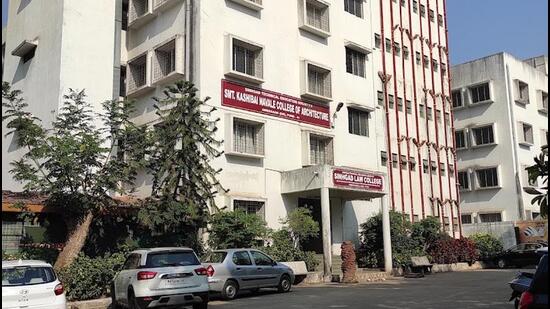
The crisis is seen as the culmination of years of financial distress, during which the society allegedly failed to meet its obligations towards employees and students.
The state government’s Directorate of Technical Education (DTE) has appointed two administrators to oversee the institutions. Pramod Naik, joint director, technical education (Pune region), will manage 25 technical institutes, while Shailendra Deolankkar, director of higher education, will oversee the society’s seven colleges.
Naik said that the appointments had been made following directions from the Bombay High Court and were aimed at safeguarding students’ interests.
“Parents must be concerned about the future of students across Sinhgad campuses. There is no need for them to worry. The government is now managing these institutions and wards should not be shifted to other institutions,” Naik said.
Aggressive expansion, mounting debt
{{/usCountry}}Aggressive expansion, mounting debt
{{/usCountry}}According to sources within STES, the roots of the society’s financial troubles can be traced back more than a decade, when its aggressive expansion across Pune, Lonavla and other parts of Maharashtra left it struggling to service its bank loans.
In 2017, the Central Bureau of Investigation (CBI) searched STES offices in connection with an alleged fraudulent loan of ₹58.04 crore obtained from the Central Bank of India for a dental college project. Loan defaults also prompted action by bank, including notices concerning the society’s properties.
As its financial position slided, STES struggled to pay salaries to its employees, including teaching and non-teaching staff.
Between late 2017 and early 2018, more than 3,000 teaching and non-teaching employees went on strike, bringing classes and examinations to a halt. Although the management promised to clear the dues in phases, the Covid pandemic aggravated the situation, disrupting operations and regular salary payments. Arrears under the Sixth and Seventh Pay Commissions also remained unpaid.
HC raises questions over fund diversion
The society’s financial management came under further scrutiny when the Bombay High Court, while hearing petitions filed by STES employees on November 10 this year, raised serious concerns over the alleged diversion of funds collected through student fees.
The court questioned why salaries had remained unpaid for prolonged periods despite the institutions continuing to admit students and collect fees. It also raised concerns over the trustees’ other business interests and the possibility of funds being transferred outside the country.
Referring to the income tax returns filed by the trustees, the court observed that they were involved in several other businesses and held shares in a large number of companies.
“The possibility of the money being siphoned out of the country cannot be ruled out. One of the trustees, being a non-resident Indian, is stated to be residing in Dubai,” the court observed, adding that this could be a “major reason for all chaos”.
DTE officials also pointed out that the STES management had failed to clear employees’ dues despite giving assurances during two meetings held at Mantralaya.
₹400 crore in pending salaries, arrears
The society is estimated to owe around ₹400 crore in unpaid salaries and Sixth and Seventh Pay Commission arrears to more than 6,000 teaching and non-teaching employees. Hundreds of retired employees are also struggling to secure their pending retirement benefits and gratuity.
The prolonged financial crisis has taken a severe toll on employees. Several experienced faculty have left STES institutions, while student strength has reportedly declined at some campuses.
More than 220 employees have approached the court seeking intervention to secure their pending salaries. Employees have also claimed that more than a dozen staff members died by suicide amid the prolonged financial distress, while many others were forced to take up odd jobs to support their families.
Shubham Phalake, faculty member, Sinhgad institute in Lonavla, said employees had been struggling with financial uncertainty for years and that the situation had also affected students.
“Since 2016, we have been facing financial difficulties, with salaries often delayed by several months. This has taken a severe mental toll on us. We have been regularly protesting to highlight the issue. The situation has also affected students, resulting in academic losses, while the continuous reshuffling of staff has created uncertainty,” he said.
Gajanan Patil, who resigned from Sinhgad Institute, Kondhwa, said employees had been fighting for their pending salaries for several years. The prolonged crisis had driven experienced and qualified faculty away from the institutions.
“Once considered among the leading colleges, Sinhgad has witnessed a decline in the quality of its faculty as well as student strength, which has fallen from around 480 to just 60 in some departments,” he said, warning that this could adversely affect future admissions.
Management assures cooperation
The administrative takeover is expected to bring the affected institutions under direct government supervision. The immediate priority will be to ensure continuity of academic activities, protect students’ interests and address concerns over the functioning of the campuses.
STES founder MN Navale said the management would comply with the court’s directions and extend cooperation to the government authorities.
“We have always abided by the orders passed by the Hon’ble Bombay High Court and will continue to do so. We will extend our full cooperation to the DTE and the authorities in implementing the decision to take over the management of our colleges. We have no other option but to comply with the court’s directions and whatever further decisions are taken by the authorities,” Navale said.