
 E-Paper



IT employees struggle with basic infrastructure in Pune’s Hinjewadi area
The elected members have failed to provide basic infrastructure, including water, waste management, traffic management, power supply, and security for the lakhs of IT employees living in the plush towers located in the vicinity

 Prefer HTon Google


The Hinjewadi IT Park, one of India’s largest IT clusters with over 5 lakh employees, has been deprived of basic amenities and facilities for a while. The Rajiv Gandhi Infotech Park consists of three phases and houses about 150 to 200 IT companies, most of which are multinational corporations. The IT Park boosted real estate in its vicinity, and several elite societies and towers came up in the nearby villages like Hinjewadi, Mhalunge, Maan, Marunji, Punawale and Wakad.
The local administration is divided into Pune Municipal Corporation (PMC), Pimpri Chinchwad Municipal Corporation (PCMC), Pune Metropolitan Regional Development Authority (PMRDA), Maharashtra Industrial Development Corporation (MIDC) and Gram-Panchayat.
The Hinjewadi IT Park and surrounding villages, where the techies dwell, are mostly part of the Baramati Lok Sabha constituency. The IT Park employees are among the highest tax-paying workforces in these areas but suffer to get basic infrastructure. However, considering the long-pending issues, IT professionals are sceptical about their MP meeting their expectations.
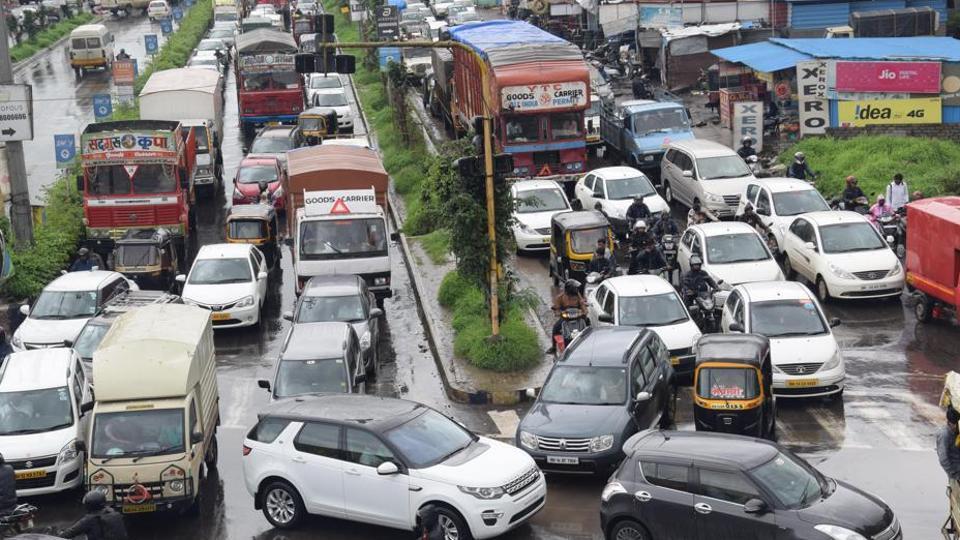
Thus far, the elected members have failed to provide basic infrastructure, including water, waste management, traffic management, power supply, and security for the lakhs of IT employees living in the plush towers located in the vicinity.
Pavanjit Mane, an IT employee said most of the IT Park lacks basic infrastructure.
“There are huge residential towers and townships which don’t get a regular water supply. The residents have to depend on the water tankers for drinking and domestic purposes and spend a significant amount of money on them. Developers are granted construction permissions on the condition that they provide water for two to three years, after that the issue becomes perennial,” he said.
As per the locals, several prominent roads in the Hinjewadi area lack pavements. The existing pavements are occupied by unauthorised vendors, with no action from the local authorities. In addition, the safety of women employees working in these companies should be given priority by the elected members.
Another techie, Vijay Patil said, the Metro is a welcome move from the government but will cater to only 10% of the commuters.
“There are no good roads, and the area lacks planning, and the recently developed underpass is not up to the mark and not sustainable. Politicians make big promises ahead of elections but fail to fulfil them later. The internal roads in the IT park area are in bad shape and dilapidated. Traffic congestion is a big problem and public transport should be improved,” Patil said.
Deepa Dhariwal, an IT Employee and resident of Marunji said, there are frequent power cuts in the society which has over 850 residents living in it.
“Every day, the power outages begin at 8.30 am, and when contacted, the MSEB employees respond rudely and unprofessionally. Children and the elderly find it difficult to live without electricity in such extreme temperatures. The situation is similar in other societies, and it is affecting the employee’s work,” she stated.


