If you live in Pune long enough, you begin to notice a pattern. Big announcements arrive with confidence. Detailed presentations follow. Maps circulate on social media. Expectations rise. And then — silence, revisions, delays or sometimes a complete rethink.
It is not that Pune lacks ideas. In fact, the city may be one of the most ambitious when it comes to infrastructure ideation. The problem lies somewhere between planning and execution — a gap that commuters experience every single day.
The latest example comes from the proposed Metro Phase-4 corridor, meant to connect Khadakwasla to Kharadi through some of the city’s most congested stretches. The project itself promises relief to growing suburbs, but the plan has already hit a familiar hurdle: land for the metro car shed. The proposed site inside the Central Water and Power Research Station (CWPRS) campus has run into objections, forcing authorities to revisit the proposal and seek intervention from higher ministries.
For citizens, the question is simple — shouldn’t land availability be settled before announcing routes and budgets? When core requirements remain unresolved, timelines automatically become uncertain. The project exists, but only on paper for now.
Then there is Hadapsar, a junction that perfectly reflects Pune’s planning dilemmas. Consultants studying future traffic solutions have suggested that existing flyovers at Gadital and Magarpatta may need to be demolished to make way for a larger multi-level corridor planned for the future. These are not decades-old structures; they were built as solutions to earlier congestion. The possibility that relatively new flyovers may be dismantled raises an uncomfortable thought: are we solving problems permanently, or just temporarily rearranging them?
{{/usCountry}}Then there is Hadapsar, a junction that perfectly reflects Pune’s planning dilemmas. Consultants studying future traffic solutions have suggested that existing flyovers at Gadital and Magarpatta may need to be demolished to make way for a larger multi-level corridor planned for the future. These are not decades-old structures; they were built as solutions to earlier congestion. The possibility that relatively new flyovers may be dismantled raises an uncomfortable thought: are we solving problems permanently, or just temporarily rearranging them?
{{/usCountry}}For daily commuters stuck at Hadapsar signals, such debates sound distant. What they see instead is infrastructure that never quite delivers the relief it promised.
Another ambitious proposal is the Katraj–Yerawada underground tunnel proposed by PMRDA — a project envisioned as a long-term solution to cross-city traffic movement. On paper, it could transform north-south connectivity by allowing vehicles to bypass surface congestion altogether. But beyond the concept stage, clarity on execution timelines, funding structure and implementation phases remains limited. Like many Pune projects, it exists more as an idea people discuss than as construction people witness.
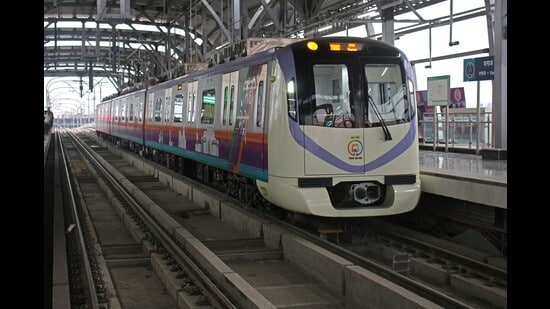
The gap between announcement and action is not new. Pune Metro itself tells a similar story. While operational stretches are now running and have improved connectivity in certain corridors, several extensions continue to move slowly through approvals, design changes and logistical challenges. Each delay may have technical reasons, but collectively they create an impression of a city always preparing for the future but rarely catching up with the present.
Even smaller projects reflect the same pattern. Junction redesigns take years. Flyovers open but fail to eliminate bottlenecks entirely because connecting roads remain unchanged. Road widening begins but pauses midway due to utilities, permissions or contractor issues. Residents learn to adjust rather than expect completion on schedule.
What makes Pune’s situation unique is that planning itself is rarely the issue. Reports are prepared, consultants are appointed, and visions are articulated clearly. The weakness appears in coordination — between agencies, departments and levels of government. A project approved by one authority may depend on land controlled by another. Environmental permissions surface late. Utility shifting begins after construction starts rather than before.
The result is a city that feels permanently under construction yet never fully transformed.
From a bystander’s perspective, Pune often seems to move in loops. A problem is identified, a solution is built, and a few years later a bigger solution is proposed because the earlier one was insufficient. Instead of long-term sequencing, development happens in layers that sometimes contradict each other.
Meanwhile, the city keeps growing faster than its infrastructure. Kharadi, Wagholi, Hadapsar and Baner have expanded rapidly, but connectivity upgrades trail behind population growth. Traffic volumes rise while solutions remain stuck between proposal and implementation.
None of this means Pune lacks capability. The city has completed complex projects before. What it seems to lack is urgency in execution and realism at the planning stage. Announcements come early; groundwork follows slowly.
Perhaps Pune’s challenge is not slow planning alone, nor poor execution alone, but the disconnect between the two. Plans imagine the city ten years ahead, while execution struggles with today’s constraints.
For commuters, however, theory matters less than experience. They judge projects not by draft project development plan (DPRs) or foundation stones but by whether travel time actually reduces.
Until planning and execution begin moving at the same speed, Punekars may continue to live with a familiar feeling — that the city is always on the verge of improvement, but never quite there yet.