
 E-Paper



New study maps rainfall patterns over Western Ghats
The research examines the diurnal cycle, how rainfall intensity changes over 24 hours, and finds that monsoon rain over the Western Ghats is unevenly distributed through the day.

 Prefer HTon Google


Pune: A study by scientists at the Indian Institute of Tropical Meteorology (IITM) offers new insights into how rainfall varies throughout the day across the Western Ghats during the Indian summer monsoon, with implications for improving weather forecasts and climate models.
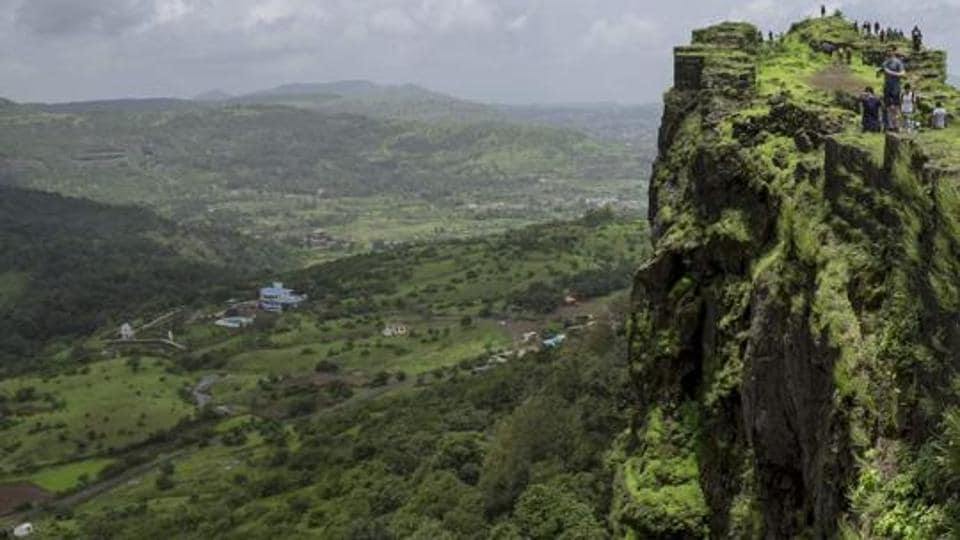
Titled “Diurnal characteristics of rainfall over the Western Ghats during the Indian summer monsoon,” the study was published in Environmental Research Communications on April 15. It is authored by Utkarsh Verma, Samir Pokhrel, Patita Kalyana Sahoo, B. Abida Choudhury, Shivamurthy Yashas, Hemantkumar S. Chaudhari, Mahen Konwar and Subodh K. Saha.
The research examines the diurnal cycle, how rainfall intensity changes over 24 hours, and finds that monsoon rain over the Western Ghats is unevenly distributed through the day. Instead, it follows consistent patterns, with peak rainfall occurring at specific times such as late afternoon or night, depending on the region.
Interactions between large-scale atmospheric circulation and local thermodynamic conditions drive these patterns. A key factor is the Low-Level Jet (LLJ), a strong stream of winds flowing over the Arabian Sea that transports moisture towards the Indian subcontinent. The Somali Jet, closely linked to the LLJ, further enhances this moisture flow during the monsoon.
When these moisture-laden winds strike the Western Ghats, they are forced upward by the terrain, triggering cloud formation and rainfall. Variations in the strength and position of the LLJ influence both the amount and timing of rainfall. Local factors such as surface temperature, heat distribution and atmospheric moisture further shape these patterns.
By combining observational data with atmospheric analysis, the researchers show how these processes determine both the intensity and timing of rainfall within a day, an aspect often overlooked in favour of daily or seasonal totals.
The findings could help improve numerical weather prediction and climate models, particularly in complex terrains like the Western Ghats, where accurately capturing sub-daily rainfall is critical.
Lead author Verma Utkarsh said the study strengthens the basis for better forecasting.
“Understanding how rainfall evolves within a day is crucial for improving model performance. Our study provides insights into the physical processes that govern these variations, which can be incorporated to make forecasts more accurate and robust,” he said.
Beyond forecasting, the research adds to the understanding of the Indian summer monsoon, which underpins agriculture, water resources and livelihoods. Linking rainfall timing with atmospheric processes helps connect large-scale monsoon dynamics with local weather events.
The findings are particularly relevant for the Western Ghats, a region prone to intense rainfall, landslides and floods. Better prediction of when rainfall will peak within a day could support more effective planning and disaster preparedness.
Overall, the study shows that monsoon rainfall over the Western Ghats follows clear, predictable intra-day patterns, knowledge that could enhance forecast accuracy and strengthen resilience to monsoon-related risks.


