Researchers from Pune-based Deccan College and IIT Kharagpur have undertaken a study to understand the human response to a similar climate change that could have affected the Indus Valley Civilisation. The project aims to establish biological relations, if any, to climate change that is believed to have contributed to the downfall of the civilisation starting approximately 2,000 BCE.
According to researchers, the project will study isotopes in land shells from archaeological sites to retrieve data on past changes in seasonality over century-level timescales.
Aarti Deshpande-Mukherjee, archaeologist, Deccan College, is the principal investigator of the project along with professor Anindya Sarkar from the geology department of IIT Kharagpur, co-investigator in the project. Sushama Deo, a retired professor at Deccan College is also one of the investigators in the project.
The research will also involve researchers from the physical research laboratory, Kutch University, and the Archaeological Survey of India.
Mukherjee said the main aim of the project is to study the climate change, environment and various other factors of the civilisation which exists thousands of years before.
“Also, how the people responded to the change of climate and weather conditions during that period was it similar to the existing conditions or was completely different. All this is going to be a part of our study and when the results will come then only we can tell more about it. For this, we have identified two sites in our country - Gujarat and Haryana state. It is a three years project and will probably complete by the end of 2024,” she said.
The project was sanctioned and to be funded by the Science Engineering Research Board (SERB) under the Department of Science and Technology (DST) of the Government of India.
{{/usCountry}}The project was sanctioned and to be funded by the Science Engineering Research Board (SERB) under the Department of Science and Technology (DST) of the Government of India.
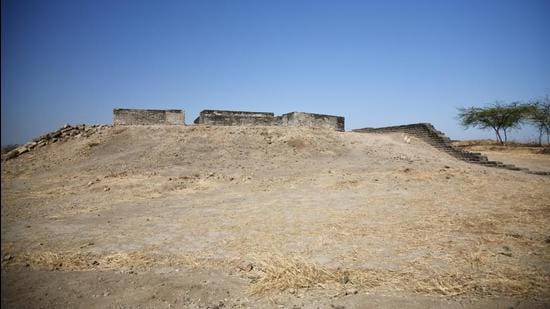
{{/usCountry}}“Today is the world of collaboration and for such research and findings, we need to work along with other institutes in the country. So the project is done in integration by Deccan College with IIT Kharagpur. It is a unique project to work on, we have already started the work on it, one of which is Bhirana in Haryana and Dholavira from Gujarat. This is an interesting subject to work on, people have a curiosity about how was civilisation in our country around 4,000 years back and what happened to it later. It will be a fruitful project and interesting results will come out once the studies are completed,” she said
Recently, Dholavira was tagged as a United Nations Educational, Scientific and Cultural Organization (UNESCO) World Heritage site, becoming the third such site in Gujarat.