The Bombay Natural History Society (BNHS) on Saturday, October 17, launched a conservation initiative at Bhigwan in Pune district to revive native fish species that have become rare or are on the verge of extinction in the Ujani reservoir; and restore aquatic plants that have disappeared from the ecosystem. Rising water pollution and indiscriminate commercial fishing using small-mesh nets have severely affected the fish population in the Ujani reservoir over the past several years. According to information shared by the BNHS, around 35 native fish species in the reservoir have become locally extinct, while another 40 species are on the verge of disappearing. The loss of aquatic vegetation has further disrupted the food chain and affected the ecological balance of the reservoir.
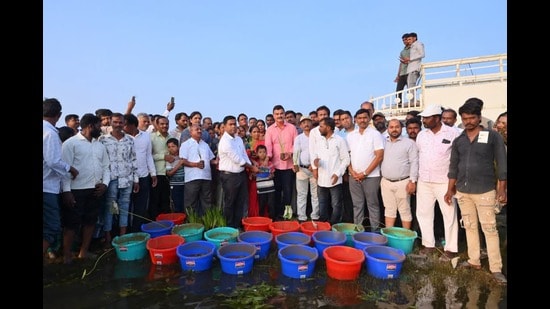
Maharashtra agriculture minister and Indapur MLA Dattatray Bharane was the chief guest at the programme which focused on restoring the reservoir’s aquatic biodiversity, strengthening the ecological balance, and creating sustainable livelihood opportunities for local fishermen. A key highlight of the initiative was the planned reintroduction of the ‘Deccan Mahseer’, a rare freshwater fish popularly known as the ‘tiger of the river’ or the ‘tiger of Ujani’, along with indigenous species such as Bobari, Kawadas, Rohu, Catla and Mrigal. The programme was undertaken under BNHS’s wetland ecology and restoration and fisheries development programme.
Explaining the scientific rationale behind the initiative, Dr Unmesh Katwate, assistant director and senior researcher at BNHS, said, “The Ujani reservoir is an important aquatic ecosystem, but increasing pollution and unregulated fishing practices have placed its native fish diversity under severe pressure. The disappearance of indigenous fish species and aquatic plants has affected the ecological balance of the reservoir. Through this conservation programme, we aim to restore the native fish population by introducing fish seed of species such as the Deccan Mahseer, Bobari and Kawadas, along with Rohu, Catla and Mrigal. The Mahseer is particularly significant because it is an indicator of a healthy riverine ecosystem and has suffered a decline across several water bodies in Maharashtra. The fish seed has been conserved and bred with support from Tata Power’s facility in Lonavala, while native fish from other locations have also been collected and bred for the programme. Alongside fish stocking, the restoration of aquatic plants is equally important because these plants provide shelter and breeding grounds for fish and help maintain the ecological balance. We hope that the phased restoration of these species will help revive Ujani’s biodiversity and provide a more sustainable foundation for the livelihoods of local fishing communities.”
The BNHS officials and local fishermen expressed confidence that restoring native fish populations and aquatic vegetation would help improve the reservoir’s biodiversity while supporting fishing-related livelihoods in the long term. Bharat Mallaw, a local fisherman, was among those associated with the initiative. The programme sought to go beyond the immediate release of fish seed by promoting the recovery of the wider aquatic ecosystem, which is essential for maintaining fish populations and supporting communities dependent on the reservoir. However, the long-term success of the initiative will depend on controlling pollution; preventing destructive fishing practices; and ensuring that the released fish can survive, breed and establish sustainable populations.
{{/usCountry}}The BNHS officials and local fishermen expressed confidence that restoring native fish populations and aquatic vegetation would help improve the reservoir’s biodiversity while supporting fishing-related livelihoods in the long term. Bharat Mallaw, a local fisherman, was among those associated with the initiative. The programme sought to go beyond the immediate release of fish seed by promoting the recovery of the wider aquatic ecosystem, which is essential for maintaining fish populations and supporting communities dependent on the reservoir. However, the long-term success of the initiative will depend on controlling pollution; preventing destructive fishing practices; and ensuring that the released fish can survive, breed and establish sustainable populations.
{{/usCountry}}Also present on the occasion were BNHS director Kishor Rithe; H C Jehangir of Jehangir Hospital; Vivek Vishwasrao, head of biodiversity at Tata Power; Anurag Mishra of the Cipla Foundation; Vijay Shikhare, regional deputy commissioner of the fisheries department; BNHS scientist Dr Sujit Narwade; and local fishermen, among others.
About two months earlier, a review meeting was held at the Solapur district collector’s office in the presence of Pravin Singh Pardeshi, chief executive officer of the Maharashtra Institution for Transformation (MITRA). During the meeting, a decision was taken to make ₹16 crore available to the district administration through MITRA for conservation of biodiversity in the Ujani reservoir, and to support the livelihoods of local residents. The proposed funding was expected to provide additional impetus to conservation efforts in the region.