A water crisis is looming large in Maharashtra as water levels in dams across the state have dropped to 32.72% of their total storage capacity. And Pune is no exception with its four dams namely Khadakwasla, Temghar, Panshet and Varasgaon holding only 10.31 TMC (thousand million cubic feet) of water as against 12.91 TMC on the corresponding day last year.
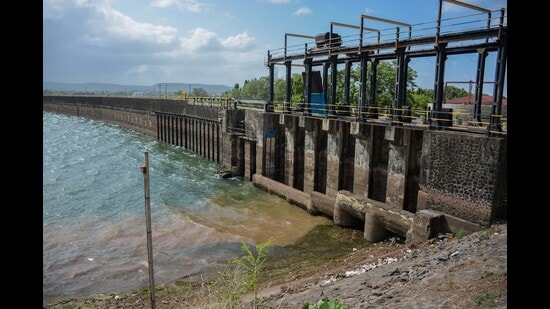
A senior official of the state water resources department said, “As compared to last year, this summer seems to be hotter, further exacerbating the water shortage. Less rainfall this year has contributed to the decline in dam water levels. Currently, 138 major dams across the state hold only 32.72% of their total storage capacity (a more than 7.1% decrease from last year).”
Water tankers to the rescue
With rising mercury levels, water scarcity is only becoming more severe. The demand for water tankers is increasing as villages struggle to access water. In Pune city, the Pune Municipal Corporation (PMC) has increased water tanker trips in the 34 merged villages due to complaints of inadequate water supply. Presently, the PMC is sending 300 water tankers to 11 out of the 34 merged villages and 800 water tankers to the remaining 23 villages to address the demand for water in areas such as Sus, Mahalunge, Pisoli, Holkar Wadi, Phursungi, Uruli and Catari Bu. However, water continues to be in short supply in these areas despite the efforts. So much so that the PMC has increased tanker trips by 10%.
A majority of the 1,799 villages in the Pune division now depend on tanker water supply. Similarly, 33 villages in the Konkan division; 1,179 villages in the Nashik division; 697 villages in the Chhatrapati Sambhajinagar division; and 26 villages in the Amravati division depend on tanker water supply. Whereas the Nagpur division has not still resorted to tanker water. As per the water supply and sanitation department statistics, 1,417 tankers are presently delivering water to 1,153 villages and 2,583 settlements across Maharashtra. Every week, around 100 to 150 new villages are being added to the list.
{{/usCountry}}A majority of the 1,799 villages in the Pune division now depend on tanker water supply. Similarly, 33 villages in the Konkan division; 1,179 villages in the Nashik division; 697 villages in the Chhatrapati Sambhajinagar division; and 26 villages in the Amravati division depend on tanker water supply. Whereas the Nagpur division has not still resorted to tanker water. As per the water supply and sanitation department statistics, 1,417 tankers are presently delivering water to 1,153 villages and 2,583 settlements across Maharashtra. Every week, around 100 to 150 new villages are being added to the list.
{{/usCountry}}Dwindling water reserves
The water storage in various divisions of the state is certainly a cause for concern. The Marathwada division has the lowest water storage at 19.36%; followed by the Pune division at 36.34%; Nagpur division at 48.84%; Amravati division at 49.62%; Nashik division at 38.17%; and Konkan division at 50.50%. Given the limited water storage in dams and the increasing demand for drinking water, there is a possibility of restrictions on irrigation, especially in Pune, Nashik, and some parts of Marathwada.
Critical dam water levels
Out of 138 major dams in Maharashtra, 17 are completely dry; 23 have less than 10% water storage; 20 have more than 50% water storage; while the rest have 20 to 40% water storage. This suggests that the state may face severe water scarcity this year.
Chances of loadshedding
The Koyna dam for instance, has only 47.52% usable water storage as against 50.92% during the corresponding period last year. This could lead to limitations on power generation as the demand for water increases during the monsoon. Consequently, there may be discussions about diverting water from electricity generation to other purposes, potentially leading to load regulation, particularly in rural areas. Koyna generates 1,920-megawatt of hydraulic power. If the water level goes down, it affects power generation.