PUNE: Maharashtra has seen an 86.6% rise in water tanker deployment over the past month, with the number of villages requiring emergency water supplies increasing by more than 75%, according to the state drinking water and sanitation department.
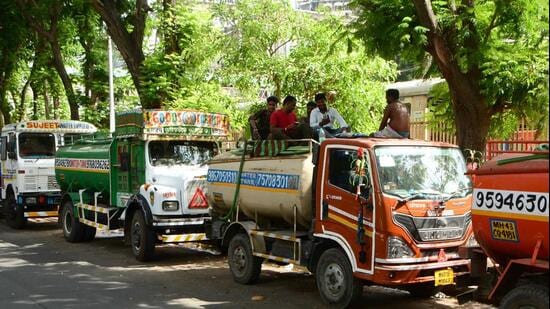
As many as 768 tankers are currently deployed across the state, compared with 411 on September 13. The number of villages needing tanker supplies in the state has risen to 635 from 362 in the same period, reflecting worsening water scarcity in rural areas.
Five districts account for most tanker deployments, with Chhatrapati Sambhajinagar reporting 169 tankers, Beed 166, Ahilyanagar 161, Solapur 123 and Jalna 29, according to department officials.
The highest number of villages dependent on tanker supplies are in Ahilyanagar (160), Solapur (130), Beed (103) and Chhatrapati Sambhajinagar (94).
State drinking water and sanitation minister Gulabrao Patil told HT that demand for water tankers was rising sharply across districts.
“During the same period in the previous two years, there was no demand for water tankers from any district. The state government is prepared to provide as many tankers as the districts require to meet people’s water needs,” Patil said.
Chief minister Devendra Fadnavis had also warned of the growing need for water tankers when he visited Nashik a few days ago to attend a programme.
{{/usCountry}}Chief minister Devendra Fadnavis had also warned of the growing need for water tankers when he visited Nashik a few days ago to attend a programme.
{{/usCountry}}The respective district administrations assess the need for tankers, while the state drinking water and sanitation department provides funds to hire them.
A department official, who requested anonymity, said the demand for tankers was increasing sharply every week.
“By May-June next year, the demand for water tankers could be substantial, comparable to the situation the state faced in 2016 and 2019,” the official said.
According to department data, 20 districts have not yet deployed water tankers. The official said water remained available in rural areas of these districts through sources such as wells.
“Once these sources run dry, the local administrations will have to hire water tankers,” the official added.