...
...
Next Story

Regularising illegal homes will lead to more cases, HC tells Maharashtra govt

The government’s policy seeks to regularise all such illegal structures in the state that were constructed before December 31, 2015.

Published on: Mar 8, 2017, 00:04:28 IST
Hindustan Times | By , Mumbai
Prefer HTon Google
Advertisement

The Bombay high court on Tuesday said that the Maharashtra government’s proposed regularisation policy for unauthorised constructions across the state would create many “loopholes” in the system and lead to “increased litigation.”
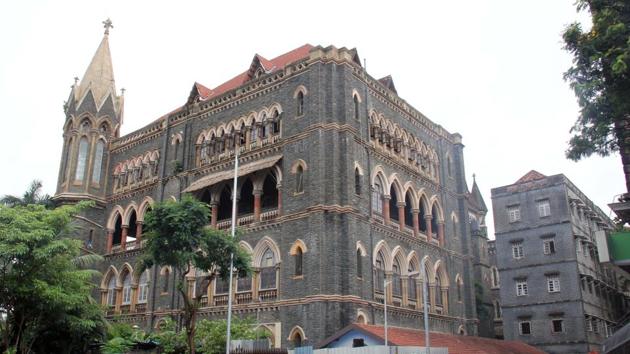
The Bombay high court on Tuesday said that the Maharashtra government’s proposed regularisation policy for unauthorised constructions across the state would create many “loopholes” in the system and lead to “increased litigation.” (HT photo)

A division bench of AS Oka and Anuja Prabhudessai were hearing a public interest litigation on rampant unauthorised construction in the Digha area in Navi Mumbai. In compliance with previous orders and its own submissions, the state had submitted its regularisation policy and had sought the court’s permission to implement it.

The policy seeks to regularise all such illegal structures in the state that were constructed before December 31, 2015.

The court had earlier rejected the state’s previous proposed regularisation policy terming it arbitrary. Thereafter, the government had come out with another policy on July 2016.

“We fear that the proposed regularisation policy will lead to increased litigation by creating so many loopholes for people to argue,” said Justice AS Oka.

Pointing out various clauses of the policy that allow for regularisation of illegal constructions on state owned or central government owned land, the court questioned the implications of the policy and gave several examples of how it could be disastrous.

“Does this not sound disastrous that construction on dumping ground can be regularised by issuing a No Objection Certificate by the civic body?” the bench said.

Deo however, said that the policy was in “compliance with the Development Control (DC) norms and Maharashtra Regional and Town Planning (MRTP) Act.”

The bench though, questioned why the government needed to bring about a policy if everything could be “regularised under existing rules and regulations.”

“If you are not doing anything contrary to rules then what is the need for the policy. Can we record that no construction will be regularised in violation of DC rules or MRTP Act?” the bench said.

Deo said that the proposed policy was brought about to ensure uniformity on what could be regularized and the compounding charges which can be levied.

Arguments in the matter will continue on Wednesday.

Read: No penalty for poor who live in illegal structures in Maharashtra

 
ABOUT THE AUTHOR
Ayesha Arvind

Ayesha Arvind is a Senior Assistant Editor specialising in legal and judicial reportage. She covers High Courts and tribunals across southern India, and believes that important legal developments do not only come from New Delhi. Her work focuses on bringing significant decisions and developments from the region to a wider audience and explaining what they mean beyond the courtroom. She tries to make legal material accessible by translating legal jargon into clear, readable prose and putting pleas, lawsuits, judgments and legal developments in context. She also looks at their political realities and practical consequences for people. Ayesha is committed to the standards of integrity journalism requires. She places a premium on accuracy and fairness, and believes that journalism's powerful voice must be tempered by humility and a sense of proportion. Over almost two decades in journalism, she has covered law and order, civil law, crime and other areas of legal affairs. Her work includes breaking news, legal affairs stories, online analysis and commentary. Ayesha is deeply interested in the law, court judgments and the Constitution because they shape everyday life. She believes every citizen should have a basic understanding of them. What she enjoys most about covering courts is that every story brings something new to learn.

Read nation and international latest News from India and around the world. Stay informed with real-time updates across top Indian cities like Mumbai, Bengaluru, Delhi, along with top national developments on Hindustan Times.
SHARE THIS ARTICLE ON
Notifications

Get breaking alerts directly from the newsroom

Notifications are on!You'll be notified when news breaks