Once upon a time, my salary used to be paid in currency notes. In a white envelope — the sort that opens at the side and not along the length. This was in the early 1980s; I was working at a newspaper in Calcutta; and on the first day of every month, an office peon would hand me the envelope and have me sign a ledger to acknowledge that I’d received it. Everyone got paid in cash then. For the newsroom’s nether form of pond life like us, the pay was too paltry and, therefore, tax-exempt; but even those who had to pay taxes got paid in cash. I don’t know who benefited from this — the company we worked for, perhaps, but certainly not us because the cash would evaporate with remarkable speed every month.
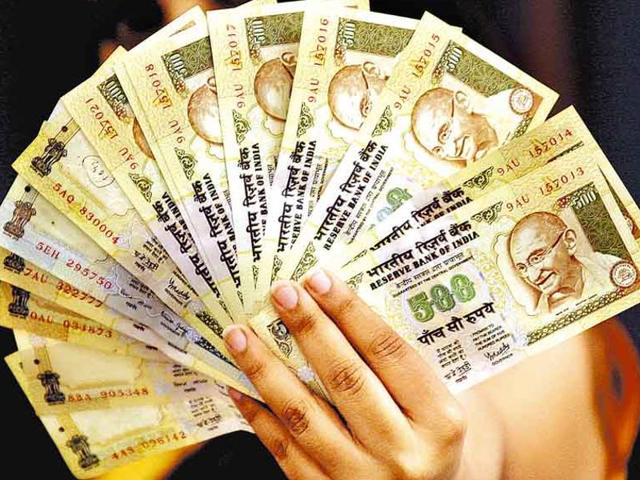
Those days everything was bought in cash. There were no credit cards; cheque payments weren’t in vogue; and, in any case, you got paid in cash. That changed, of course, and in a few years, at least for salaried employees across industries, cheques and bank transfers replaced cash. But have things really changed? Last weekend, while shopping for a new laptop for my daughter, the sales guy at the store asked me whether I’d pay in cash or by card and when I said card, he seemed noticeably disappointed. The thing is cash continues to be the dominant mode of transactions in India — never mind what you’re buying. And much of the cash that flows around in such transactions are from incomes that are not disclosed to the government in order to avoid paying taxes.
Nearly two-thirds of India’s GDP, ($1.4 trillion or Rs 90 lakh crore), is a cash economy where buying goods, paying for services, or paying wages are all in cash. And while some of this is legitimate tax-paid money, quite a bit of it is not. Just how big is India’s black money economy? In 2011, three government think tanks were asked to estimate that. Their final report remains unpublished. But other, unauthorised estimates peg it at 25-30% of GDP or $600 billion annually. The real loser is, of course, the government: it is deprived of an estimated $200 billion (or Rs 13 lakh crore) in yearly tax revenues because of black money. Consider this: India’s revenue, including indirect and direct taxes, is currently around Rs 9.1 lakh crore; if the black money that is swirling in the economy is reined in and accounted for, then (albeit theoretically) the government could declare a tax-free year!
{{/usCountry}}Nearly two-thirds of India’s GDP, ($1.4 trillion or Rs 90 lakh crore), is a cash economy where buying goods, paying for services, or paying wages are all in cash. And while some of this is legitimate tax-paid money, quite a bit of it is not. Just how big is India’s black money economy? In 2011, three government think tanks were asked to estimate that. Their final report remains unpublished. But other, unauthorised estimates peg it at 25-30% of GDP or $600 billion annually. The real loser is, of course, the government: it is deprived of an estimated $200 billion (or Rs 13 lakh crore) in yearly tax revenues because of black money. Consider this: India’s revenue, including indirect and direct taxes, is currently around Rs 9.1 lakh crore; if the black money that is swirling in the economy is reined in and accounted for, then (albeit theoretically) the government could declare a tax-free year!
{{/usCountry}}The good news is that the government is pro-active. Finance minister Arun Jaitley recently wrote about how cash transactions would be de-incentivised and plastic would be encouraged. The culture of cash has deep roots in India and tax avoidance became a habit among its wealthiest and its well-off chiefly because of the steeply progressive tax rates in the earlier decades, such as the 1980s. Income tax rates have since become moderate but old habits seemingly don’t die easily. About half of India’s black money deals are said to be in real estate transactions, where “How much in white? And how much in black?” are routine questions encountered by anyone who tries to transact. But even consumer durables, cars, and jewellery are routinely bought with black money.
Weaning Indians off cash isn’t going to be easy. Among the things proposed are tax benefits for those who pay using plastic; a ceiling and a charge on cash deals above a threshold; tax rebates for merchants who report more sales via plastic; and mandatory PAN details for high-value purchases. Both carrots and sticks will have to be deployed if the scourge of black money is to be eradicated. But uphill though that task may seem, there are silver linings — such as the Pradhan Mantri Jan-Dhan Yojana. Hidden behind this ambitious plan for financial inclusion is RuPay, India’s own payment gateway system. Of the 585 million debit cards in use by Indians, 200 million are RuPay cards, used mainly by the poor. In fact, adoption of the cashless culture could come from unexpected quarters. Last month, our domestic help requested that I electronically transfer her monthly wages instead of paying her by cash. It’s convenient and would help her save, she said. I had a flashback of that monthly ritual of the white envelope from three decades ago.
Read More
Govt to make PAN must for cash spending beyond a limit: Jaitley
Govt proposes tax benefits for credit and debit card payments
Those who didn’t use black money window will ‘regret’, says govt
More black money stashed inside country than abroad: SIT member