Kolkata: Rishabh Pant has built much of his Test career by refusing to play the game conventionally. If there is a ball to hit, he hits it. If there is a field to unsettle, he tries to unsettle it. If convention says a wicketkeeper should first keep wickets and then bat, Pant’s emergence flirted with it from the onset. It’s an approach that has made him one of India’s most valuable Test cricketers, as well as one of their most exasperating.
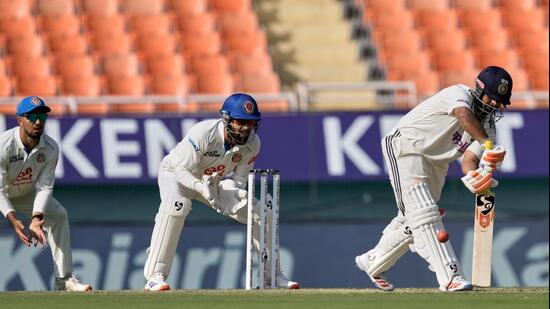
Last November, at the Barsapara Stadium, Gautam Gambhir offered the clearest indication yet that India’s patience with that contradiction may have limits. During an unusually fiery 15-minute press conference, the head coach spoke of players needing to understand the difference between playing with freedom and “playing to the gallery”. He didn’t name Pant. He didn’t have to. The subtext was difficult to miss.
For much of Pant’s India career, the argument in his favour was simple—who else but him could pull off stuff like that? His batting was sufficiently transformative, his wicketkeeping had improved sufficiently and his match-winning record was so compelling that India could afford the occasional indiscretion. Pant was not merely India’s wicketkeeper. He was a tactical weapon. Perhaps he still is but that monopoly has now disappeared.
The more immediate threat is Dhruv Jurel, who has gone about establishing himself with almost none of Pant’s noise. Jurel’s value is precisely that he doesn’t need to dominate a game to influence it. His wicketkeeping is assured, his temperament has impressed and his batting has suggested that he can occupy the No 6 or No 7 role without India having to compromise elsewhere.
{{/usCountry}}The more immediate threat is Dhruv Jurel, who has gone about establishing himself with almost none of Pant’s noise. Jurel’s value is precisely that he doesn’t need to dominate a game to influence it. His wicketkeeping is assured, his temperament has impressed and his batting has suggested that he can occupy the No 6 or No 7 role without India having to compromise elsewhere.
{{/usCountry}}But the more intriguing challenge comes from Ishan Kishan. He has always possessed an element of Pant’s attraction — left-handed aggression, an appetite for risk and the ability to turn a quiet passage of play into something chaotic. What has changed is the evidence that his attacking game is no longer merely potential. His performances at the T20 World Cup, followed by a productive period in domestic cricket, have strengthened the case for treating him as a serious red-ball option rather than simply another explosive white-ball batsman. That distinction matters.
India don’t need a wicketkeeper who can merely survive at Test level. Their selection increasingly revolves around the value that player can add to the batting order. Pant’s greatest advantage has always been that he can change the mathematics of a Test match. A counter-attacking 80 can be worth considerably more than a sedate hundred scored after the opposition has already controlled the game. Kishan offers a similar proposition.
Indeed, at this stage of their careers, there is an uncomfortable question for Pant: Is he still India’s go-to wicketkeeper? Former chairman of selectors MSK Prasad, under whom India had perfected the balance of making Wriddhiman Saha keep at home and Pant away, still believes Pant is non-negotiable to India’s demands.
“Don’t forget that he was the number one wicket-keeper batter in the world, I mean, a year ago,” said Prasad. “He is the only wicket-keeper batter in the history of Indian cricket to get runs in all SENA countries. So, a few innings here and there cannot write him off.”
Few can argue this point. Pant has produced extraordinary innings in the format, including overseas, in situations in which India appeared to have little chance. His record remains the standard against which any challenger must be measured. Kishan has not yet demonstrated that he can reproduce that influence over a sustained Test career. But selection is rarely about reputation alone. It is about what comes next.
RIshabh Pant one-format player at the moment
And that is where Pant finds himself in unfamiliar territory. His last ODI and T20I for India was in 2024, making him a one-format player now. That is never easy.
His method has always carried an inherent contradiction. The same instinct that allows him to dismantle a bowling attack can also expose him to unnecessary dismissals. When it works, it looks like genius. When it fails, it can look like indiscipline. The difference between the two is often a matter of timing, match situation and consequence, something that India probably realised the most during the South Africa Tests last year.
As his latest innings in the warm-up game suggest, Pant’s genius is inseparable from his willingness to take risks. The problem, from a coach’s perspective, begins when the situation demands restraint and the instinct to thrill wins. Until recently, Pant could reasonably believe that the Test wicketkeeper’s slot was his to lose. But with Jurel and Kishan actively jockeying for their seats as well, Pant may have to face some competition. Which can be good for Pant because competition could unveil a new side to him.
Pant’s greatest gift has never been his technique, it has been his ability to impose himself on a phase to drastically alter the context of a game. The next stage of his career, however, may require a different kind of judgment—knowing when to attack, and when the attack can wait. He has done that before. With the landscape rapidly changing though, Pant may want to be more consistent at it.