Harmanpreet Kaur's decision to step down as captain promises to leave a big void in the Indian women's cricket team. She played a pivotal role in transforming India into a cricketing powerhouse, a team that consistently competed for silverware across formats. With the men's team continuing to dominate, the women's side faced pressure to carve out an identity of its own. Previous captains took crucial steps in that direction, but Harmanpreet pushed this team further, moulding it into an aggressive young unit that refused to back down from challenges, both at home and overseas. India became a team that regularly fought its way into semifinals and finals, with that relentless effort eventually culminating in the 2025 World Cup triumph and finally ending the long wait for a global title.
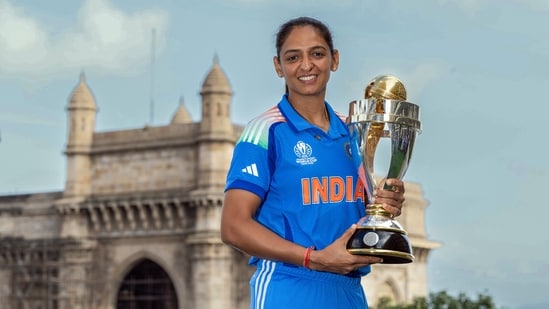
Harman faced criticism during her captaincy when things didn't go her way, but she proved to be a leader who refused to back down with her back against the wall, even when people started counting her out. There were instances when critics called for her to relinquish the captaincy and hand over the reins to a younger Smriti Mandhana, but Harmanpreet eventually stepped down on her own terms after leading India to the Asian Games gold medal recently. In all, Harmanpreet led India in five Tests, 51 ODIs and 155 T20Is.
"As a captain, I have had to make difficult decisions. Decisions that were not always understood, not always easy, and sometimes came at a personal cost. But every decision I made was with one intention - to make this TEAM better and to give other players the opportunity to grow, believe in themselves and become the best versions of themselves."
Deep Dive
What were Harmanpreet Kaur's significant achievements as the captain of the Indian women's cricket team?
Why did Harmanpreet Kaur decide to step down as captain following a BCCI meeting?
How did Harmanpreet Kaur's captaincy influence the Indian women's cricket team’s performance in international competitions?
These words in Harmanpreet's retirement note clearly depicted her conviction as a leader and the fighter she was while leading the side.
{{/usCountry}}These words in Harmanpreet's retirement note clearly depicted her conviction as a leader and the fighter she was while leading the side.
{{/usCountry}}Harman, 37, was among the first Indian women cricketers to understand the T20 style of play, a key reason for her elevation as T20I captain in 2016, a role she held for a decade. She became ODI captain in 2022 before taking charge across all formats in 2023. Under her captaincy, India began challenging the toughest opponents on overseas tours and, more importantly, started beating them. The ODI series win over England in 2022 was a statement that this Indian team was ready to face challenges away from home. It was India's first bilateral WODI series win in England since 1999. India put on another remarkable show against England by winning their first-ever WT20I bilateral series in 2025, while the first-ever Test victory over Australia in 2023 is something Harmanpreet would cherish greatly when she looks back on her captaincy in bilateral cricket.
World Cup glory stands out
The 2025 World Cup triumph, however, stands above all else in Harmanpreet's captaincy. She led India to a maiden Women's ODI World Cup title, completing a journey that had seen the team grow stronger and more competitive under her leadership. After years of coming close, Harmanpreet finally lifted the trophy that had eluded Indian women's cricket and became the captain to deliver the country's first ODI World Cup crown.
Besides the World Cup glory, Harmanpreet has also been part of several major title-winning campaigns for India over the years. She featured in India's Women's Asia Cup triumphs in 2012, 2016, 2022 and 2026, and was part of the teams that won Asian Games gold in Hangzhou in 2022 and Aichi-Nagoya in 2026. She also helped India win silver at the 2022 Commonwealth Games in Birmingham.