


 Live Score
 Cricket Teams
 Cricket Players
Is Virat Kohli the best T20 batsman in the world?
The India captain tops the charts in every important aspect, but when it comes to building an innings in a chase, there's no one to match him.

 Prefer HTon Google


Is Virat Kohli the best T20 batsman in the world?
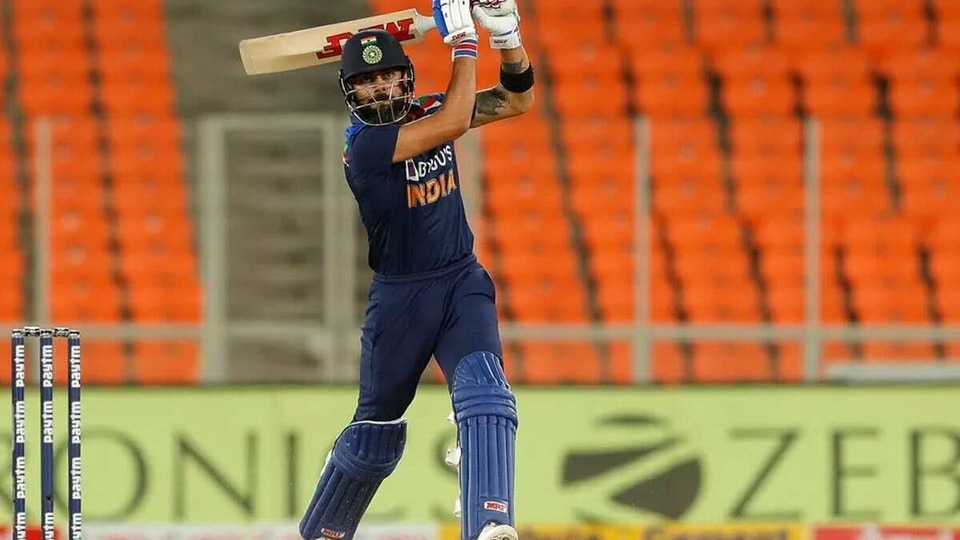
In a fickle format where 4-5 balls can change the entire course of a match and a number of top-rung contenders like Rohit Sharma, David Warner, Martin Guptill or Aaron Finch in the fray, that may seem like a tough question to answer.
Yet, a stack of numbers shows that Kohli is a T20 monster, and, if that's possible, his skills in this format are underappreciated.
Take any major criteria and Kohli sits at the top of the chart: Most runs in T20Is (3078 in 88 matches), only batsman with more than 1000 T20I runs to average above 50 (52.16), most fifties (27) and most boundaries (278). What these numbers don’t say is how Kohli achieved it by defying the norms of success in this format - he doesn’t open the batting like Sharma, Warner or Guptill, plays more conventional shots and hardly takes the aerial route like Chris Gayle, Finch or Eoin Morgan.
Also Read | 'Virat Kohli had to go down to No. 4 which is not ideal': Aakash Chopra
Kohli subscribes to a classical batting approach that ensures maximum runs at minimum risk, a methodology at odds with the usual T20 mantra of aggression, muscle and power-hitting. It’s why T20 has been less accommodating of some of the finest Test batsmen. There are exceptions like Kane Williamson or Babar Azam but no major Test batsman has slipped into this format as comfortably as Kohli. And he does it by preserving his wicket, rotating the strike and picking the gaps - just the way you would want to bat in Tests.
That was yet again on display in the way Kohli built his innings on Tuesday--scoring 28 off his first 29 balls before scoring 49 in the next 17. Only Yuvraj Singh has scored more (58 off 16 against England in 2007) in the last five overs of a T20I for India, that too because of his six sixes off one Stuart Broad over.
Also Read | 'Just beyond me': Manjrekar surprised at India's opening combination
We are so used to watching Kohli make batting look ridiculously easy that back-to-back ducks at the start of this T20I series sparked unfair chatter over his form. But no one is as hard on Kohli as Kohli himself. So he spoke to AB de Villiers who advised him to “watch the ball”. “That’s exactly what I did,” said Kohli after his unbeaten 73 in the previous match. What else? “I had to shift the focus back to the basics of the game.” Basics of the game translate to being patient, trusting one’s instincts and finding the right stroke for every delivery. Time-consuming on the onset, these basics help Test greats like Kohli make the seamless transition between facing pace or spin, on quick or slow pitches, in big or small grounds, converting them into the run machines T20 cricket craves.
Let's go back to Tuesday’s match. Watch Hardik Pandya, one of the most hyped T20 batsmen, struggle against Jofra Archer’s slowers in the 19th over. Now rewind to the 17th over and watch Kohli move across the line, head still, slapping Chris Jordan’s slower wide delivery between deep midwicket and wide long-on to bring up his fifty. A similar but quicker delivery from Mark Wood the next over was expertly dispatched wide of a scampering deep third-man. The ball before that, Kohli just hit Wood through the line for a straight six with a high-elbowed finish. It tells you a story when Wood, who till his third over had taken three wickets for just 14 runs, leaks 16 in just three deliveries. This is what Kohli does once he stays at the crease long enough--he makes the bowlers pay and finishes big. And he almost always stays till the last ball. Among contemporary batsmen, only Shoaib Malik has more unbeaten innings (31) than Kohli (23) but the Pakistani has played far more matches (116) compared to Kohli (88).
But it is really in the chasing game that Kohli has proven to be an all-time best. Of all the batsmen to have featured in at least 20 wins batting second, Kohli tops the average with a stupendous 108.3 in 31 victories. Next best is MS Dhoni, averaging 72.5 in 29 wins, followed by Jos Buttler (71.85 in 21 wins). Acing 164 on Sunday’s 2nd T20 was easier, thanks to Ishan Kishan’s coordinated assault. But chasing 160 in the 2016 World Twenty20 game against Australia at Mohali was far more difficult after India lost Shikhar Dhawan, Sharma and Suresh Raina and the asking rate touched nine for the last 12 overs. Twenty off 20 balls at one point, Kohli pressed the Australians with his running between the wickets before unleashing cover drives that quickly hacked down the equation. Kohli finished unbeaten on 82 off 51, India won with five balls to spare. He did it again in 2017, scoring 82 chasing 170 in Colombo; and then again in 2019, chasing down West Indies’ 207 with a reassuring 94. The list is pretty long. If it’s a tricky chase, trust Kohli to have a whole-hearted go at it.
Kohli’s scoring prowess is in full display in the IPL as well - highest all-time scorer (5878 runs in 192 matches), highest scorer in a season (973 runs in 2016) and five centuries (second only to Gayle’s six hundreds) tell you why Kohli is such a game-changer in this format (though, it must be said, not enough to change the fortunes of his chronically underperforming team RCB). And he has kept himself in business by adapting; lifting his IPL strike rate from 105 in 2008 to 152 in 2016 was one such crucial adjustment. It improved his international returns as well. Barring 2018, Kohli’s T20I strike rate hasn’t dipped below 140 since 2016. Through the years, Kohli has looked and acted the part of the Test-style anchor who not only chases down stiff totals but also ensures respectable first-innings finishes after batting meltdowns. That he does that without ever looking slow makes Kohli such a giant of the game.


