India boast the most number of grounds worldwide where international cricket has been played, a staggering 70. Currently, 24 venues are used on a loose ‘rotation’ basis where definition and reality appear mutually exclusive. To say that India are spoilt for choices is, therefore, a massive understatement.
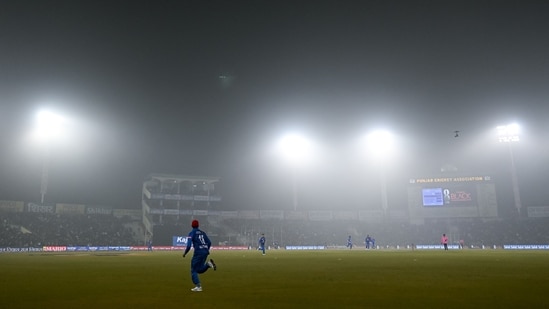
Yet, the ‘honour’ of hosting the first of three Twenty20 Internationals against Afghanistan on Thursday was conferred on Mohali. Since the India-West Indies Test in 1994 that brought the then PCA Stadium into global limelight, the venue has hosted numerous prestigious matches, including the 2011 World Cup semifinal between India and Pakistan. It no longer commands a place among the top grounds for various reasons, but that’s a topic for discussion at some other stage.
When Thursday’s encounter began at 7 pm IST, the temperature was a ridiculous 9 degrees Centigrade. Nine degrees! Who was it fair on? Players from Afghanistan and India, who have hardly encountered such freezing climes on a consistent basis, let alone played in them? Spectators, often used to roasting under the harsh sun because of a lack of overhead protection, now exposed to the other extreme? Who was it fair on? Was it really fair on any of the stakeholders involved?
The day before the contest, the Board of Control for Cricket in India posted a video shot during India’s practice session on Wednesday night. In some ways, it was an own goal. Axar Patel asks a member of the support staff what the temperature is. When the reply is 12 degrees, the all-rounder counters, “12? It feels like six degrees.” Washington Sundar, from hot and humid Chennai – where apparently the three seasons are ‘hot’, ‘hotter’ and ‘hottest’ – dead-panned, “Coming from Chennai, it’s pretty easy for me because back in Chennai also, we get such weather every now and then,” before flashing a broad grin, while head coach Rahul Dravid disappeared into the distance after mouthing, “Very cold. For one from Bangalore, this is freezing.” And Arshdeep Singh, one of two local lads in the side along with Shubman Gill, showcased his sense of humour by saying, “Feeling very hot, that’s why I am roaming around in half-sleeves! Would be nice if it was a bit colder.”
{{/usCountry}}The day before the contest, the Board of Control for Cricket in India posted a video shot during India’s practice session on Wednesday night. In some ways, it was an own goal. Axar Patel asks a member of the support staff what the temperature is. When the reply is 12 degrees, the all-rounder counters, “12? It feels like six degrees.” Washington Sundar, from hot and humid Chennai – where apparently the three seasons are ‘hot’, ‘hotter’ and ‘hottest’ – dead-panned, “Coming from Chennai, it’s pretty easy for me because back in Chennai also, we get such weather every now and then,” before flashing a broad grin, while head coach Rahul Dravid disappeared into the distance after mouthing, “Very cold. For one from Bangalore, this is freezing.” And Arshdeep Singh, one of two local lads in the side along with Shubman Gill, showcased his sense of humour by saying, “Feeling very hot, that’s why I am roaming around in half-sleeves! Would be nice if it was a bit colder.”
{{/usCountry}}There is no similar video from the Afghan camp, but even without clairvoyance, it’s easy to imagine their plight being the same. So, why Mohali at this time of the year, in early January? Was it because the one-time powerhouse, the Punjab Cricket Association, didn’t get to host a single World Cup game and won’t be staging any of the five Tests against England beginning later this month? Is the otherwise amorphous rotation policy so set in the stone of convenience that player and spectator comfort must be given the go-by? Is it just plain indifference that, with so many other venues to choose from beyond the north of India where it is coldest at this time of the year, the nod went to one of the must-avoid cities? So many questions, so few answers.
For too long now, the light has been shone on how much the authorities have taken the most influential stakeholder, the average Indian cricket fan, for granted. Right from the lottery of purchasing tickets to the numerous challenges they must encounter to first get into the ground and then settle down to watch the action, they have been repeatedly short-changed. Seats are dirty, washrooms dirtier, food and drink prohibitively expensive, the list of what one can’t bring to the ground exhaustive and exhausting. Where cricket-viewing is a memorable, enjoyable family experience in most other parts of the world, in India, it’s little short of punishment. It always beggars belief why fans make repeat forays to the ground when they know how much they are putting themselves through to watch their heroes, and maybe themselves on the giant screens at the ground and millions of television screens globally.
It would appear as if apathy towards the spectator has now been extended to apathy towards the players too. The easy counter might be that as professionals, they should be able to ‘adapt’ to anything thrown at them, including extreme weather. But really? How about a little more prudence and commonsense from those drawing up schedules? If cricket, and especially the T20 format, is as much about entertainment as the sport itself, shouldn’t the protagonists be provided with the optimal conditions so that they can parade their wares? In front of thousands who ought to, at the very least, watch the fun in bare minimum comfort? Or is that asking for too much?