Shubman Gill was one of three India cricketers to leave the ODI squad mid-series and link up with the Test team. He even spoke to Kane Williamson for tips ahead of the Wellington game. The Basin Reserve is known for its windy conditions and tests even the best of batters. Kumar Sangakkara, with 433 runs in six innings, is the leading run-scorer among visiting batters at the venue. Among Indians, it’s Sachin Tendulkar, with 290 runs from three Tests. Gautam Gambhir and Ajinkya Rahane are the other Indians to have scored centuries there.
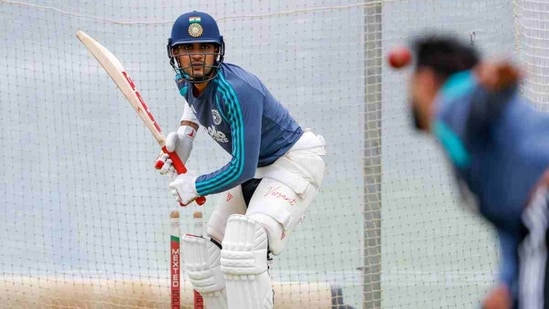
Gill understands that if there was ever a time to lead from the front again, it is now.
When Gill was appointed India’s Test captain ahead of the England Tests last year, he spoke to Tendulkar and Steve Smith to understand how things work at the highest level. Five Tests and 754 runs later, Gill had arrived, successfully taking over the prized No. 4 position vacated after Virat Kohli’s retirement.
New Zealand, though, is a different beast altogether. Gill returns to a country that holds a special place in his heart. It was in Tauranga that he was named Player of the Series when India won the Under-19 World Cup in 2018. A few months later, in Hamilton, Gill also received his India cap. This time, however, a new frontier awaits. With India having won just two Test series in 41 years, Gill will be tested like never before – technically and mentally.
Also Read: India seek a Test high at Basin Reserve
{{/usCountry}}Also Read: India seek a Test high at Basin Reserve
{{/usCountry}}“When he is batting, Shubman should not worry too much about captaincy," former India opener Wasim Jaffer told HT. "The first 30 balls are important. If he can see those deliveries through, he will become dangerous. The conditions in England weren’t as challenging as they have been on some previous Indian tours. We’ve seen with Shubman that he sometimes struggles a bit when the ball is seaming, especially when it’s coming in. But that’s not something he can’t overcome.”
If Gill’s Test career is to be divided into two halves, that is where Jaffer’s concern lies. Of his 3043 runs, 1499 have come in India. In Australia, his tally of 342 runs was largely scored in his debut series in 2021. A telling example of Gill’s indecisiveness against the moving ball was evident during the last Border-Gavaskar Trophy, where he managed just 93 runs across five innings without a single fifty. Even in South Africa in 2024, Gill managed only 74 runs in four innings. In England too, if his record-breaking 2025 series is excluded, Gill’s other three Tests have yielded just 88 runs in four innings.
Also Read: Trip down memory lane - Gautam Gambhir's impact in India's last Test series win in New Zealand
As of Tuesday morning, the pitch at the Basin Reserve expectedly wore a green look. But that’s the nature of wickets in New Zealand. With time, however, the surface tends to flatten out, and that’s where Gill has a chance to pounce. He remains India’s most technically sound batter, and a strong response, like the one he produced in England, would be entirely in keeping with his ability.
“He should excel because his game has reached a level where he’s technically well suited. We have been working on it since he was seven years old. He has the best technique among all batters in the team. When he plays, he seems to have a lot of time. He shouldn’t face any problem, and I’m confident he will do well,” Gill’s childhood coach Sukhwinder Tinku told HT.
“He has played enough cricket and knows what his approach should be on different types of wickets. We once had a 30-day tour in New Zealand. I feel that it’s not just about the first 20 overs. You have to grind the whole day. You can’t go on the front foot much. He must have studied all of this.”
Watch out for early collapses
India’s scores in their last four Test innings in New Zealand - 165, 191, 242 and 124 - aren’t encouraging either. In fact, batting collapses have become an increasingly familiar problem for India in Tests. India A, too, were bowled out for 113 in the first innings of the unofficial Test against New Zealand A. While they bounced back to post a 500-plus total in the second innings, Jaffer believes it is something Gill and his team must be wary of.
“The thing with a two-Test series is that there isn’t much room to make a comeback. In a five-Test series, India could have afforded maybe a couple of batting collapses and a few poor sessions. But here, there’s absolutely no room for that. Gill needs to ensure there aren’t too many wickets falling in a cluster. Because then it becomes difficult,” he said.
“We saw it happen a lot in the Test matches in India when they lost the two home series. Hopefully, the quicker surfaces should make things easier because the ball could come on to the bat much better than it did on Indian pitches. If they play these periods out carefully, the chances of getting skittled out reduce significantly.”