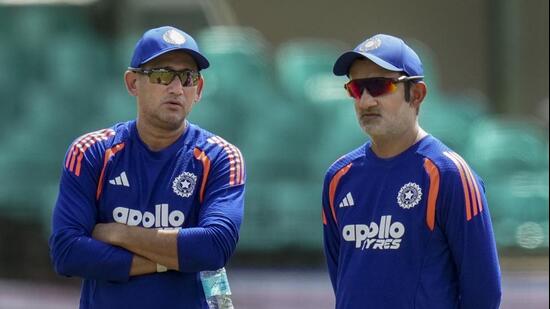
Mumbai: With Ajit Agarkar on his way out, Pragyan Ojha is acting as the interim chairman of the Indian men’s selection committee. Not handpicked on merit, or by virtue of seniority— the former left-arm spinner from Hyderabad is the youngest in the five-member panel — but because he has played the most Tests out of the bunch.
Among the Lodha committee’s reform measures for BCCI, the criteria to select the selectors is the most unremarkable. Mandating that the most capped Test player in the committee to be the chief selector may have been fit for purpose in another era, but not today when format-specific talent identification has become an everyday job and overlapping international schedules are increasingly common.
In his final meeting, the Agarkar-led selectors were tasked with picking a winning ODI team to beat West Indies, a T20I squad to bring home the Asian Games Gold, and competitive red-ball reserves for India A and the Irani Cup, with all cricket being played concurrently. Having an eye for talent may be a prerequisite to be a good selector, but it is not everything. Present-day cricket connection—whether through coaching, administration, or even media work—has become equally important.
Under the current clause in the BCCI constitution, Ojha is a leading candidate to take over when Agarkar’s contract expires on October 4. The only other candidate in the running is Parthiv Patel, who has played 25 Tests to former spinner Ojha’s 24.
{{/usCountry}}Under the current clause in the BCCI constitution, Ojha is a leading candidate to take over when Agarkar’s contract expires on October 4. The only other candidate in the running is Parthiv Patel, who has played 25 Tests to former spinner Ojha’s 24.
{{/usCountry}}Even if there was a stronger candidate with proven white-ball playing expertise or IPL coaching experience with the wherewithal to take hard selection calls, he would not make the cut without the requisite Tests under his belt.
With Indian cricket, being a successful chief selector demands other skill sets. His stature is essential. People skills are equally vital to make BCCI see reason when it comes to forward-looking judgement calls of larger-than-life star players. Whether it was Dilip Vengsakar looking past Sourav Ganguly and Rahul Dravid in ODI cricket, or Sandeep Patil giving Sachin Tendulkar a heads-up of his imminent career end, or Agarkar phasing out Rohit Sharma and Virat Kohli from Test cricket, these unpopular calls wouldn’t have been possible without BCCI’s backing.
Poorly paid
If BCCI does not have a wide range of options for the chief selector’s post, it is also of its own making. The remuneration for the demanding job hasn’t kept pace with the times. When Agarkar took over in July 2023, in a first, the chief selector was paid three times more than the others in the committee.
With the ₹3 crore annual contract, BCCI was able to match the money Agarkar made from IPL coaching and commentary. But with time, the IPL pay package has grown considerably and some assistant coaches make more money than the India men’s chief selector. Some of the head coaches earn four times the salary of the chief selector for two months’ work.
Sample this. The salary of the other four selectors is not even equivalent to that of the leading sports science personnel in the IPL teams. Indian cricket has increased the pay of its coaching staff in line with IPL standards. That’s after realisation dawned that being on the road through the year in an elite performance-driven environment demanded such rewards. With the selectors perhaps, the archaic view that those naming teams travel on tour to pocket allowances still prevails.
The selection committee salary structure is in urgent need of overhaul if quality past players with a modern-day outlook are to shape future India squads.