To keep prowling leopards at bay, villagers in Uttarakhand’s Bageshwar district set on fire the crop residue on nearly four-hectare agriculture land adjoining the reserve forest area late Thursday night.
Timely action by forest officials, however, prevented the fire from reaching the forest area or damaging the trees.
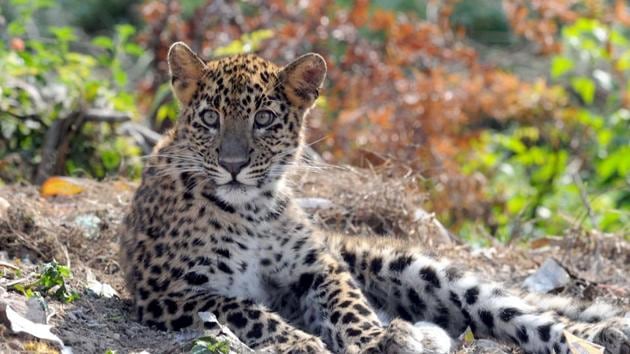
Locals claimed that a female leopard with its two cubs has made home in the bushes near near Majiakhet village in Bageshwar, some 300 km from state capital Dehradun. Within a fortnight the animal has lifted over a dozen cattle, they claimed. The villagers now fear that the big cat may attack them.
On Thursday, around 8 pm, locals again saw the leopard near the bushes and set fire to the grass and the crop residue in the agricultural farms to shoo the animal away. Due to winds, the fire spread quickly and reached the edge of the reserve forest. However, forest officials claim no harm was done to the trees in the forest area.
“The ranger came to know about the incident about 9 pm. He reached the spot and controlled the fire before it could pose any danger to the forest,” BS Sahai, assistant conservator of forest (ACF), Bageshwar told Hindustan Times.
{{/usCountry}}“The ranger came to know about the incident about 9 pm. He reached the spot and controlled the fire before it could pose any danger to the forest,” BS Sahai, assistant conservator of forest (ACF), Bageshwar told Hindustan Times.
{{/usCountry}}Following the incident, the forest department has put a cage near the village.
Anita Rawat, a Majiakhet resident, told HT over phone that they had in the past requested the forest officials several times to set up a cage there. “We had been demanding a cage, but the department kept ignoring our plea. To avert any attack on people, the villagers put farmland on fire,” she said.
Officers claim that installing a cage is not an easy owing to the stringent Wildlife Protection Act, 1972. Under the Act, the officers have to seek permission from the chief wildlife warden for setting up a cage. A month ago in Almora, despite request from residents of a village where a leopard had attacked two women, officers did not install a cage. It was only after the intervention of local MLA that the cage was put up.
Home to two tiger reserves with another two in the pipeline, Uttarakhand has the second highest population of tigers in the country. The state is also home to a large number of leopards. The state sees a spurt in man-animal conflict across its hilly terrains during winter season. In the past 17 years, the big cats have killed over 600 people, averaging nearly 35 people per year, and injured over 3,000. The conflict rate is highest in the country, claim activists. Experts claim that leopards travel far in search of mate and territory, often foraying into human habitation, leading to the conflicts.
Before Nainital High Court in December last year put a ban on declaring big cats as man-eaters, nearly 150 leopards were given the tag in the state since its formation in 2000. Of these, 35 were killed, 40 were captured and released in the wild.
Even though a stay has been taken on the order, the officials have remained cautious of declaring the big cats as man-eaters. “We cannot declare an animal a man-eater unless human casualties are reported,” Digvijay Singh Khati, chief wildlife warden, said.