
 E-Paper



Yamuna’s water quality improves, but not fit for use
The improvement is mainly on account of an increased flow of fresh water in the river and reduced pollutant load from commercial and industrial sectors.

 Prefer HTon Google


The overall quality of water in the Yamuna river has improved by up to 33% at the Okhla barrage (Agra canal) during the lockdown period but it is still to meet prescribed standards, a comparative study of water samples taken from nine different locations by the Delhi Pollution Control Committee (DPCC) earlier this month shows.
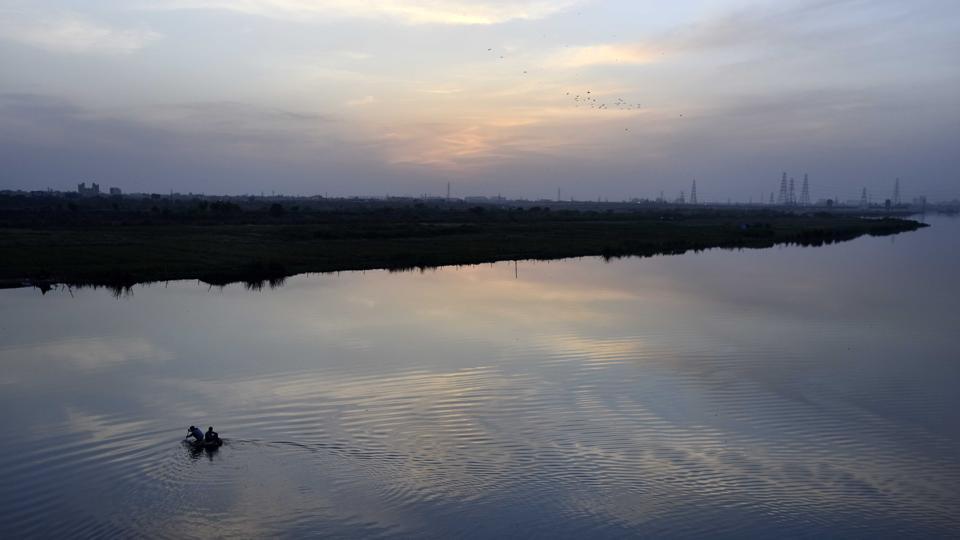
The improvement is mainly on account of an increased flow of fresh water in the river and reduced pollutant load from commercial and industrial sectors.
According to officials, the prescribed BOD (bio-chemical oxygen demand) standard for Yamuna river water is 3mg/l, when the water can be considered fit for bathing. BOD levels mean the amount of oxygen required by the river to maintain its flow. The lower the BOD levels, the better the quality of water.
Except for two locations — Palla (2.8 mg/l in April 2020 compared to 1.7 mg/l in 2019) and Surghat (3.8mg/l in April 2020 compared to 2.8mg/l in 2019) — the water quality did not meet the prescribed parameters (fit for bathing) at the rest of the locations, the DPCC report released on Monday said.
Besides nine locations along the river, samples were also taken from 20 major drains falling into the river on April 6 and have been compared with the water quality recorded during the same period in 2019.
“The quality of water in river Yamuna has improved during the lockdown period. At Okhla Barrage (Agra canal) the bio-chemical oxygen demand (BOD) value of 16 mg/l was observed, compared to 24 mg/l last year (April 2019), which is an improvement of 33%. However, the water quality is still not meeting the prescribed standards,” the report stated.
“During the lockdown period, with abundant rainfall in and around Delhi, the flow of fresh water in the river was almost three times more than that of last year during the same time. Increased flow in the river helps wash away pollutants,” a senior DPCC official, who did not wish to be named, said.
In April 2020, the average flow in the river was of 3,900 cusecs, as compared to 1,000 cusecs at the same time in 2019. “The increased flow has helped in dilution of the pollutants, which is contributing to the improvement of water quality,” the report said.
Of the nine locations, the maximum reduction was observed at Okhla barrage (Agra canal) Nizamuddin, ITO Bridge, Agra Canal (Jaitpur) and Okhla barrage (after meeting Shahdara drain)
ITO bridge saw a reduction of 21% in pollution levels. The BOD levels here were 22mg/l in comparison to 28mg/l last year.
At Nizamuddin Bridge, the improvement was of 20%, which recorded BOD levels of 16 mg/l as compared to 20 mg/l in 2019.
At Agra Canal (Jaitpur), the reduction was 26% with BOD levels of 17 mg/l, as compared to 23mg/l last year while at Okhla barrage (after meeting Shahdara drain) the quality improved by 18%, as it recorded 23 mg/l BOD levels in comparison to 28 mg/l in 2019.
However, no significant change was observed at Qudesia Ghat, while an increase in pollution level of up to 42% was found at Khajuri Paltoon pool.
Meanwhile, the waste water quality of the major drains too saw a reduction in pollution levels, including Najafgarh drain (22%), Barapulla drain (32%), ISBT drain (68%), Shahdara drain (33%) and Civil Mill drain (80%).
The National Green Tribunal-appointed two-member Yamuna Monitoring Committee had asked the pollution monitoring bodies to test the water quality of the river during the lockdown.
According to Manoj Misra, convener, Yamuna Jiye Abhiyan, even though the values are far from prescribed standard, it is a significant improvement. “The data has established an important baseline in terms of the factors that affect the river health as well as steps required to revive it. The improvement shows that controlling the discharge of industrial effluents is crucial. Besides it also shows the importance of maintaining dilution flow in the river,” said Misra.


