Halfway into the crucial global climate meet underway in Egypt, India submitted its Long-Term Low Emission Development Strategy (LT-LEDS) to the United Nations Framework Convention on Climate Change. The strategy, released by Union environment minister Bhupender Yadav, has four key planks: climate justice, sustainable lifestyles, equity, and common but differentiated responsibilities and respective capabilities.
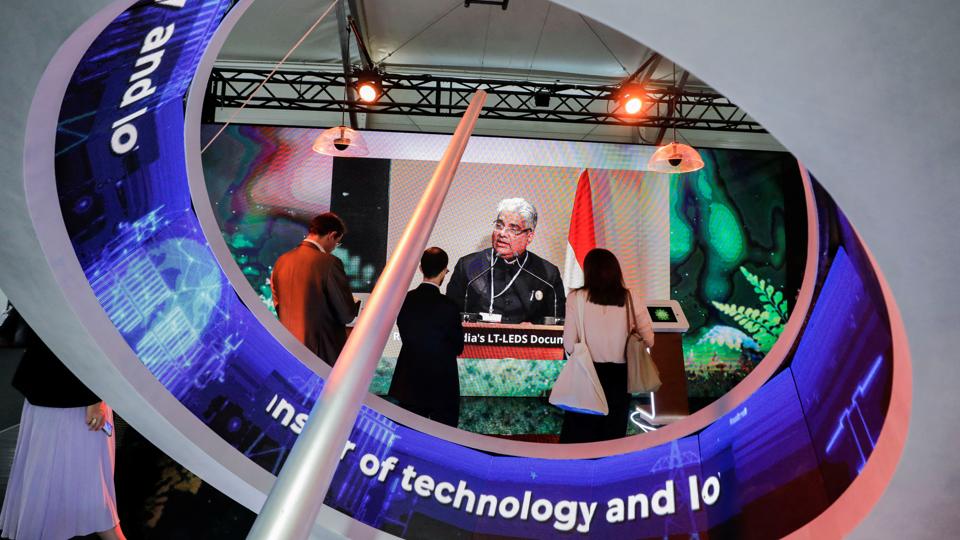
The LT LEDS is designed to help India reach net-zero emissions by 2070. The country has already made progress in the electricity sector and committed to
Halfway into the crucial global climate meet underway in Egypt, India submitted its Long-Term Low Emission Development Strategy (LT-LEDS) to the United Nations Framework Convention on Climate Change. The strategy, released by Union environment minister Bhupender Yadav, has four key planks: climate justice, sustainable lifestyles, equity, and common but differentiated responsibilities and respective capabilities.
The LT LEDS is designed to help India reach net-zero emissions by 2070. The country has already made progress in the electricity sector and committed to 50% of installed capacity by non-fossil fuel sources by 2030 as part of the revised Nationally Determined Contribution, which specifies targets to be achieved in the 2030 timeframe. In addition, the new long-term strategy shows that India is now actively looking at decarbonising the transport sector by increasing the share of electric vehicles and expanding the use of biofuels. The document, however, clarifies that India has significant energy needs for development.
Now that the long-term plan is in place, it is crucial to embed it in various development plans and develop a road map. However, the success of this low-carbon development pathway plan is contingent on available finance for developing new technologies, new infrastructure, and other transaction costs. At COP26, Prime Minister Narendra Modi asked for $1 trillion to meet India’s decarbonisation goals. India turned up the heat on developed countries to expand climate finance and free up carbon space by reaching net-zero faster. This also means that richer nations will have to abandon their rhetoric and admit that the huge gap in per capita emissions necessitates differentiated responsibilities. Whether the Global North heeds this message will determine the course of this summit.
One Subscription.
Get 360° coverage—from daily headlines
to 100 year archives.
Archives
HT App & Website