Ahead of the 94th Air Force Day on October 8, Air Chief Marshal AP Singh has flagged a serious decline in India’s air power, largely owing to the sluggish supply of fighter jets. The outgoing chief’s comments are not new; this has been the view of the Indian Air Force for years, and under successive chiefs; and it is one that has been ignored by successive governments in Delhi.
India needs to induct 30-40 jets every year only to stem
Ahead of the 94th Air Force Day on October 8, Air Chief Marshal AP Singh has flagged a serious decline in India’s air power, largely owing to the sluggish supply of fighter jets. The outgoing chief’s comments are not new; this has been the view of the Indian Air Force for years, and under successive chiefs; and it is one that has been ignored by successive governments in Delhi.
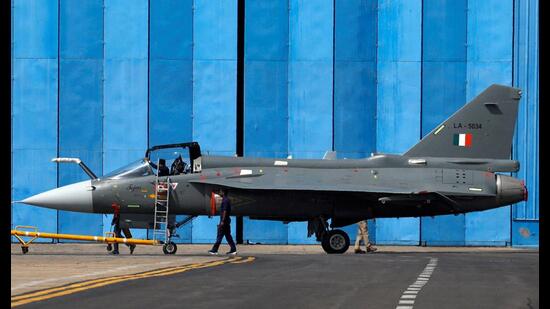
India needs to induct 30-40 jets every year only to stem the decline in squadrons; expansion is another story. Just like its ground counterpart, the IAF has been dealing with shortfalls in men and machines for years. Instead of the sanctioned strength of 42 squadrons, the current strength is 29 — the IAF is running on nearly 75% steam. This is a strange quandary for a country that has engaged in at least five full-fledged air battles since independence. The Narendra Modi government, with its aggressive two-fold defence procurement and indigenisation policy, has tried to address this issue but has met with limited success. The biggest culprit appears to be the State-owned company HAL. Tejas Mk 1A, a homegrown jet was hailed as the panacea for this problem but its deliveries are delayed by almost three years. The traditional tardiness of many of India’s public sector undertakings has been ignored for far too long. Averting our gaze now comes with serious consequences, as ongoing conflicts in West Asia and the muted war bugle in Europe make defence imports more difficult than before. Pakistan, on the other hand, is ramping up its air power with the help of Chinese fifth-generation fighter jets. The government must do what it takes to ensure HAL begins its supplies without making any quality compromises. IAF, too, must ensure that it keeps the existing pool of its men and machines battle-ready, irrespective of the factors beyond its control. This is what militaries do.
One Subscription.
Get 360° coverage—from daily headlines
to 100 year archives.
Archives
HT App & Website