The Election Commission of India’s (ECI) decision to conduct a special summary revision (SSR) of electoral rolls in 17 states and Union Territories and implement a slew of changes to the procedure fulfil long-pending demands and are welcome. But it is difficult to ignore the fact that the announcements came only after sustained street protests that have roiled the national capital and reached the Supreme Court.
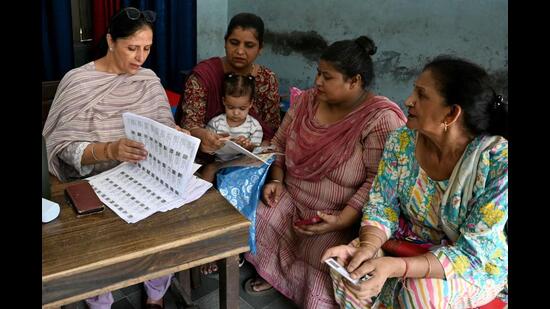
Usually, ECI conducted SSR every year to allow citizens turning 18 an opportunity to
The Election Commission of India’s (ECI) decision to conduct a special summary revision (SSR) of electoral rolls in 17 states and Union Territories and implement a slew of changes to the procedure fulfil long-pending demands and are welcome. But it is difficult to ignore the fact that the announcements came only after sustained street protests that have roiled the national capital and reached the Supreme Court.
Usually, ECI conducted SSR every year to allow citizens turning 18 an opportunity to enter the rolls. In the past two decades, SSR was held 19 times. Yet, it was not conducted over the last two years as ECI shifted its attention to the controversial special intensive revision (SIR) — where every entry on the electoral roll had to be verified and backed by documentary evidence. This departure was not only unexplained — just as ECI had not given any concrete reason why it revived SIR for the first time since 2002-03 — but it also denied young people a chance to enter the rolls. This was particularly egregious given that Gen Z is set to form the largest voting cohort of India’s population (about a fourth) by 2029. ECI’s belated realisation here is a relief but its earlier reticence remains to be explained.
Even more curious, albeit in a positive way, are the changes effected by the poll body.
ECI directed electoral registration officers to provide recognised political parties with two copies of the draft and final electoral rolls for each polling station. This includes one hard copy and one soft copy in a machine-readable PDF format. ECI also directed officials to share addition, deletion and modification lists to help parties track changes in voter records. This is a big departure for ECI, which used to provide political parties with image PDFs earlier. Machine-readable digital copies can be searched and analysed easily, helping political parties check voter names and scrutinise changes. ECI will also share weekly lists of claims and objections with political parties.
The changes will ensure transparency and boost confidence in the electoral process at a time when uncomfortable (and entirely avoidable) questions are being asked of Indian democracy across the globe.
The changes addressed key concerns raised by the Opposition over the past two years, including in June 2025, when Rahul Gandhi and Mallikarjun Kharge demanded digital, machine-readable voter rolls for the 2024 Lok Sabha and Maharashtra assembly polls, along with version histories and timestamps showing changes to the rolls. At the time, ECI argued that providing voter lists in machine-readable formats was legally forbidden, citing a Supreme Court ruling. Raising privacy concerns, it noted that statutory rules did not mandate supplying draft rolls in searchable formats. What changed? What caused ECI to shift its stance? The body must consider explaining this.
Coming against the backdrop of protests demanding the resignation of chief election commissioner Gyanesh Kumar, the decisions are likely to have two fallouts. One, since SSR is being conducted in all poll-bound states, their electoral rolls are likely to look very different from the post-SIR numbers. In addition, the process might itself become an electoral factor, like it did in Bengal. And second, SSR is likely to help many people — left out of SIR for one reason or another — to re-enter the rolls.If this happens, not only will this raise fundamental questions about the efficacy of a process that has caused unnecessary hardships to citizens, but also underline the futility of chasing statistically perfect rolls in a country as large and diverse as India.
One Subscription.
Get 360° coverage—from daily headlines
to 100 year archives.
Archives
HT App & Website