India currently ranks as the world’s second-largest arms importer and fifth-largest military spender — a reflection of its ongoing drive to modernise its armed forces against both longstanding and emerging threats. The new Raksha document on defence diplomacy unveiled by defence minister Rajnath Singh needs to be seen in this context, as a blueprint for defence partnerships over the next decade. Its four pillars are forging global strategic partnerships better aligned with India’s national security objectives, capacity building through joint
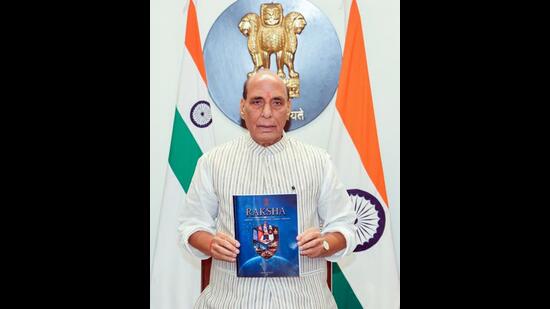
India currently ranks as the world’s second-largest arms importer and fifth-largest military spender — a reflection of its ongoing drive to modernise its armed forces against both longstanding and emerging threats. The new Raksha document on defence diplomacy unveiled by defence minister Rajnath Singh needs to be seen in this context, as a blueprint for defence partnerships over the next decade. Its four pillars are forging global strategic partnerships better aligned with India’s national security objectives, capacity building through joint military exercises and training, ramping up defence exports by making India a reliable defence manufacturing hub, and enhancing New Delhi’s role in security across the Indian Ocean.
This is truly ambitious. However, some of the building blocks for this are already in place. Even till the turn of the millennium, India’s dependence on Russia for cutting-edge defence hardware was almost absolute. It has come a long way since, lowering dependence on Russia-origin equipment to about 40% through new defence partnerships with countries such as France, the US, and Israel. India’s membership of Quad has helped launch a range of maritime security initiatives across the Indo-Pacific. Even as enthusiasm for Quad itself has cooled, its security-related initiatives — cooperation in maritime domain awareness and tracking of illegal activities across the Indian Ocean, among others — have gained pace. India conducts a wider range of army, air force and naval exercises with a steadily growing number of countries and also participates in multilateral drills. This has helped create greater inter-operability that emergencies such as evacuations and disaster response demand. India’s defence exports have risen from ₹686 crore during 2013-14 to ₹38,424 crore in 2025-26, with military gear ranging from protective equipment to the BrahMos cruise missile being sold to more than 80 countries.
The latter is the most significant pivot — from dependent importer to confident exporter, while forging alliances with a range of established players — and it has been underway for some time now. The new Raksha document can help fine-tune this process and give it greater impetus. It also comes on the heels of a drive to privatise the production of conventional missiles through the transfer of technology from the DRDO to private Indian entities. Belgian Prime Minister Bart De Wever’s visit to India this week witnessed the conclusion of agreements between entities of the two countries to manufacture equipment ranging from tank turrets to naval mine countermeasures and drones.
As India takes all of these processes forward, it must learn from the experiences of both the erstwhile USSR and the US steer clear of creating defence monopolies. Spreading the pie can help spur defence production and create specialised jobs across the country. At the same time, ambitions should be set realistically, instead of blindly chasing technologies that can take decades to develop only to become obsolete. Needs should be prioritised dispassionately — for instance, we must develop propulsion units for aircraft and warships at the earliest. Embattled priorities causing delays have serious national security fallouts, as witnessed in the case of the light combat aircraft Tejas. Research and production costs, too, will need to be kept realistic to give homegrown weapons and military systems an edge in the export market; more so when they are competing against more expensive western hardware. Any policy document is as successful as its implementation, and that’s where the government should now focus.
One Subscription.
Get 360° coverage—from daily headlines
to 100 year archives.
Archives
HT App & Website