The Delhi assembly election has brought to the forefront the contradictions within the Opposition India bloc. Parties such as the Trinamool Congress (TMC), the Shiv Sena (UBT) and Samajwadi Party (SP) have announced their support for the Aam Aadmi Party (AAP), which is aiming for a third consecutive term in office. The Shiv Sena (UBT) and the Congress share an uneasy relationship though they fought the Maharashtra assembly polls together. A recent editorial in Saamna, the mouthpiece of the
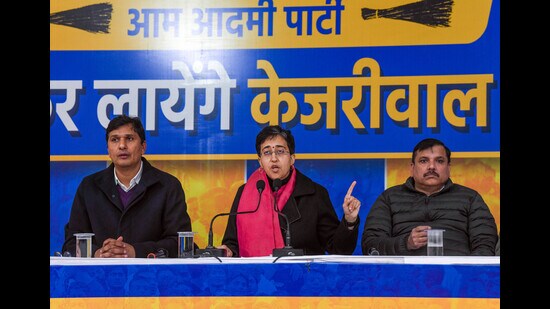
The Delhi assembly election has brought to the forefront the contradictions within the Opposition India bloc. Parties such as the Trinamool Congress (TMC), the Shiv Sena (UBT) and Samajwadi Party (SP) have announced their support for the Aam Aadmi Party (AAP), which is aiming for a third consecutive term in office. The Shiv Sena (UBT) and the Congress share an uneasy relationship though they fought the Maharashtra assembly polls together. A recent editorial in Saamna, the mouthpiece of the Sena (UBT), castigates the Congress for not standing with its allies.
This alignment should not surprise anyone. As Tejashwi Yadav, the leader of the Rashtriya Janata Dal, a steadfast Congress ally since the 1990s, and a member of the INDIA bloc, pointed out on Wednesday, it was always clear that the INDIA bloc was floated by regional parties as an anti-BJP front for the general election knowing well that it may not work in state elections. Though the bloc could not float a common minimum programme or run a coordinated national campaign, it prevented the BJP from achieving a simple majority for the third consecutive time. However, the fissures within the bloc came to the forefront when the Congress, which emerged as the leader of the INDIA bloc on account of its national footprint, refused to accommodate the smaller India bloc allies — the AAP and SP, among them — in the subsequent Haryana and Maharashtra assembly elections, both of which it lost. In Parliament, the party has preferred to drive its agenda rather than build a consensus among the opposition parties. This led to the latter questioning the Congress’s ability to lead the Opposition: The TMC, for instance, has staked its claim to head the bloc.
The Delhi battle may exacerbate the divisions within the grouping. The Congress is likely to face isolation for at least two reasons. One, its treatment of allies after the general election, which it saw as a win despite failing to enter the triple-digit mark in terms of seats. Two, the party’s sharp attacks in Delhi — Ajay Maken calling Arvind Kejriwal “Farjiwal” and “anti-national” and Ashok Gehlot describing the AAP as the Congress’s opponent — has alienated not just the AAP but also other India allies that see the Arvind Kejriwal-led party as the best bet for defeating the BJP in the Capital. Most regional outfits would prefer a diminished Congress since that will reduce that party’s bargaining power in the upcoming state elections — Bihar will go to polls later this year, followed by Tamil Nadu, West Bengal, Assam, Kerala, and Puducherry in 2026. All of this works to the advantage of the BJP, which will only be too happy to see a divided India bloc in the Delhi battle.
One Subscription.
Get 360° coverage—from daily headlines
to 100 year archives.
Archives
HT App & Website