The UN Environment Programme said on Wednesday that global temperature rise will, now inevitably, cross 1.5°C within a few years, and that even the most optimistic pathway it modelled peaks at 1.8°C above pre-industrial levels. Most other pathways peak higher. The overshoot can still be held short and then reversed, the report argues, and that possibility needs to be taken seriously to stave off unseen catastrophes.
The report is also candid about what comes now: Adaptation has limits, and irreversible
The UN Environment Programme said on Wednesday that global temperature rise will, now inevitably, cross 1.5°C within a few years, and that even the most optimistic pathway it modelled peaks at 1.8°C above pre-industrial levels. Most other pathways peak higher. The overshoot can still be held short and then reversed, the report argues, and that possibility needs to be taken seriously to stave off unseen catastrophes.
The report is also candid about what comes now: Adaptation has limits, and irreversible losses and permanently changed conditions are certain. Risks intensify with every additional fraction of a degree and every year spent above the threshold, some impacts accumulate and others arrive abruptly, and the tipping points grow likelier the longer the world stays beyond 1.5°C: major ice sheets destabilising, the Atlantic circulation disrupted, and a cascade of floods, droughts and other effects that come with it follow.
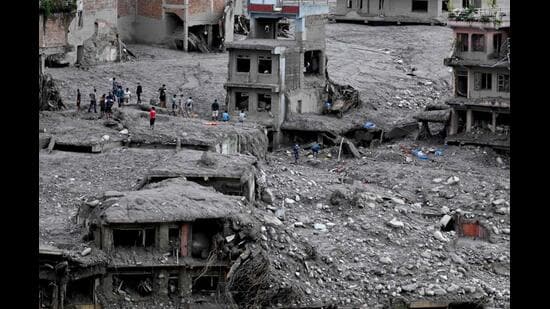
Last week, a flash flood in the Bhotekoshi river killed more than a thousand people in Nepal and left thousands more missing. Hundreds are feared to have died in China too. Nepal’s ministers have since written to a UN Fund for Responding to Loss and Damage, arguing that its losses exceed anything the country can absorb on its own.
The Fund was indeed built for incidents like these. Its founding document lists displacement, relocation and permanent loss among the harms it exists to address although, till now, it has not paid a dollar to any country. Its first funding window drew roughly 180 applications, seeking $2.8 billion against a paltry $250 million available, and the first approvals have been put off to December.
Implicit in the mechanism was that disasters would be rare — countries pay into it when they choose to, claims go in during a window of applications and wait their turn. And when governments set it up, they agreed it would create no liability and no right to compensation.
The truth is, nobody has seen what 1.8°C warming looks like. While climate models are clear about what becomes of ice sheets and ocean currents, it is hard to imagine what truly happens to people — just like it was unthinkable to tie the notion of glacial collapses with the scenes seen in Nepal last month. Nepal may not be an exception in a few years’ time, and it is time for the reckoning that the climate crisis is here.
One Subscription.
Get 360° coverage—from daily headlines
to 100 year archives.
Archives
HT App & Website