Government-to-government meetings are typically sober affairs focussed on the minutiae of administration. But in recent years, meetings of the southern zonal council have grabbed headlines — for obvious reasons. With the Hindi heartland, the west, and slowly now the east, becoming fortresses of the BJP and its allies, peninsular India is the last bastion of the Opposition. Discussions at the 31st council meeting on Thursday — attended by the CMs of Karnataka, Tamil Nadu, Kerala and Andhra Pradesh, the deputy
Government-to-government meetings are typically sober affairs focussed on the minutiae of administration. But in recent years, meetings of the southern zonal council have grabbed headlines — for obvious reasons. With the Hindi heartland, the west, and slowly now the east, becoming fortresses of the BJP and its allies, peninsular India is the last bastion of the Opposition. Discussions at the 31st council meeting on Thursday — attended by the CMs of Karnataka, Tamil Nadu, Kerala and Andhra Pradesh, the deputy CM of Telangana, the lieutenant governors of Puducherry and Andaman and Nicobar Islands, and the administrator of Lakshadweep — flagged regional water disputes as a key fault line. The states voiced concerns about river-water sharing and dam projects.
But water is only one part of the problem. Delimitation is another wrinkle with the Congress-ruled Karnataka, Telangana and Kerala seeking to project a united front to demand a freeze on the strength of the Lok Sabha for the next 25 years. Vijay, in contrast, took a softer stance and urged the Union government to provide a clear legislative assurance that no state will suffer a reduction in its percentage of representation in Parliament. The Centre had announced its willingness to do this earlier. Though the Tamilaga Vettri Kazhagam has no MPs, Vijay is a popular CM whose position will be of keen interest not just to the BJP but also his ally Congress. A lot will ride on how the Union government balances the twin objectives of ensuring every vote is worth roughly the same while ensuring that the south, which managed to control its population in line with past national imperatives is not penalised.
Separate litigations by some of the southern states on gubernatorial powers, the constitutionality of the National Medical Commission Act, and questions over borrowing limits also underscored some discomfort with the Centre. Similarly, the decision by Karnataka, Kerala, and Telangana to jointly challenge the recent amendment to mines and minerals law that bypasses a Supreme Court verdict upholding state levies on mining and mineral-bearing lands, suggests that the perimeters of federalism are being contested.
But these are mere irritants. India’s south and north have always had cultural, linguistic and social differences, which sometimes disturbed their working relationship. The south’s rising fiscal anxieties are now increasingly straining the relationship. The worry is reflected in demands for greater devolution of funds from the central tax pool — commensurate with their contribution to the GDP. The Union government’s strategy of mobilising additional resources through cesses and surcharges has vitiated ties, as has the loss in states’ fiscal autonomy in the aftermath of the GST, which has otherwise streamlined the economy. Questions are also being raised about the division of funding in central branded schemes, against the backdrop of competitive welfare politics between the BJP, which controls the Centre, and the Opposition, which controls most southern states. Clearly, more tweaks to the devolution formula — along the lines of the recommendations of the 16th finance commission — are required to allow more money to flow to states.
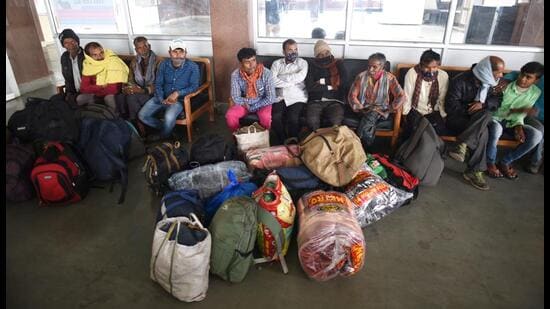
But the south must also remember that migrants from the north power its economy by doing menial jobs, populating the factory floors and the labour lines, the software parks and the informal sector. They often bear the brunt of cynical nativist politics for no fault of their own. Both sides must rein in their political machinations and show genuine political will to resolve this impasse, lest it lead to dysfunction.
One Subscription.
Get 360° coverage—from daily headlines
to 100 year archives.
Archives
HT App & Website