Recent actions by the Donald Trump administration have increased fears of an all-out trade war. The United States is threatening China and other countries with tariffs and other restrictive measures. China has retaliated with tariffs on US farm imports. Other countries are contemplating similar actions. And all this is happening at a time when the multilateral trade regime is caught in a deep crisis. The last two ministerial conferences of the World Trade Organisation have failed to arrive at any understanding. This means that the scope of any collective action preventing escalation by other countries is bleak.
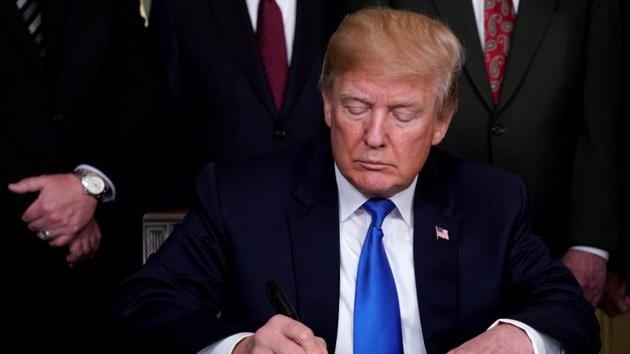
The US’s trade policies are driven by Mr Trump’s promise of reviving manufacturing activity and employment in the country. This promise was crucial in Mr Trump getting elected as the president. The problem with such an approach is that it is blinkered.
When Mr Trump and his advisors complain about the decline of manufacturing activity in their domestic economy, they chose to ignore the fact that the US continues to remain the leading economy in the world. Its currency is the most widely accepted across the world. Wall Street is still considered the global finance headquarters. Despite running large trade deficits, the US does not face a balance of payments problem. This is because its economic supremacy forces other countries to maintain dollar reserves. This success has been achieved on the basis of an economic consensus which was premised on the free movement of goods and services. It is easier to encourage domestic steel production by raising tariffs. Dealing with the repercussions of China scaling back on dollar reserves and the potential consequences of this move for global economic stability will be far more difficult. This example highlights the fundamental problem of policymaking in a liberalised capitalist set up. Spontaneity is engrained in the system. Any effort to artificially compensate one set of losers can lead to tectonic changes. The result could leave everyone, including the intended beneficiaries, worse off.
All this is not to say that nothing is wrong with the present economic order. Blue collar workers in developed countries have witnessed a continuous squeeze in their living standards. Countries such as India are struggling to replicate the manufacturing success story scripted by others. The credibility of policymakers to provide relief is being eroded by the day. All this calls for a reinvention of the existing economic thinking. History shows that succumbing to the temptation of trade wars led to great depression rather than prosperity.
{{/usCountry}}All this is not to say that nothing is wrong with the present economic order. Blue collar workers in developed countries have witnessed a continuous squeeze in their living standards. Countries such as India are struggling to replicate the manufacturing success story scripted by others. The credibility of policymakers to provide relief is being eroded by the day. All this calls for a reinvention of the existing economic thinking. History shows that succumbing to the temptation of trade wars led to great depression rather than prosperity.
{{/usCountry}}