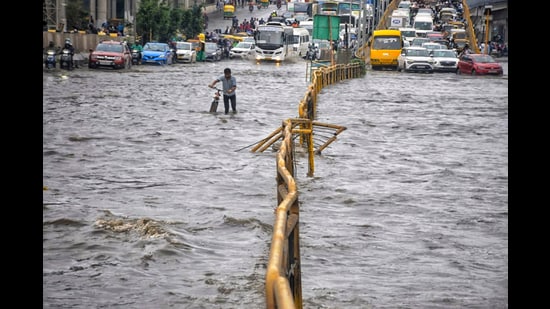
Mango showers, or pre-monsoon downpours, are not uncommon in Bengaluru. What the city is now getting familiar with, however, is the havoc in its wake that has made headlines over the past few years. Flooded apartment complexes, drowned roads, drifting vehicles, and casualty counts — three persons died in the downpour on Monday — have displaced the happy recounting of cooling showers that made Bengaluru summers tolerable, and even pleasant.
Across expert diagnoses, two reasons for this have consistently stood
Mango showers, or pre-monsoon downpours, are not uncommon in Bengaluru. What the city is now getting familiar with, however, is the havoc in its wake that has made headlines over the past few years. Flooded apartment complexes, drowned roads, drifting vehicles, and casualty counts — three persons died in the downpour on Monday — have displaced the happy recounting of cooling showers that made Bengaluru summers tolerable, and even pleasant.
Across expert diagnoses, two reasons for this have consistently stood out. The first is the rapid urbanisation that has contributed to the horizontal sprawl of the city, at the cost of its network of raja kaluves and lakes (raja kaluves are intra-city natural and man-made channels that drain the run-off into the lakes). A citizen audit some years ago showed residential colonies, illegal settlements, and even malls standing where some of these channels once flowed. The second is the changing nature of weather phenomena — with extreme events such as cloudbursts that were once rare now becoming common, almost an annual occurrence. The impact of both factors is compounded by urban planning and design that is yet to factor in the localised impact of the climate crisis. To illustrate, Bengaluru had 53 underpasses in 2023, and more are under construction. For a city infamous for traffic, underpasses may be a crucial bypass for chokepoints. But some of them could also be significant flooding risks — an audit by city authorities flagged this in 2023. Throw in inadequate and choked stormwater drains and it is not hard to see why roads disappear during a downpour.
This problem, however, is not exclusive to Bengaluru. Most Indian cities — Delhi, Mumbai, Chennai, Hyderabad among others — experience floods and waterlogging after seasonal and unseasonal downpours. Urban bodies and planners need to recognise this new normal of extreme weather events and redesign infrastructure accordingly. Existing vulnerabilities must be addressed even as infrastructure creation happens with an eye to the future.
One Subscription.
Get 360° coverage—from daily headlines
to 100 year archives.
Archives
HT App & Website