Last month, the educational research and advocacy organisation, Pratham, completed 25 years of existence. Late last year, the environmental research and advocacy organisation, Kalpavriksh, completed 40 years of existence. Both anniversaries went unnoticed by the media, whether mainstream or alternative, digital or print. This was unfortunate, for Pratham and Kalpavriksh are both remarkable institutions, while the fields they work in, education and the environment respectively, are vital to India’s future. Since I have known both organisations for many years now, I thought I should make some amends for this silence, and pay my personal tribute to these two national treasures.
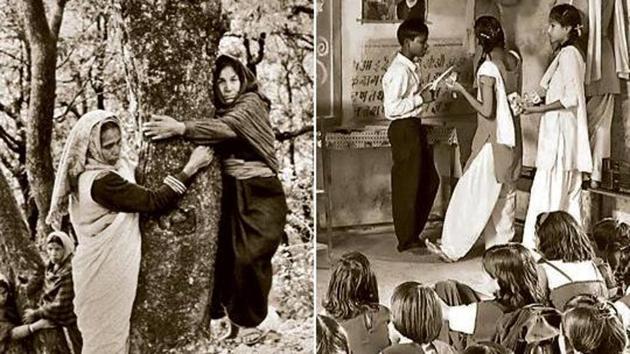
Kalpavriksh was started by a group of high school students in Delhi in 1979. I could, in fact, name some of them, except that they won’t allow me to, since the group always stoutly refuses to be identified by individuals. So let me speak instead of the kind of work they have done. KV (as it chooses to be known) began with an interest in the ecology of the National Capital Region, studying the native plant and bird life of the Aravallis, while seeking to save these hills from urban sprawl and unregulated mining.
In the early 1980s, the members of Kalpavriksh began to look outside Delhi as well. They travelled in the Himalaya with activists of the Chipko movement, who alerted them to the destruction to the hill ecology and the village economy by commercial forestry. Then, they travelled in the Narmada Valley on their own, studying the impact on tribal communities of a series of mega-dams being built on that river. Their report, published in the Economic and Political Weekly in June 1984, attracted the attention of the social activist Medha Patkar, who soon moved to the Narmada ghati to work with those who were to be displaced and rendered homeless by these dams.
Some of the founding members of Kalpavriksh took their commitment into other fields; achieving distinction as journalists, human rights activists, and university professors. Some stayed close to their original mission — namely, charting a sustainable environmental future. They did field research in remote and vulnerable areas such as the Northeast, the Western Ghats, and the Andaman and Nicobar Islands, working with local communities in restoring ravaged ecosystems. Now headquartered in Pune, Kalpavriksh remains a vibrant and energetic organisation, driven by the same sense of idealism as when it was first established 40 years ago.
{{/usCountry}}Some of the founding members of Kalpavriksh took their commitment into other fields; achieving distinction as journalists, human rights activists, and university professors. Some stayed close to their original mission — namely, charting a sustainable environmental future. They did field research in remote and vulnerable areas such as the Northeast, the Western Ghats, and the Andaman and Nicobar Islands, working with local communities in restoring ravaged ecosystems. Now headquartered in Pune, Kalpavriksh remains a vibrant and energetic organisation, driven by the same sense of idealism as when it was first established 40 years ago.
{{/usCountry}}Pratham was founded in the city of Mumbai in January 1995. Its prime movers were Madhav Chavan and Farida Lambay, both of whom had a background in research and teaching. Both were animated by a strong social conscience. They first worked among slum children in Mumbai, who tended to drop out of school early so as to contribute to the meagre family income. Then, like Kalpavriksh, having established their credibility through solid work in their home city, Pratham’s founders spread their wings wider. Animated by the aim of having “every child in school and working well”, Pratham has since established its presence in as many as 23 states and Union Territories.
Pratham has done pioneering work in teacher training and curriculum development. Its all-India network of trainers, working in tens of thousands of schools across the country, focuses on building foundational skills among young children, particularly in reading and arithmetic. Pratham also has a strong research wing, manifested in the Annual Status of Education Report (ASER) that it has produced for many years now. These reports document learning outcomes by age groups and subjects across Indian states. The ASER reports have become a veritable gold mine for educational researchers, and could become a key input in designing more effective public policies as well. Finally, through Pratham Books, the organisation has published hundreds of engagingly written and well-illustrated books for children, across a wide variety of subject areas and in many different languages.
I began my career as a scholar of the environment, and thus have had close professional dealings with Kalpavriksh. I am not an educational researcher; and thus cannot comment with the same authority on Pratham‘s work.
However, I have had many meetings with its founders and staffers, and have come away impressed by their intelligence, their commitment, and their remarkable capacity to absorb and learn from criticism. Among the organisations’ admirers are the Nobel Laureates Abhijit Banerjee and Esther Dufflo, who have done much of their own research in collaboration with Pratham.
As someone who has had the great good luck to know both Kalpavriksh and Pratham, I am struck by some striking parallels. Both began and dug deep roots in a single city — Delhi in one case, Mumbai in the other — before expanding to other parts of the country. Both have had productive international collaborations, yet remain strongly rooted in the Indian context. Both believe in the importance of original, primary, research; both have published a series of important books and reports embodying this research. Both wish or hope to use this research to influence public opinion and State policy. Finally, the leadership of both Kalpavriksh and Pratham have always placed the organisation above themselves; this in contrast to so many other non-governmental organisations in India, whose story so often begins and ends with the charisma and personality of the founder.
That the anniversaries of these two great Indian organisations were ignored by the media is not altogether surprising. For the Indian media is consumed by politics, by looking ahead at the last election or looking back at the last one, with analysing what this minister said or what that Opposition leader tweeted. In this obsession with elections and parties, subjects like education and the environment get short shrift. Yet, surely the country’s future vitally depends on the state of our schools and colleges, on the state of our air, water, soils, and forests. Perhaps it is time we paid more attention to what organisations like Kalpavriksh and Pratham do, say, and think.
Readers of this column can visit their websites for a start.