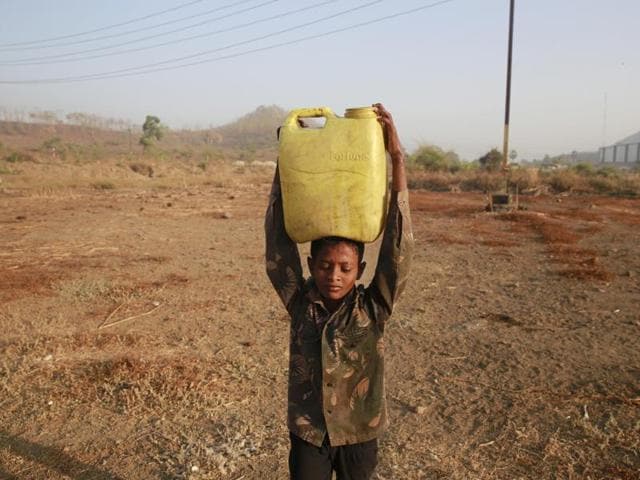
About 330 million people are affected by drought in 10 states as 256 districts reel from severe water shortages and poor farmers suffer crop losses. The current dry spell is partly because of two back-to-back years of bad monsoons. Policy makers have no control over fickle weather whims. As credit rating and research agency Crisil points out, the rising frequency of weather shocks amid higher vulnerabilities has compounded agrarian stress, slashing cultivation income and farm profitability.
Read | Maha drought: Drinking water situation worsens
The importance of villages in India’s economy cannot be over-emphasised. About 58% of rural households engage in agriculture and within this, two-thirds are heavily reliant on it. Without rural prosperity, the Narendra Modi government’s plans for an economy firing on all cylinders will be easier said than done. India grew 7.6% in 2015-16, outpacing China, but a slowing rural economy can pose major hurdles in sustaining this turnaround. According to planners, for India to sustain a growth rate of 8%, agriculture must grow at least 4%. Alarmingly, rural distress — marked by slowing wages, poor incomes and lower profits from farming — now seems to be getting entrenched.
The silver lining is that after two years of drought, India’s June-to-September monsoon is likely to be above normal this year. The country’s main rainy season will be 106%, the Met department has said in its initial forecast. The monsoon is critical because nearly 60% of the country’s arable land doesn’t have irrigation facilities. This means millions of farmers are dependent on rains. Regardless of the eventual course and quality of summer rains, the early predictions do give an early indicator of what is likely in the next few months.
{{/usCountry}}The silver lining is that after two years of drought, India’s June-to-September monsoon is likely to be above normal this year. The country’s main rainy season will be 106%, the Met department has said in its initial forecast. The monsoon is critical because nearly 60% of the country’s arable land doesn’t have irrigation facilities. This means millions of farmers are dependent on rains. Regardless of the eventual course and quality of summer rains, the early predictions do give an early indicator of what is likely in the next few months.
{{/usCountry}}Read | Mercury rising: Centre fights drought with water train, borewell ban
One main reason for the stagnation in yields and agricultural productivity has been a consistent underinvestment in land development, a trend perhaps best manifested in the declining spending on irrigation over the last two decades. There is an urgent need for a top-down effort from the government as self-sufficiency and increasing farm land productivity gain importance; a shift is needed towards new and more efficient irrigation techniques like micro-irrigation and water harvesting which can be implemented by individual farmers and rural households. Every drought year, India’s response to deal with scanty rains has been knee-jerk, betraying a lack of preparedness. India’s ability to deal with weather shocks will critically depend on a matrix of carefully detailed administrative and policy solutions that ensures people’s participation while making politicians and bureaucrats accountable.
Read | Hyderabad faces major water crisis, reservoirs dry up for first time in 30 years