The arrest of Jawaharlal Nehru University Students’ Union (JNUSU) president Kanhaiya Kumar on charges of sedition has raised two questions: First, did Mr Kumar do anything to attract sedition charges; and second, does a democratic India need the archaic, 156-year-old colonial law anymore?
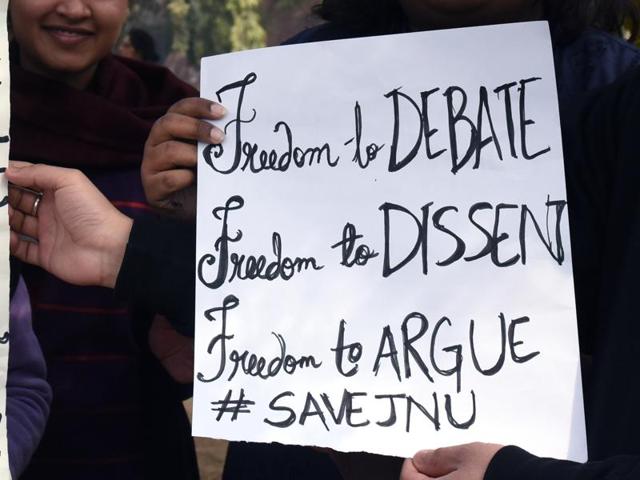
There is no doubt that the Delhi Police did everything it could to build a case against Mr Kumar but the case had so many holes that even the ministry of home affairs and the intelligence agencies are finding it difficult to justify the arrest. The JNU case has given the Congress a handle to take on the government in the coming Budget Session. Congress MP Shashi Tharoor has already moved a private member’s Bill, arguing that one should not be charged with sedition until he or she advocates violence.
So does India need the sedition law at all? For starters, here is a list of countries that consider sedition a criminal act: Saudi Arabia, Malaysia, Iran, Uzbekistan, Sudan, Senegal and Turkey. Democratic India should not figure on this list. Legal experts cite many reasons why the law should go: First, it was not there in the original penal code; second, it is inconsistent with free speech, a constitutional guarantee; third, the State cannot impose a duty of being loved; fourth, the fundamental rights were borrowed from the United States and so we must follow American tradition on this too.
The US still has a sedition law, promulgated 218 years ago, but many of its provisions have been struck down, and most importantly, as historian Romila Thapar said recently, India inherited a number of colonial laws that were meant for a different society and these laws must be reconsidered since India is not a colony anymore.
{{/usCountry}}The US still has a sedition law, promulgated 218 years ago, but many of its provisions have been struck down, and most importantly, as historian Romila Thapar said recently, India inherited a number of colonial laws that were meant for a different society and these laws must be reconsidered since India is not a colony anymore.
{{/usCountry}}Yet the reason for the State’s love for the law is not difficult to understand; like Afspa, it is a handy tool to avoid discussions on uncomfortable questions, many of which point towards its failure to ensure an inclusive and equitable society. In fact, India quite liberally uses this law. As many as 47 sedition cases in nine states were reported in 2014. In recent years, those arrested on sedition charges include a cartoonist, students cheering Pakistan in a cricket match, a Gujarati caste-group leader, and a man from Kerala for a Facebook post. Most of those charged were not violent or had not incited violence, a legal pre-requisite for a sedition charge. The law needs to go but until we are ready for its total repeal, punishment should be given only in the rarest of rare cases where there is conclusive evidence of the accused’s involvement or where there is direct and proximate connection between his/her words and large-scale violence against the country.