Nearly three months after Bangladesh’s interim government banned all activities of the Awami League under an anti-terror law, the country’s International Crimes Tribunal has begun the trial of former prime minister Sheikh Hasina on charges of crimes against humanity linked to the crackdown on protests against her regime last year. This appears to be yet another move aimed at discrediting the Awami League and erasing its role from the political history of Bangladesh. Sheikh Hasina’s administration displayed an authoritarian impulse
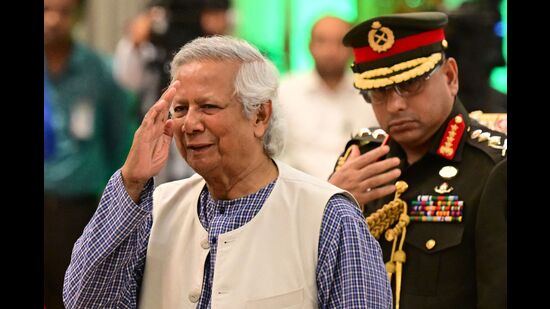
Nearly three months after Bangladesh’s interim government banned all activities of the Awami League under an anti-terror law, the country’s International Crimes Tribunal has begun the trial of former prime minister Sheikh Hasina on charges of crimes against humanity linked to the crackdown on protests against her regime last year. This appears to be yet another move aimed at discrediting the Awami League and erasing its role from the political history of Bangladesh. Sheikh Hasina’s administration displayed an authoritarian impulse at times, especially in its final months, which was reflected by its high-handed actions against the Awami League’s political opponents. But excessive targeting of a single leader misses out the larger structural fault lines in play that influence politics in Bangladesh.
The decision by the interim government led by Muhammad Yunus to ban the Awami League can hardly be perceived as impartial, especially when Bangladesh appears to be on the road towards a general election, and student groups that were once aligned with Yunus are trying to strengthen their new political party. There are no valid grounds for prohibiting the activities of one particular political party even if its leader is on trial in absentia. Barring the stabilisation of the internal situation, there are few signs that Bangladesh’s interim government has implemented other reforms or really begun preparing for free and fair elections. For New Delhi, hopefully, Hasina’s trial will not turn into an anti-India campaign at a time when bilateral ties are at a fresh low.
One Subscription.
Get 360° coverage—from daily headlines
to 100 year archives.
Archives
HT App & Website