As Prime Minister (PM) Narendra Modi returns from the Shanghai Cooperation Organisation (SCO) summit at Bishkek, Kyrgyzstan, marking the 25th anniversary of the regional grouping, there are three issues that need deliberation. Making a strong statement on ending terrorism, with Pakistan’s PM in attendance, Modi has managed to highlight India’s priorities during the summit which remains, at its core, a forum of duelling objectives. Although Central Asia has witnessed enough terror-linked activity to set up Regional Anti-Terrorist Structure (RATS) in
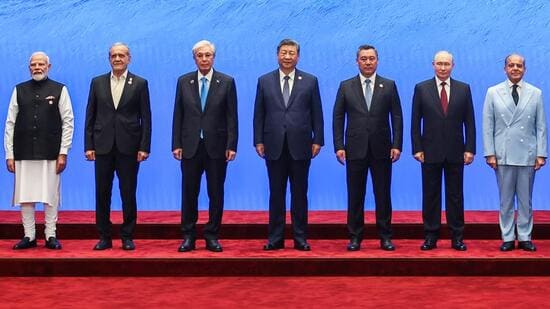
As Prime Minister (PM) Narendra Modi returns from the Shanghai Cooperation Organisation (SCO) summit at Bishkek, Kyrgyzstan, marking the 25th anniversary of the regional grouping, there are three issues that need deliberation. Making a strong statement on ending terrorism, with Pakistan’s PM in attendance, Modi has managed to highlight India’s priorities during the summit which remains, at its core, a forum of duelling objectives. Although Central Asia has witnessed enough terror-linked activity to set up Regional Anti-Terrorist Structure (RATS) in Tashkent, member-specific concerns have received inadequate attention.
The first issue the government, therefore, must worry about is that the institution still lacks a centralised consensus. Not only this, the asymmetrical dominance China enjoys in the grouping greatly influences any emergent consensus. Any statements or initiatives underscoring India’s concerns are unlikely to be universally acceptable to the members. If another member State is implied to be the source of concern, the chances of organisational inertia are likely to be exponentially higher.
Second, a dispassionate assessment of whether the SCO and similar platforms, despite the dominance of one country, serve India’s interests must be undertaken. In the past one year, the SCO has offered space for India and China at least twice to press reset in the bilateral relations. India has also used the grouping to expand trade relations with central Asian countries. The latest uranium deal with Uzbekistan is an example of how the government’s “extended neighbourhood” policy has been bolstered through regular engagement — offered by the SCO — with a region rich in critical minerals.
Third, does a regional grouping offer a pathway into a larger geopolitical schema for a middle-power such as India? To be sure, the SCO was intended to challenge the US hegemony and offer an Asian alternative. As India retains its strategic autonomy by staying non-aligned to any geopolitical bloc, optimising regional groupings is a way forward for asserting the same.
The handshakes at summits are important, but of bigger significance is what they lead to. The SCO, in that sense, has prepared a solid ground for the upcoming BRICS summit in India. At a time when India and China are engaged in finding mutually-agreeable solutions for the long-rankling issues along the Line of Actual Control, the importance of cordial meetings between the leaders of the two countries, even if not bilateral, cannot be understated. It is these opportunities that the government must build on.
One Subscription.
Get 360° coverage—from daily headlines
to 100 year archives.
Archives
HT App & Website