In the annals of history, few issues have proven to be as vexing to legislate on than the legal age of consent. Law demands uniformity and strict conformation to the written statute. The nature of relationships, romantic or sexual, is the opposite — it is subjective and hinges on the specificities of the circumstance, people involved and the cultural milieu. The debate around the age of consent, therefore, is sharply polarised between those who want to safeguard young people from
In the annals of history, few issues have proven to be as vexing to legislate on than the legal age of consent. Law demands uniformity and strict conformation to the written statute. The nature of relationships, romantic or sexual, is the opposite — it is subjective and hinges on the specificities of the circumstance, people involved and the cultural milieu. The debate around the age of consent, therefore, is sharply polarised between those who want to safeguard young people from exploitation and abuse, and those who argue that protecting their civil and constitutional rights is important. A decade ago, India appeared to take a position that privileged the former argument. By setting the legal age of consent at an unshakeable 18, the Protection of Children From Sexual Offences Act, 2012 (Pocso), offered almost no leeway to judges hearing cases involving minors in consensual relationships, other than almost certain criminalisation.
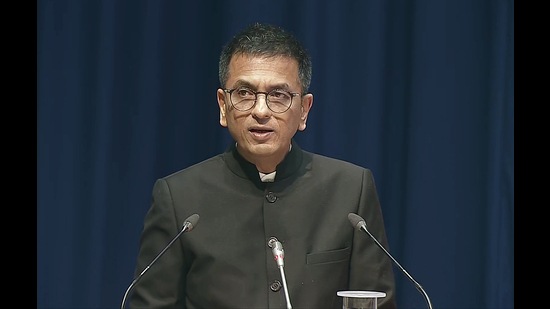
Last week, the Chief Justice of India, DY Chandrachud, weighed in on the debate. Speaking at a national consultation on Pocso, he said the legislature must address concerns related to the age of consent and acknowledged that cases involving minors who were in consensual relationships posed difficulties for judges across the spectrum, given the presumption of the law is that there is no consent in the legal sense below 18.
The CJI is making an important point. There is growing recognition that while adolescents may not be adults in the legal sense, they do have an understanding of sexuality and consent — one that must be acknowledged, understood and discussed, not criminalised. In India, for example, studies have shown that a large chunk of Pocso cases involve the police and families filing cases against minors who have dared to break barriers of caste, community or faith. The high courts of Karnataka and Delhi have also raised similar concerns and asked why consensual relationships among willing adolescents are being criminalised. A study in West Bengal, Maharashtra and Assam by UNICEF-India and Enfold Proactive Health Trust found that one in four Pocso cases was linked to a consensual relationship. This has consequences not only for the young people involved but also for the system. After all, as a recent study by the Vidhi Centre for Legal Policy found, chronic delays were becoming endemic, and acquittals outnumbered convictions three to one. It is nobody’s argument that children don’t need the strongest protection from predators and harassment both online and offline. But criminalising consent and reinforcing dogma is not the way to do it. The legislature must review this provision.
One Subscription.
Get 360° coverage—from daily headlines
to 100 year archives.
Archives
HT App & Website