
 E-Paper



Critical chapters dropped from CBSE Class 10 exam
Chapters on democracy and diversity in the Class 10 social science syllabus for the 2019-2020 session will not figure in the final exams, the Central Board of Secondary Education (CBSE) has decided.

 Prefer HTon Google


Chapters on democracy and diversity in the Class 10 social science syllabus for the 2019-2020 session will not figure in the final exams, the Central Board of Secondary Education (CBSE) has decided.
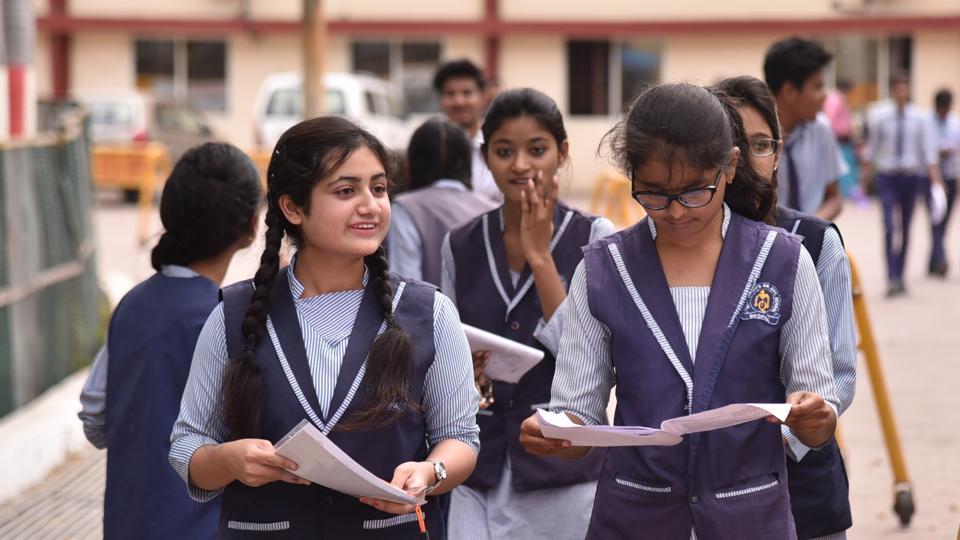
Three chapters from the Democratic Politics Book-I, namely, ‘democracy and diversity’, ‘popular struggle and movements’ and ‘challenges to democracy’, will be not evaluated in board examination 2020.
A circular released by CBSE says the said chapters will be “assessed in the periodic tests, but will not be evaluated in the board examination.”
The decision is believed to be a part of a curriculum rationalisation exercise undertaken by the human resource development ministry reduce the “burden” of the curriculum on students
According to CBSE, the chapter, ‘challenges to democracy’, includes ‘thinking about challenges’, ‘political reforms’ and ‘redefining democracy’, while the chapter, ‘popular struggles and movements’, creates understanding of the vital role of people’s struggle in the expansion of democracy.
The chapter ‘democracy and diversity’ analyses the relationship between social cleavages and political competition with reference to the Indian situation.
No exam will lead to lax attitude
A government schoolteacher requesting anonymity as she is not authorised to speak to the media says, “CBSE has made these crucial chapters in a way optional for students. These will be evaluated in the periodic tests but students know that they won’t be tested in the boards so they’re not likely to go in for in-depth study.”
Approving “pruning of the syllabus,” she says there are four books for the social science examination of 80 marks.
“The National Council of Educational Research and Training (NCERT) textbooks that students read today were carefully designed after the National Curriculum Framework, 2005. The book was designed in a way which promoted flexibility among teachers as well as students. The idea was to delink textbook from examination and promote students’ interest in the subject,” says Krishna Kumar, former NCERT chairman
What is happening now is that CBSE is taking away the flexibility from the textbooks, he says, adding, “The NCERT should be the body that should decide the curriculum. However, CBSE is calling the shots.”
CBSE’S ‘INTERFERENCE’ Echoing Kumar’s thoughts, HS Mamik, chairman of Vivek High School, Sector 38, says CBSE, an examination body, cannot decide on what should and should not be included in the syllabus. “NCERT and a team of academicians should be advising the government. CBSE is just interfering in other people’s work,” he adds
Reema Dewan, principal, Delhi Public School, Sector 40C, and CBSE city coordinator, says, “There are 20 marks allotted for political science in the board exam and the syllabus is sufficient. The three chapters (excluded) will be given due weightage and taught in the periodic exams.”
Professor Satvinderpal Kaur of the department of education, Panjab University, too, does not think this is the right thing to do to reduce the students’ workload.
“Chapters such as ‘popular struggle’ and’ movements and challenges to democracy’ have their own importance in making of the child understand past struggles. The child’s knowledge of these topics must be holistically evaluated. What is being done is not healthy and will have a harmful long-term effect.”
Satvinderpal Kaul feels all chapters are interrelated in social sciences and students’ understanding of the chapters in question will be poor. The alteration in the curriculum is unplanned and haphazard. “For the purpose of political socialisation understanding of democratic setup is minimum, without it what is the value of social science?” she asks
CBSE regional director and CBSE Delhi did not respond to questions.


