For Gaurang Agarwal, the decision to pursue the Post Graduate Programme (PGP) at the Indian School of Business (ISB) was not about walking away from investment banking, but about preparing for a broader leadership role within it.
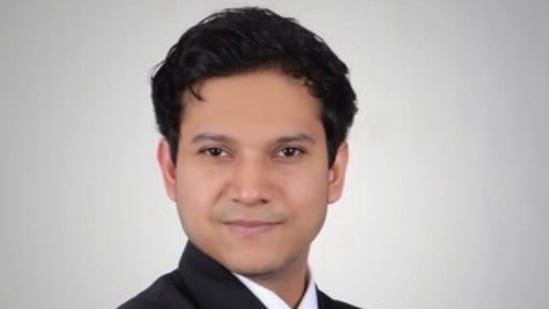
An IIT Kharagpur graduate with a dual degree in Financial Engineering, Agarwal ranked third in his department and among the top 30 students in a batch of nearly 1,500. He went on to build a career in investment banking, working at Deutsche Bank and Credit Suisse before joining JPMorgan, where his experience has spanned derivatives and structured products.
Top 10 emerging careers students should know about in 2026 and beyond
After five years in banking, Agarwal felt that technical expertise in a single function was no longer enough for the leadership role he wanted to pursue.
That realisation led him to ISB's PGP Cohort 27. For Agarwal, the programme offers an opportunity to step outside the finance lens and understand how businesses are built, scaled and led.
While speaking to HT Digital, Gaurang shared why he shifted from being a full-time corporate employee to a student again, his daily routine, his achievements in various fields, and his future ambitions. Know Gaurang's journey from IIT Kharagpur to ISB's PGP Cohort 2027 here.
{{/usCountry}}While speaking to HT Digital, Gaurang shared why he shifted from being a full-time corporate employee to a student again, his daily routine, his achievements in various fields, and his future ambitions. Know Gaurang's journey from IIT Kharagpur to ISB's PGP Cohort 2027 here.
{{/usCountry}}Is higher education still worth it in the age of AI? Intel Manager Mihirkant Upadhyaya explains
Question 1: You had a successful career in investment banking, working with firms like JP Morgan, Credit Suisse, and Deutsche Bank. What motivated you to step away from that trajectory and pursue PGP at ISB at this stage of your career?
Answer: Banking gave me depth. Five years in derivatives and structured products made me very good at one vertical: pricing risk, structuring a solution, getting the deal done. But the leaders I admired weren't just experts in their function. They understood how sales, technology, operations and strategy fit together, and they could carry people with them. That's what pulled me towards the PGP at ISB. I wanted exposure beyond finance. How does a founder build something from scratch? How does a large company decide where to place its bets? You can pick some of this up on the job, but it takes years and a fair amount of luck. A year at ISB compresses that learning, and this felt like the right stage of my career to invest in it.
Question 2: Coming from IIT Kharagpur with a strong academic record and national-level achievements, what skills or perspectives do you hope ISB will add that you couldn't have gained in the corporate world alone?
Answer: Three things, honestly. The faculty first. You're learning macroeconomics, strategy and analytics from professors doing frontier research in those areas, which is very different from picking things up as you go at work. Then the peer group. My section alone has consulting, manufacturing, healthcare and the armed forces in it. Every discussion drags me out of my finance lens, and just understanding how their industries work is an education in itself. And the case method. In a bank, you see your own deals. In a classroom, you dissect a hundred companies and figure out why one expansion failed while another pricing model worked. The corporate world teaches you your job very well. A school like ISB teaches you everyone else's.
Question 3: Investment banking is known for its demanding work culture. During your IIT years and professional career, what did your daily routine look like, and how did you balance academics, extracurricular activities, and personal well-being?
Answer: The intensity isn't new to me. JEE preparation meant twelve-hour study days, and in banking you work until the deal is done, whatever hour that is. Some stretches are genuinely brutal. My coping mechanisms are simple. Music above everything; even on the worst days I'd take micro-breaks with a playlist, and I think people underrate how much it heals you. On lighter days I dance, or just head out with my close set of friends. The formula that has worked for me: keep loved ones around, take up some physical activity (sport, gym, dance, whatever is available), and eat reasonably well. And celebrate small wins. Give yourself a pat on the back when something goes right, however minor. That self-belief is what carries you through the next rough phase.
Canada, UK or Germany: What should matter most to Indian students in 2026?
Question 4: Your profile reflects achievements beyond academics—from research and finance competitions to sports, dance, and social impact initiatives. How have these diverse experiences shaped your leadership style and influenced the way you approach problem-solving?
Answer: I try to keep things simple and stay open to new settings. In sports, dance, research, community work, I was rarely the most experienced person in the room when I started. So I learnt to speak up, ask basic questions without ego, and absorb from the people who actually knew the field. That habit shaped how I lead. Some of my best work in banking, like a first-of-its-kind derivative structure or the AI pricing tool we built with the technology team, came from putting people with completely different skill sets in one room. The best work almost always happens in groups, when different ideas collide. So my style really comes down to believing in people, making room for their ideas, and keeping the problem simpler than it looks.
Question 5: You led a workplace-bias study that was later adapted into a stage play for IIT Kharagpur's Diversity, Opportunity and Inclusion Council. What inspired this initiative, and what lessons about leadership and inclusion have stayed with you throughout your career?
Answer: The trigger was something I saw every day. Workplaces bring together people from different parts of India, with different languages and different beliefs, and without meaning to, we commit small biases that quietly exclude someone. Nobody intends it, which is exactly why it persists. The study was an attempt to hold up a mirror, and turning it into a stage play made it land emotionally in a way a report never could. Watching an audience of over two hundred people recognise themselves in those scenes taught me something I've carried since: inclusion is a leadership skill, not an HR checkbox. People do their best work when they feel comfortable and heard. If you want to lead teams, and I do, you have to build rooms where every opinion actually counts.
Question 6: Looking ahead five to ten years, what are your long-term ambitions? Do you see yourself returning to investment banking, moving into entrepreneurship or leadership roles, or contributing to academia and public policy in some way?
Answer: I see myself back in an investment bank, but in a broader leadership role, running teams across products and regions rather than a single desk. I've had a taste of this already. I managed a team of ten in my last role, and I enjoyed the people side of the job as much as the markets side. But there's a difference between running a desk-sized team and leading across a business, and that's the gap I want to close. My derivatives years taught me the business; what I'm learning now is how businesses are led, and the next step is to put the two together. Markets are also changing fast. AI is already reshaping how banks price and manage risk, and I've built early tools in that space myself. I want to be driving that shift inside a large institution, not reacting to it. Entrepreneurship within a bank, if you like: new capabilities, new ways of working, and mentoring the next set of people the same way seniors once invested in me.
In many ways, Agarwal’s return to the classroom is not a departure from the career he has built, but an effort to prepare for what comes next.