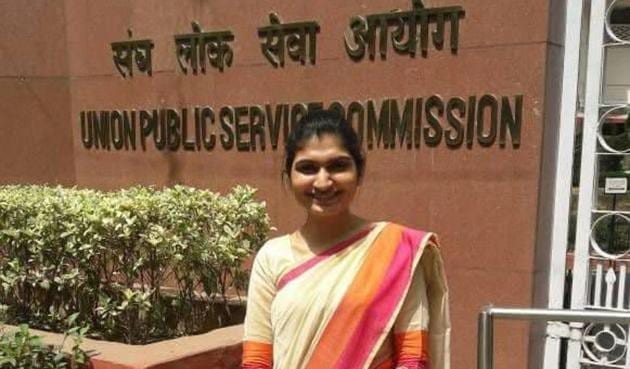
She was born in the middle of India’s Maoist heartland and grew up amid a decades-old violent insurgency that has claimed thousands of lives and brought development to a grinding halt in her home state.
Namrata Jain, 24, is the first woman from the Maoist-hit Bastar region to make it to the top 100 in UPSC’s civil services exams
{{^htLoading}} {{/htLoading}}
But 24-year-old Namrata Jain didn’t let the violence deter her, and cleared the Union Public Service Commission (UPSC) civil services examination this year, becoming the first person from the Maoist-hit Bastar region to get into the top 100 of what is considered to be one of India’s toughest examinations.
{{^usCountry}}{{/usCountry}}
“I want to become an IAS officer and serve Bastar . I know the problems of this region because I was born here,” Jain told HT.
Jain – who cleared the exam in her second attempt – studied up to Class 10 in Dantewada, which has seen hundreds of insurgency deaths in the past decade, and then shifted to Bhilai. She completed her engineering degree from Sankracharya Engineering College and started preparing for the UPSC entrance tests.
{{^htLoading}} {{/htLoading}}
{{^usCountry}}
“I have seen the conflict of Bastar since my childhood and I believe that the government should make more attempts to win the faith of the tribals,” she said.
{{/usCountry}}
{{#usCountry}}
“I have seen the conflict of Bastar since my childhood and I believe that the government should make more attempts to win the faith of the tribals,” she said.
{{/usCountry}}
A total of 1,099 candidates were recommended for appointment to various central government services from among tens of thousands of applicants this year.
Many in Dantewada’s administration are overjoyed by her success, specially because she was helped by Laskshya, a coaching initiative by the district authorities.
“I personally guided her related to internal security and contemporary affairs. It is great that a girl who has studied in Dantewada has got under 100 rank in UPSC,” said Abhishek Pallav, an IPS officer posted in Dantewada.
Ritesh Mishra is the State Correspondent for Chhattisgarh with Hindustan Times. He reports on Maoism, internal security, politics, mining, governance, and major developments shaping the state. Based in Raipur, he has covered Chhattisgarh since 2016, reporting extensively from the Bastar region and other conflict-affected areas. With nearly two decades of experience in journalism, Ritesh has built a reputation for ground reporting from some of India's most challenging terrains. His coverage spans Left-Wing Extremism, counter-insurgency operations, elections, tribal affairs, environmental issues, infrastructure, mining, and socio-economic developments. He has reported on major security operations, policy initiatives, wildlife crime, and the changing dynamics of conflict and development in Central India. Before moving to Chhattisgarh, Ritesh spent eight years reporting from Madhya Pradesh, covering politics, administration, crime, development, and social issues. Throughout his career, he has reported on various forms of extremism in Central India, combining field reporting with in-depth analysis to produce accurate, balanced, and impactful journalism. Prior to joining Hindustan Times, Ritesh worked with The Pioneer and The Free Press Journal, where he covered a wide range of beats and honed his skills in political, investigative, and field reporting.
His reporting is marked by exclusive stories, extensive fieldwork, and a commitment to factual, on-the-ground journalism that brings complex issues to a wider audience.
Stay informed with the latest updates on Education News also check NEET PG Result 2026 and Find tips to help you succeed in your academic journey and career planning on Hindustan Times.
Stay informed with the latest updates on Education News also check NEET PG Result 2026 and Find tips to help you succeed in your academic journey and career planning on Hindustan Times.