Chris Hansen was the first person to speak against Primetime, the new film in which Robert Pattinson plays the former TV host. The film chronicles Hansen’s rise and the birth of his iconic show, To Catch A Predator. The show saw Hansen catch American men in sting operations as they tried to meet minors for sexual relations. The show was a hit on TV in the early 2000s before it all came to a grinding halt after a subject killed themselves on the show.
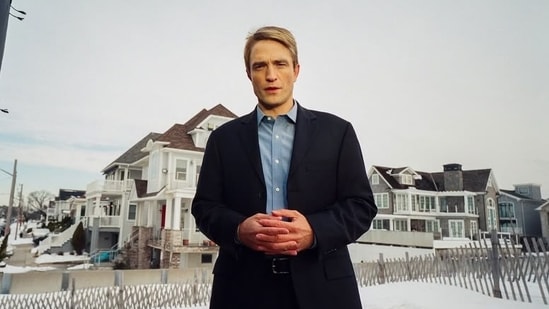
Primetime, directed by Lance Oppenheimer, stars Pattinson as Hansen, and shows how exactly the show began and what went down on that fateful night when Bill Conradt shot himself. Amid the praise the film has received and the criticism from its subject, Chris Hansen, writer Ajon Singh talks to Hindustan Times about the reception, laurels, and brickbats. Excerpts:
HT: In one of your interviews, you said that you were fascinated by To Catch a Predator when you were growing up. I know that Dan (played by Skyler Gisondo) is based on a composite of people who worked on it. But was that also a surrogate for you, as the young boy who was fascinated by this entire thing?
Ajon Singh: I think that's a very astute observation. Yeah, I would say. Also, a big part of it was this idea of like a dream and him engaging with this dream, and then the dream not being exactly what he thought it would be. The character Decoy Dan struggled in Hollywood for many years. He had done odd jobs, and he was really trying to find his place in his career, and I felt like I was in a similar position. I was struggling for many years. I didn't know exactly what my niche was. That was always the goal with Decoy Dan: his character is mostly about someone being presented with a dream and then having the opportunity to access it, which was also my experience. Then, at the end, it seems like he's left and found an escape, but then he gets that siren's call of that dream calling him back into this strange, ugly world of Hollywood.
HT: This film is very different from a regular biopic because it has a sense of magical realism. Was that something that you put in the script, or was that something that came in when Lance came on board?
Ajon Singh: The original script was mostly a political thriller. It was more about the entertainment industry and law enforcement. The drama and the story's thrust are pretty much the same. What Rob and Lance brought was the idea that Chris Hansen is actually an angel of punishment. One thing we all talked about was the psychic toll. That was the term we used over and over: the psychic toll that this line of work takes to repeatedly humiliate and punish people. What does that do to a man? So how do you go from something small and materialistic or superficial like that to something so cosmic by the end of the film? So it's a metamorphosis.
HT: What was that one moment that Rob surprised you with his interpretation of something that you wrote in the film?
{{/usCountry}}Ajon Singh: The original script was mostly a political thriller. It was more about the entertainment industry and law enforcement. The drama and the story's thrust are pretty much the same. What Rob and Lance brought was the idea that Chris Hansen is actually an angel of punishment. One thing we all talked about was the psychic toll. That was the term we used over and over: the psychic toll that this line of work takes to repeatedly humiliate and punish people. What does that do to a man? So how do you go from something small and materialistic or superficial like that to something so cosmic by the end of the film? So it's a metamorphosis.
HT: What was that one moment that Rob surprised you with his interpretation of something that you wrote in the film?
{{/usCountry}}Ajon Singh: He surprised me in every scene. He's unbelievable. Every single version of every take was fascinating. He would do eight takes. Each of them would be different. If he did even one of those takes, I would be thrilled, but he did eight takes that were all very profoundly good. But one that comes to mind is that scene in the precinct. The way we had written it felt sort of standard, but the way he always envisioned Chris was as this weakened wizard. So that's why he's like stumbling across the room. He has this very tortured expression on his face, and he really drags the words out. The other one that really impressed me is the opening sting, the way he does it. We didn't want to do this photorealistic mimicry of the original show. We wanted to do a dramatised, heightened version of that. And he turned it into something really terrifying. It's almost like a Dracula performance.
HT: Were you surprised by Chris Hansen’s reactions to the film even before it had been released? He was pretty strongly against it. Were you surprised, or were you expecting that?
Ajon Singh: I really didn't know what Chris Hansen's reaction would be. I hoped that he would like the movie. But the thing that has really surprised me and that has been so exciting is that even when he did his press conference after the movie and in many weeks after the movie has been released, he keeps telling people to go see the film. He says, ‘Go watch it, go make up your own mind’. That, in a way, is the perfect encapsulation of who he is. He can have his strong opinions all he wants, but at the end of the day, he still wants you to go see it. He's bought some advertising time in the United States before the film. So he's promoting the movie regardless of whether he likes it. I think that's been the real surprise to me and has been a joy. In some way, it feels like we're working together even though we're not.
HT: There's this online discourse that Primetime somehow paints Chris Hansen as a bad guy. It somehow discredits his work. Have you ever felt like responding to that?
Ajon Singh: First of all, I'm very keen on letting the art speak for itself. So, if people want to have arguments, that's up to them. I strongly believe that for most of these people, their issues with the film are addressed within it. We talk about people in power. We expose a high-ranking politician in the film. We expose religious leaders. This is all part of the film's story. I feel that if they just watched the movie, they might see that we're actually on the same side on a lot of these things. But we live in a culture of reading headlines. I think that's the internet. And I appreciate that a lot of people are defending the film, too. And when they defend the film, it's usually coming from a place of ‘I've seen it. That's not what this is’.
Primetime is currently running in theatres.