It was indeed in his blood. For Satyajit Padhye, ventriloquism is a homegrown art. “My grandfather Yeshwant Keshav Padhye pioneered the craft and introduced Indian masses to something niche back in the 1920s. Ramdas Padhye, my father, has been cultivating it for 52 years now, but I was never expected to carry on their legacy. I took it up because it interested me,” Satyajit says.
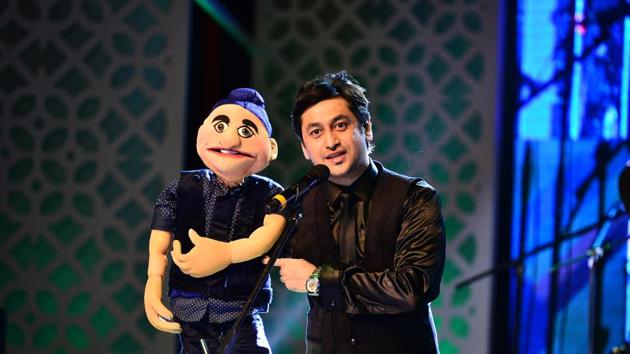
The power of being someone else through voice and speech modulation, inspired the artiste from a very young age. Being stuck in the house for days at a stretch can drain out our general keenness. The artiste feels learning a new skill to make use of the few extra hours or to kill boredom may help us treat this lockdown as an opportunity for self-development. Satyajit is holding online sessions to impart his knowledge. “You can’t learn ventriloquism in an hour-long-session. It is difficult, but you can start out with key inputs and work on voice production,” he adds.
Ask him about the initial challenges a new learner might face and he explains, “It is essential to see your puppet as a being, with an identity of its own. Then, you need to find a voice, different from yours, and use the same comfortably. Ventriloquism also requires riyaaz as stressing on vocal chords is intrinsic to performances. The most important factor is sound substitution. The puppeteer can’t use sounds that require lip movement (p, f, b gets struck off). So, to make your puppet say “police”, you will have to replace p with k and say “kolice” instead.” Satyajit signs off saying when in school, he had used his talent to impress his crush. “During roll call, I used to say present on behalf of other classmates,” he laughs heartily.