100 Days of Deception web series review
Cast: Kim You Jung, Park Jinyoung, Jin Seon Kyu, Kim Hyun Joo and Lee Moo Saeng.
Director: Yoo In Shik
Rating: ★★★★
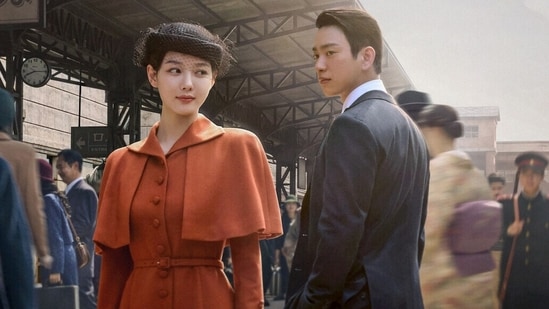
A pickpocket dreaming of a new life in America, a Korean interpreter working for the Japanese administration and a resistance fighter haunted by her past find their lives intertwined in the currently airing Korean drama 100 Days of Deception. Set in 1930s Gyeongseong during the Japanese occupation of Korea, the k-drama follows a young woman who gets drawn into the independence movement and takes on a dangerous undercover mission that puts her life at risk.
Directed by Yoo In Shik and written by Ryu Bo Ri, the 16-episode drama is part of tvN's 20th anniversary special projects and is also streaming on Netflix. Starring Kim You Jung and Park Jinyoung, the series blends espionage with political intrigue and romance, as its characters navigate a world where revealing too much can have deadly consequences. The first four episodes set the stage for a tense game of secrets and shifting loyalties, with the stakes rising as the undercover operation gets underway.
Plot of 100 Days of Deception
The story centres on Lee Ga Kyung (Kim You Jung), a pickpocket who dreams of leaving Korea for America. With little money and no interest in joining the independence movement, she is focused on finding a way out. But everything changes when she steals a suitcase belonging to Yoo So Ran (Kim Hyun Joo), a resistance sniper. The bag contains bullets, and this seemingly small theft draws Ga Kyung into the dangerous world of those fighting Japanese rule.
Soon, Ga Kyung is recruited for an undercover mission at the Japanese Government-General of Korea. Posing as an interpreter, she must spend 100 days inside the colonial administration without exposing her true identity. The assignment becomes even more complicated when she meets Kim Tae Woong, also known as Sato Hideo (Park Jinyoung), a Joseon-born interpreter who has built his life within the Japanese establishment.
{{/usCountry}}Soon, Ga Kyung is recruited for an undercover mission at the Japanese Government-General of Korea. Posing as an interpreter, she must spend 100 days inside the colonial administration without exposing her true identity. The assignment becomes even more complicated when she meets Kim Tae Woong, also known as Sato Hideo (Park Jinyoung), a Joseon-born interpreter who has built his life within the Japanese establishment.
{{/usCountry}}Hideo's past is as complicated as his present, particularly when it comes to his adoptive father, Sato Shinichi (Jin Seon Kyu). Once a low-ranking police officer, Shinichi killed a Korean boy before taking the young Hideo, then a pickpocket, under his wing and raising him as an elite Japanese citizen. Their relationship is unsettling, with Hideo's need for his father's approval clashing with the violence and prejudice that have shaped his life.
Working behind the scenes are Yoo So Ran (Kim Hyun Joo) and Yoo Philip (Lee Moo Saeng), whose lives are equally marked by loss and deception. So Ran became a resistance sniper after Japanese police killed her daughter 13 years ago. The tragedy also left her uncertain about whether her husband, a fellow resistance fighter, had survived. To carry out assassinations and support the Gugukdan, she enters into a marriage of convenience with Philip. A Korean-American correspondent for an American news agency, he uses his journalistic credentials and international connections to pressure colonial officials while helping his wife carry out her dangerous missions.
The first two episodes establish the stakes through a tense sequence at Gyeongseong Station, where Ga Kyung's decision to steal the suitcase pulls her into a conflict far beyond her control. By episodes 3 and 4, she has begun her assignment inside the Government-General, where every conversation and interaction could put her cover at risk. She must quickly learn the rules of her new environment while concealing her real intentions from those around her.
Being so close to Hideo only makes matters harder. Both have secrets to protect, and their growing connection is complicated by suspicion and conflicting loyalties. There are hints of romance between them, but neither can afford to let their feelings get in the way of the mission. This mix of personal attraction and constant danger gives the story the much needed tension.
Direction
Yoo In Shik brings 1930s Gyeongseong to life, showing a city where the privileged live comfortably while ordinary Koreans struggle under colonial rule. This divide comes through in the production design, from imposing government buildings and crowded streets to the cramped homes of those living in poverty. The cinematography captures the period beautifully without making the setting feel like a backdrop. There is a constant sense of unease, even in quieter moments, as the characters navigate a world where a single mistake could put them in danger.
Performances
Kim You Jung brings a street-smart edge to Ga Kyung, a young woman who has learned to fend for herself. Initially focused on saving enough money to move to America, she has little interest in the independence movement until circumstances force her into it. She captures her fear and uncertainty while holding on to the quick thinking that has helped her survive. Her command of Korean, Japanese and English is particularly impressive.
Park Jinyoung brings a quiet intensity to Hideo, a man caught between his Korean roots and the Japanese identity he has been raised to embrace. His longing for his father's approval reveals the vulnerability beneath his otherwise controlled demeanour. The actor handles this inner conflict with restraint, and his ability to switch between Korean, Japanese and English is a standout, making his portrayal all the more convincing.
Kim Hyun Joo gives So Ran a commanding presence, balancing her sharp instincts as a resistance fighter with the grief she carries. Her disguise as a pregnant Chinese woman from Shanghai adds another layer to her dangerous mission, while the return of her husband, whom she believed to be dead, threatens to complicate everything. Lee Moo Saeng adds an element of mystery as Yoo Philip, a Korean-American correspondent for an American news agency. While he maintains a cordial relationship with the Government-General, he secretly assists So Ran. His smooth manner makes it difficult to tell where his loyalties lie, adding another intriguing layer to the show's web of secrets and shifting allegiances.
Jin Seon Kyu is unsettling as Sato Shinichi, a senior official in the colonial administration who exercises control without needing to raise his voice. His relationship with Hideo is particularly disturbing, with his desire to mould his adopted son often overshadowing any affection he might feel for him. Seon Kyu makes the character menacing through his measured delivery and cold, calculated behaviour.
What works
One of the drama's strongest points is how it gives each character a personal reason to make the choices they do. Ga Kyung is driven by her desire to escape poverty and build a new life in America, not by a sense of duty towards the independence movement. Her unexpected involvement in the fight against Japanese rule makes her journey feel more grounded.
Hideo's relationship with his father adds an emotional layer to the larger political story. His need for his adoptive father's approval clashes with the reality of his Korean roots, making their bond both complicated and painful. Their relationship also shows how affection can become a tool for control.
The undercover mission keeps the story tense, with the characters constantly having to watch their words and hide their true intentions. The period setting adds to the experience, with detailed costumes and production design capturing life in colonial Korea. While the characters and their stories are fictional, the series does not shy away from the cruelty of Japanese rule, giving the conflict a sense of historical weight.
The opening episodes pack in several characters, political factions and secret identities, and the constant shifts between the resistance and the colonial administration can occasionally make the story feel crowded. However, the plot is not as difficult to follow as it might seem at first.
The violence, on the other hand, can be hard to stomach. The drama does not shy away from showing the cruelty of the occupation, with a flashback in which Sato Shinichi shoots a child standing out as particularly disturbing. These scenes drive home the brutality of the period, but viewers who find graphic violence upsetting may struggle with some of the show's more harrowing moments.
Verdict
100 Days of Deception is a beautifully shot, superbly acted, and perfectly paced K-drama. It is an unflinching, exhilarating and is actively vying for the crown of the next great historical epic.
The bigger challenge lies in keeping the story engaging across 16 episodes. The first four move quickly, with new revelations and close calls keeping the tension alive. Whether the show can maintain that momentum remains to be seen. So far, this is a rewarding one.
Get more updates from Bollywood, Taylor Swift, Hollywood, Music and Web Series along with Latest Entertainment News at Hindustan Times.
Get more updates from Bollywood, Taylor Swift, Hollywood, Music and Web Series along with Latest Entertainment News at Hindustan Times.