
 E-Paper



Ecostani: India’s new sulphur norms — A promise at Paris climate summit undone
The policy change means that about 78% of India’s 537 thermal power plant units do not have to install machinery to reduce SO2 emissions.

 Prefer HTon Google


The environment ministry had issued a clarification on July 14 claiming that its July 11 order, exempting thermal power plants in India from using technology to trap sulphur dioxide emissions, was “grossly misinterpreted” following a backlash from experts terming it a retrograde step.
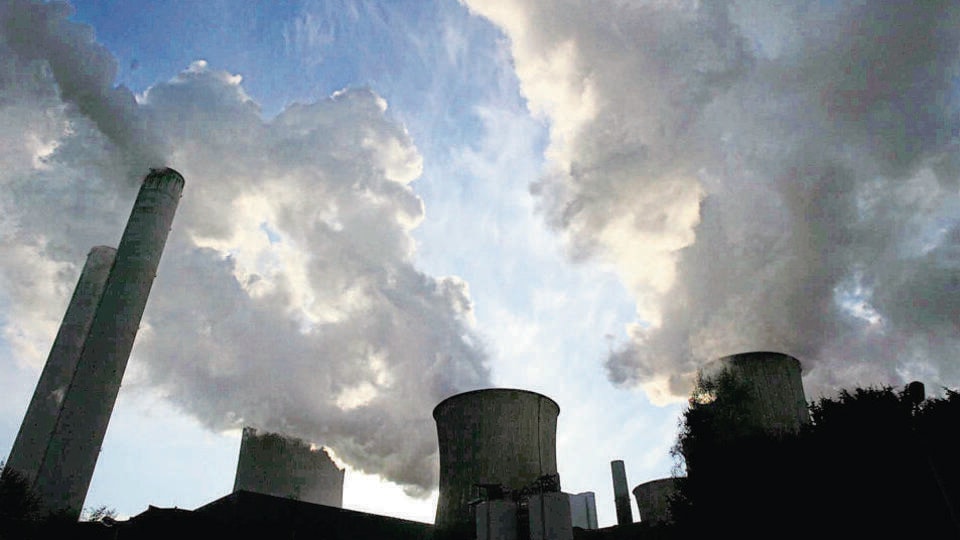
The July 11 notification reversed a key environmental policy notified in 2015 to cut SO2 emissions. The policy change means that about 78% of India’s 537 thermal power plant units do not have to install machinery to reduce SO2 emissions, called Flue Gas Desulfurization systems (FGDs), that can filter 80-90% of sulphur emissions at the source.
Of the 537 units having annual generation capacity of 2,04,999 mega watt (MW) of electricity, which were supposed to get FGDs, now only 65 units (12%) must have these in category A.
In the case of a further 66 units in category B, officials will determine on a case-by-case basis whether they need to install FGDs. The remaining 406 units in category C are now exempted.
In 2021, the ministry divided the thermal power plants into three categories and provided a deadline to install FGDs as prescribed in 2015 notification making FGDs mandatory.
Category A was one within 10km of the National Capital Region or cities with a population of more than one million had to install FGDs by December 2022. The category B units, those within 10km radius of critically polluted areas such as Vapi in Gujarat, or non-attainment cities, had to install FGDs by December 2023. Remaining thermal power plants falling in category C, had to install FGDs by December 2024.
None of these deadlines was met because of stiff resistance by the thermal power industry, which claimed that installing the FGDs was a costly affair and no similar indigenously developed technology was available. However, several of National Thermal Power Corporation (NTPC), the country’s public sector power major, has installed FGDs at several of its plants and has invited tenders for installing them in more plants.
From the documents and arguments available, it appears that the ministry decided to abandon the 2015 notification to provide relief to private thermal power operators, who appeared to be lagging in installing FGDs. The ministry did not issue any public notification for stakeholder consultations. If any such consultation was done, as claimed by the ministry, it was highly restrictive and aimed at benefiting the thermal power industry at the cost of people’s health, especially the poor living near the coal-based industries.
There cannot be denial of the fact that India is the largest SO2 emitter, mostly from the coal-based power plants, and has least emission control measures for the highly polluting sector.
Since 2017, China has been able to reduce its sulphur dioxide emissions by 70% by using FGDs and other emission trapping mechanisms. As China reduced its sulphur emissions, India became the world’s largest SO2 emitter, contributing more than 15% of the global anthropogenic emissions. Nearly 70% of India’s sulphur emissions are from coal-fired power plants. However, overall sulphur emissions between 2010 and 2020 in India have reduced.
A review of 38 peer reviewed studies showed that SO2 has adverse health effects on the human respiratory, cardiovascular, and nervous systems and causes type 2 diabetes and non-accidental deaths. The studies also emphasised that sulphur dioxide in combination with other air pollutants can “significantly” enhance adverse health impacts. The gas is also linked with ecological impacts such as acid rain.
The ministry, however, debunked the claims of SO2 contribution to air pollution and its health impact. The ministry claimed that the July 11 notification was based on the extensive consultations with stakeholders and research institutions but it failed to provide any scientific document which states that SO2 emissions are not bad for human health.
Its claim that SO2 contribution to PM 2.5 emissions is “very less” — 0.96% to 5.21% of PM2.5 and 0.57% to 3.67% of PM10 — does not hold ground as air pollution is just not about particulate matter, which is mostly dust particles. Sulphur pollution, rated as toxic gas, is much more harmful than particulate matter when it comes to human health impact.
Moreover, it is a scientifically established fact that the sulphur compounds contribute 12–30% of PM2.5, which the ministry called “unsubstantiated claim” in its rejoinder. The ministry did not share any peer reviewed scientific study to substantiate its claim.
The ministry’s claim that “current exposure levels provide no credible evidence to suggest that SO2, under prevailing ambient conditions, is a major public health concern” is a dangerous assertion and is continuation of its narrative that air pollution does not kill people.
The ministry’s claim that removing SO2 emission trap technology requirement would save consumers 50 to 70 paisa per unit seems slightly out of thin air as nowhere installation of such a technology has resulted in exorbitant increase in electricity prices. Moreover, 70 paisa per unit increase would be less than a 5% hike in electricity prices as half of India’s power comes from renewable sources, which most consumers would pay for cleaner technology.
Internationally, India may find it difficult to defend its decision on international climate forums. The 2015 notification came as precursor to the Paris Climate meeting, where India wanted to showcase that it was serious about reducing emissions from thermal power plants, whose expiry day the developed world is asking for.
The Indian delegation had repeatedly spoken about the new SO2 emission control norms at the summit, where Prime Minister Narendra Modi participated and the Paris climate deal was signed. Going back on a progressive policy, would not help India in international environmental forms and for the health of its citizens.


