The Greenland Ice Sheet lost 5,091 sq km (1930 sq miles) of area between 1985 and 2022, according to a study in the journal Nature published on Wednesday, the first full ice-sheet wide estimate of area loss on that scale.
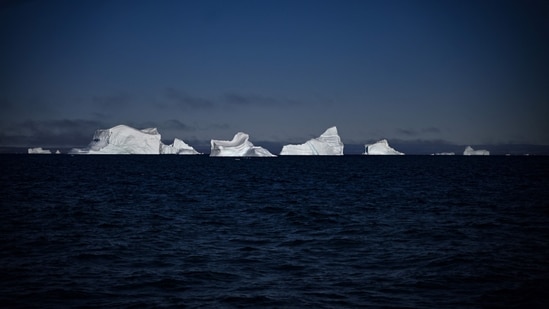
This shrinkage reflected the 1,034 gigatonnes (1.034 trillion kg.) of ice that have been lost as glaciers retreated, shedding ice through "calving" - when ice chunks break off from a glacier - at their terminating ends.
The study is also the first to fully estimate how much ice Greenland has lost due specifically to glacial retreat. It suggests previous estimates of changes to the Greenland Ice Sheet's mass balance - how much snow and ice is accumulated each year versus how much is lost - undercounted those losses by as much as 20% by neglecting glacial retreat.
The lost 5,091 sq km represents an area about the size of the island nation of Trinidad and Tobago.
The study used more than 200,000 satellite and AI observations of glacier positions to analyze changes over time.
"In Greenland, we have these areas around the edges where everything is just kind of retreating and crumbling," said study co-author Alex Gardner, an earth scientist at NASA's Jet Propulsion Laboratory.
{{/usCountry}}"In Greenland, we have these areas around the edges where everything is just kind of retreating and crumbling," said study co-author Alex Gardner, an earth scientist at NASA's Jet Propulsion Laboratory.
{{/usCountry}}"The previous methods weren't really that great at measuring that change in the ice sheet. But the change is huge."
The Greenland Ice Sheet is one of the world's two remaining ice sheets, the other spanning the Antarctic continent. Comprised of hundreds of glaciers, it covers about 80% of Greenland's landmass.
If fully melted, the Greenland Ice Sheet would raise global sea level by about 7.4 metres (23 feet).
With climate change warming the Arctic four times faster than the rest of the world, scientists say it is inevitable that the melting of the Greenland Ice Sheet will raise sea level by at least 27 cm (10.6 inches) due to warming that has already occurred.
The new estimate of ice loss from glacial retreat would have little impact on global sea levels, scientists said, but a big impact on ocean circulation.
That much added freshwater into the salty ocean could strengthen coastal currents around Greenland and help to weaken the Atlantic Meriodonal Overturning Circulation, which moves water from north to south and brings warmth to Europe.
(Reporting by Gloria Dickie, Editing by Angus MacSwan)